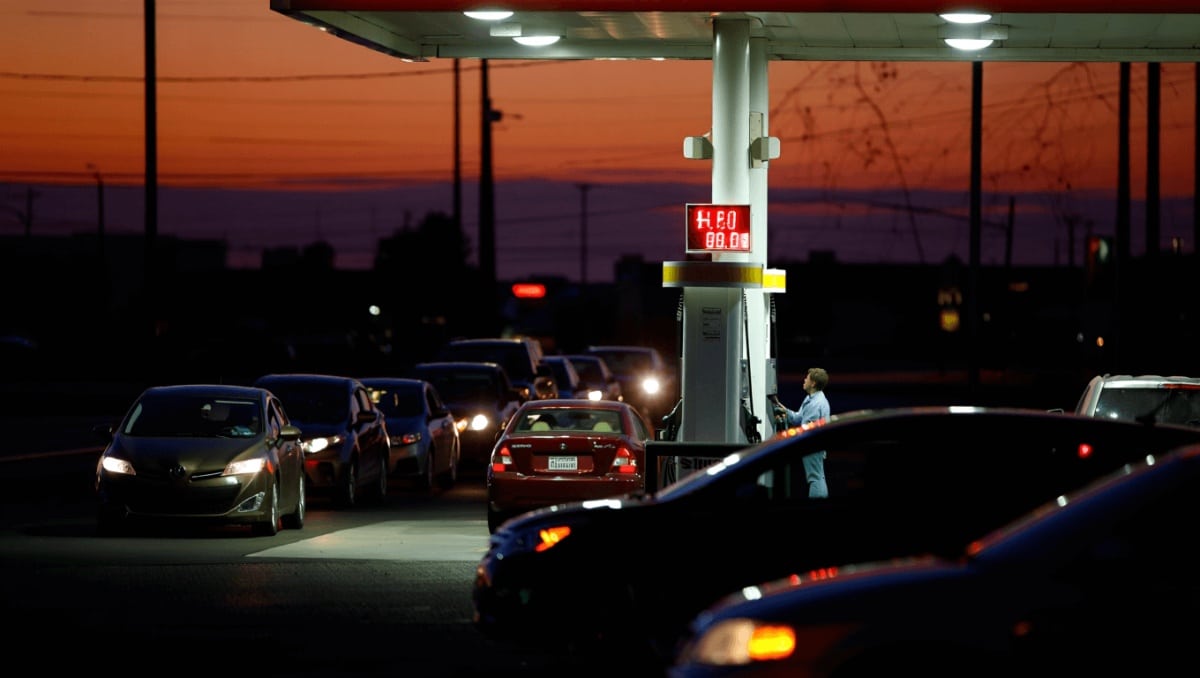
Fuel costs rose again Friday as the confrontation involving Iran pushed oil markets sharply higher, stoking immediate concerns about supply at the pump across the United States. The move in prices reflects rapid shifts in shipping and refining after tensions disrupted flows through a key Middle East waterway.
The national average for regular gasoline reached $3.32 per gallon Friday, up from $3.25 a day earlier and $2.98 a week ago, according to AAA. On commodities markets, U.S. crude settled at $90.90 per barrel, a one-day gain of roughly 12.2%.
Why the jump happened
Analysts point to a string of events that has tightened both crude and refined product availability. After recent strikes and retaliatory actions in the region, Iran moved to disrupt tanker traffic in the Strait of Hormuz — a chokepoint that handles about one-fifth of global oil shipments — which has complicated loading operations in Iraq, Kuwait and Saudi Arabia.
Separately, missile attacks have affected refinery facilities in several countries in the region, including Israel, Bahrain and Saudi Arabia, reducing processing capacity and removing barrels of gasoline and diesel from international markets. Further strain comes from Chinese restrictions on exports of refined petroleum, cutting another source of supply for global buyers.
What drivers should know
- Price snapshot: National gasoline average — $3.32/gal; U.S. crude — $90.90/barrel (12.2% daily increase).
- Supply pressure: Tanker loading delays and refinery outages have removed both crude and refined products from circulation.
- Geopolitical trigger: Actions in and around the Strait of Hormuz are central to the current market reaction.
- Near-term outlook: Futures markets signal potential for further price gains if tensions persist; some analysts expect the national pump average could reach about $3.50 soon.
Energy consultant Andy Lipow told reporters that the combined impact of blocked shipments and refinery disruptions is directly feeding the rise in pump prices. He added that some producers have been forced to shut in output where tankers cannot safely load, tightening available supply.
Market watcher Phil Flynn noted that futures contracts currently imply additional upside in the near term, but that positive diplomatic or security developments could quickly ease pressure. “We may see more increases in the short run,” he said, “but good news from the region would likely cool the move.”
How long might this last?
Forecasts depend heavily on the trajectory of the conflict and on how quickly shipping and refining operations can normalize. If disruptions continue, refiners and traders will face ongoing inventory strains; if tensions de-escalate, prices could retreat toward prior levels relatively fast.
President Donald Trump told Reuters he was not overly concerned about the recent rise, suggesting prices would fall once the situation stabilizes and that broader geopolitical considerations outweigh a temporary increase at the pump.
For now, the immediate consequence for consumers is clear: short-term volatility in gasoline prices is likely, and drivers should expect occasional spikes until shipping through the Strait of Hormuz and regional refinery activity return to normal levels.