Iran has reportedly told ships to avoid the Strait of Hormuz after large U.S. and Israeli strikes, a move that could choke a key artery for global oil shipments and send energy markets into turmoil. The warning, relayed via marine radio by Iranian paramilitary forces, has already prompted some traders and carriers to halt transits — raising immediate questions about supply, prices and regional stability.
What was reported at sea
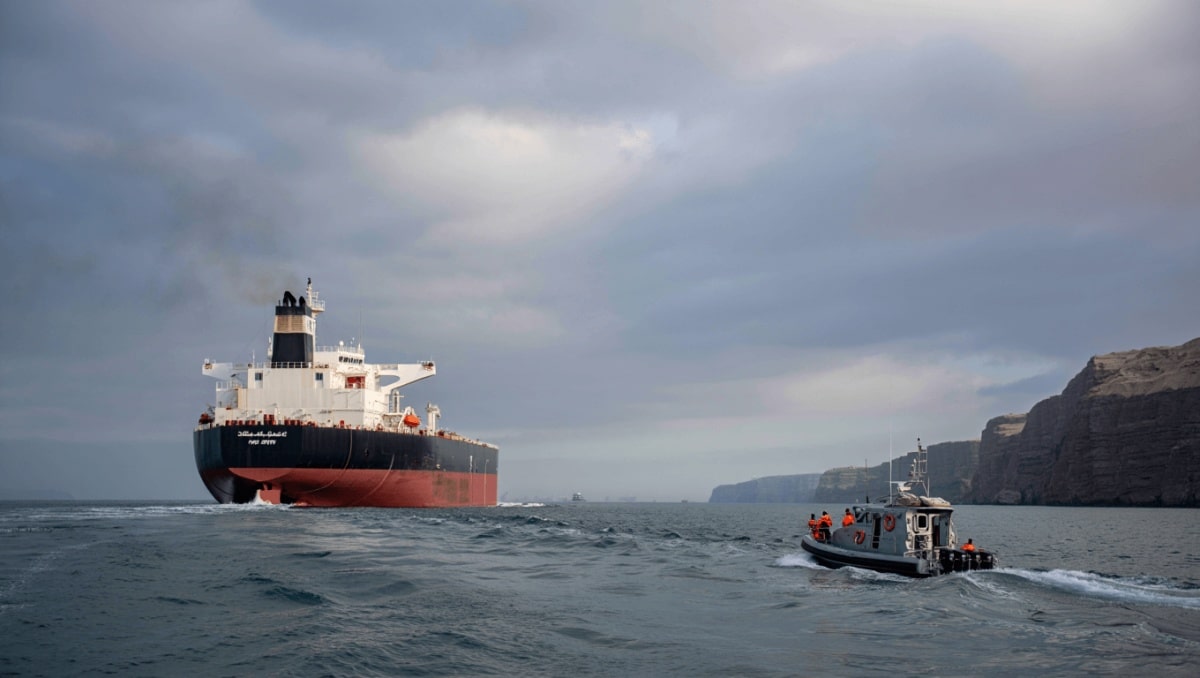
An official with a European Union naval mission said vessels operating near the Persian Gulf received radio messages from the Revolutionary Guard ordering ships not to transit the waterway. Tehran has not issued a formal, public confirmation of such an order, and independent verification remains limited.
Shipping and trading firms cited by industry sources have paused some crude and fuel shipments through the channel. Tanker operators and insurers are closely watching the situation, and refiners are recalculating routes and delivery timetables amid the uncertainty.
Why the Strait of Hormuz matters right now
The narrow maritime passage links Gulf producers to global markets: roughly one in five barrels of the world’s oil supply passes through it. Any sustained closure or effective throttling of traffic could materially tighten available crude volumes and disrupt refined fuel flows.
| Sector | Immediate effect | Why it matters |
|---|---|---|
| Oil markets | Reduced shipments; price risk | About 20% of global oil transits the route; supply shortfalls can push benchmark prices higher |
| Shipping and tankers | Rerouting, delays, some suspensions | Longer voyages and higher costs for insurers and owners |
| Aviation | Flight cancellations and altered routes | Wider airspace restrictions can increase costs and disrupt schedules |
| Currency markets | Short-term volatility | Safe-haven flows and commodity-linked currency moves can follow geopolitical shocks |
Market signals and analyst views
Brent crude traded near $73 a barrel at the end of last week. Analysts warn that if tanker traffic remains constrained, prices could move sharply higher once markets reopen. Energy strategists at Eurasia Group suggested a moderate, immediate rise under a short-lived disruption, while banking analysts at Barclays have warned that a longer disruption could push Brent toward triple digits.
Currency markets may also react. During a brief flare-up in June, the U.S. dollar initially weakened before bouncing back — a pattern investors say could repeat if uncertainty deepens.
Wider consequences and the unanswered questions
Airlines have already canceled flights across parts of the Middle East, and aviation firms are monitoring whether airspace closures expand. For oil exporters such as Saudi Arabia, the UAE, Iraq and Kuwait, any sustained interruption to Hormuz traffic would force contingency plans that could include increased use of pipelines and alternative ports.
Crucial unknowns remain: whether the radio warnings represent a formal closure, how long any restrictions would last, and how quickly shippers can secure alternate routes or insurance. Those answers will determine whether this episode is a short-lived market shock or the start of a deeper disruption.
For now, traders, shipping companies and market regulators are watching broadcasts and vessel movements closely. The balance between a local tactical move and a strategic closing of one of the world’s busiest oil gateways will decide the scale of the economic fallout.