

Michael Burry, the investor famous for predicting the 2008 housing crisis, warned on Tuesday that U.S. stocks face a possible 1987-type crash even as the S&P 500 closed at a record high of 7,737, up 1.9% on the day. In a Substack post, Burry said he continues to hold bearish positions despite the market’s rally, citing rising leverage and the mechanics of volatility-targeting strategies as key risks.
“I continue to believe it is possible we are near a major top, and possible a 1987-type fall,” Burry wrote. The S&P 500’s gain on August 4 marked its first record close in two months, driven by stronger-than-expected corporate earnings and falling oil prices as hopes grew for reopened maritime traffic through the Strait of Hormuz.
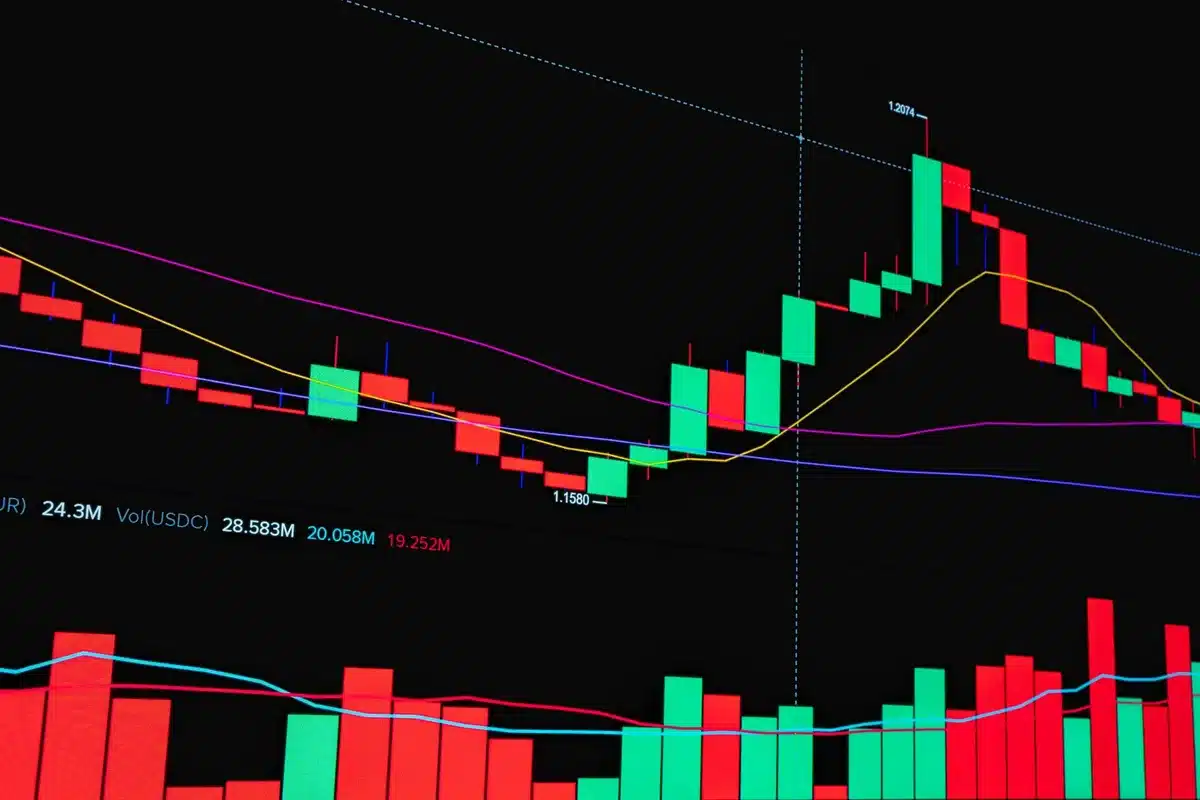
Burry’s warning centers on a specific mechanism: the behavior of volatility-targeting funds. These strategies manage roughly $2 trillion globally, according to analysis of the February 2026 selloff. They work by automatically increasing leverage and equity exposure when market volatility falls below their target, and selling to reduce risk when volatility spikes. When falling volatility encourages these funds to add leverage, the result can be a self-reinforcing cycle that amplifies price swings in both directions.
“Remember, the market going up on falling volatility forces vol-targeting funds to leverage up, and brings leverage from other momentum strategies into play,” Burry explained. The risk, he argues, is that if market conditions reverse suddenly, these automatic selling mechanisms could trigger cascading losses across multiple asset classes simultaneously.
Burry continues to hold short positions—bets that prices will fall—in the iShares Semiconductor ETF, Micron Technology, Nvidia, Caterpillar, Palantir Technologies, Tesla, and Applied Materials. Most of those positions remain profitable, though his Nvidia short has moved against him. He said he would cut his losses if the trades moved decisively against him, adding: “Again, shorting is not for everyone. I must short. Most should not.”
The 1987 Precedent and Modern Leverage
On October 19, 1987—Black Monday—the Dow Jones fell 22.6% in a single day, the largest one-day stock market collapse in history. That crash was driven by a combination of overvaluation, rising interest rates, and portfolio insurance strategies that automatically sold stocks when prices fell, amplifying the decline. The crash spread globally within hours, a remarkable speed for that era.
Today’s market structure poses similar risks, but with far greater speed. An estimated $2 trillion sits in volatility-targeting strategies globally, with another $300 billion in risk parity funds. The February 2026 selloff, which erased roughly $1 trillion from software stocks alone over five trading days, demonstrated how these mechanisms interact. When gold fell 11% on January 31 and triggered margin calls on leveraged positions, selling cascaded into equities, precious metals, and crypto simultaneously. Algorithmic traders, which now account for an estimated 60% of equity trading volume, responded within milliseconds across time zones, transmitting U.S. selling pressure into Asian and European markets in real time.
Margin debt also sits at historically elevated levels. As of December 2025, FINRA-reported margin debt stood at $1.23 trillion, a seventh consecutive record high. Relative to GDP, it reached 3.91%—well above both the dot-com bubble peak of 2.6% and the 2007 pre-crisis peak of 2.5%. When prices fall sharply, portfolios dip below maintenance margin requirements, brokers issue margin calls, and investors must either deposit cash or liquidate positions. That forced selling drives prices lower, triggering more margin calls in a potentially self-reinforcing cycle.
Burry’s bearish stance on semiconductors and artificial intelligence reflects his skepticism of the rally’s foundations. He has argued that AI demand is being fueled by financing arrangements that may prove unsustainable, and that the market’s advance is creating a self-reinforcing cycle where declining volatility encourages systematic investors to increase exposure. His warning does not establish that a crash is imminent, but it highlights risks tied to crowded positioning and leverage that have amplified market moves in recent years.
Sources
- CNBC — Michael Burry’s August 4, 2026 Substack post warning of a possible 1987-type fall and his continued short positions
- Yahoo Finance / GuruFocus — Burry’s warning on rising market leverage and volatility-targeting strategies, S&P 500 closing at 7,737 up 1.9%
- Michael Brenndoerfer — Analysis of the February 2026 selloff, including volatility-targeting fund mechanics, margin debt figures, and algorithmic trading volume
- Federal Reserve and historical sources — Black Monday October 19, 1987 Dow Jones decline of 22.6% and its global propagation










