Quantum computing startup Oratomic has raised $300 million in Series A funding to accelerate development of fault-tolerant quantum computers, with the massive round co-led by ARCH Venture Partners, Spark Capital, and Khosla Ventures.
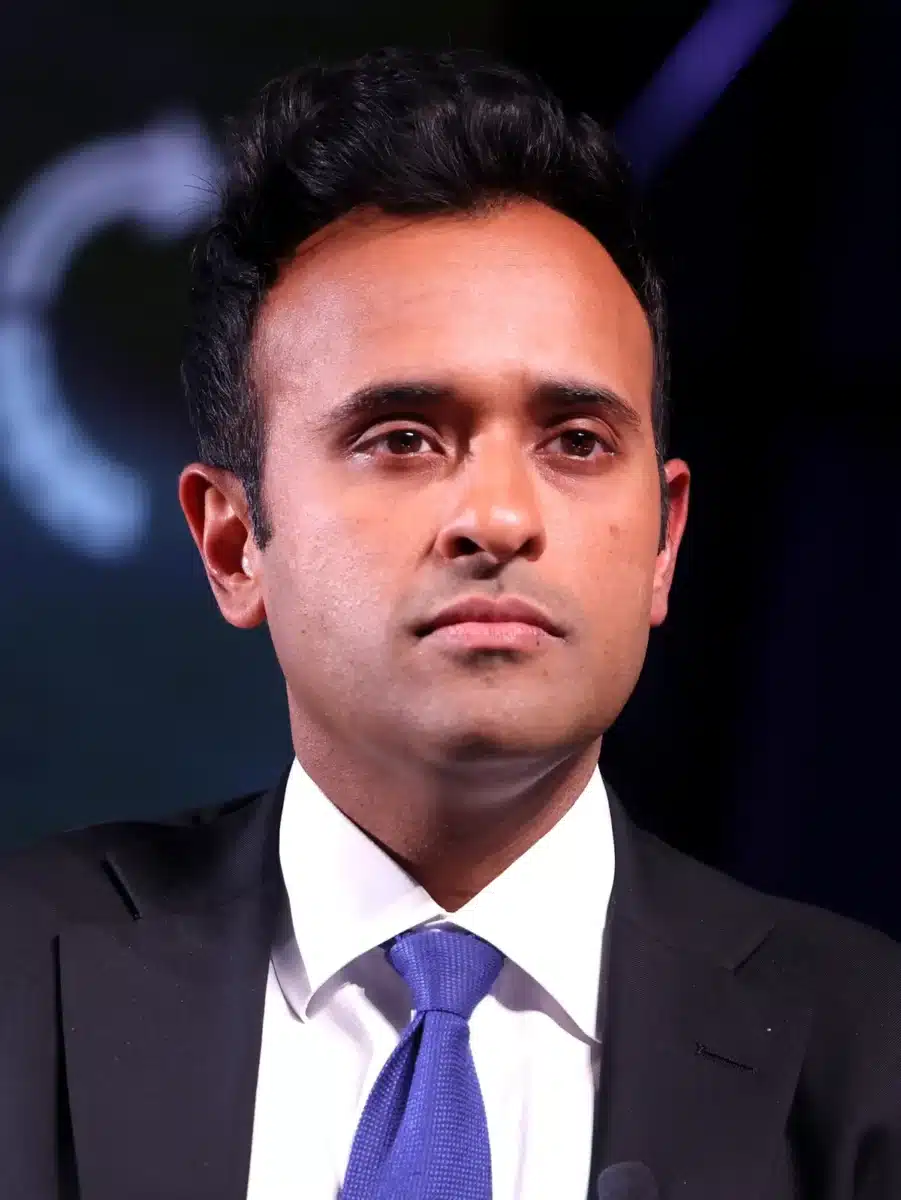
The funding was announced in early July 2026, just four months after the Pasadena-based company emerged from stealth with breakthrough research conducted alongside Caltech scientists. Oratomic’s founding team includes physicists from Caltech, UC Berkeley, Harvard, Amazon, and Google, led by CEO Dolev Bluvstein.
Investor Vinod Khosla characterized the investment as exceptional confidence in the company’s mission. In a post on X, Khosla wrote that Khosla Ventures made “the largest initial investment yet” in Oratomic, comparing it to the firm’s early backing of OpenAI. “On its way to solve Shor’s algorithm, the true symbol of getting to ‘quantum computing’ FIRST,” Khosla added, referencing the quantum algorithm capable of breaking widely used encryption systems.
The company plans to deploy the capital toward high-performance quantum hardware fabrication, accelerating research into fault-tolerant quantum computing architectures, and significantly expanding its physics and hardware engineering teams. Additional investors in the round include Bezos Expeditions, Index Ventures, General Catalyst, Lowercarbon Capital, Bain Capital, and others.
A Breakthrough Path to Practical Quantum Computers
Oratomic’s rapid rise reflects a major shift in quantum computing timelines. When the company launched in March 2026, it published research suggesting that utility-scale quantum computers capable of solving real-world problems could be built with approximately 10,000 to 20,000 reconfigurable neutral-atom qubits—far fewer than the millions previously estimated by many researchers.
The breakthrough, developed with Caltech researchers, challenged conventional assumptions about the resources needed for cryptographically relevant quantum computing. Co-founder Manuel Endres has already demonstrated neutral-atom arrays containing roughly 6,000 trapped atomic qubits in laboratory settings, providing experimental validation for scaling the approach.
Unlike competitors pursuing “noisy intermediate-scale quantum” (NISQ) systems as stepping stones, Oratomic is skipping that phase entirely and targeting fault-tolerant machines directly. Fault-tolerant systems use error correction techniques that allow quantum computations to continue accurately even when individual qubits fail—solving one of the field’s most fundamental obstacles.
“You would have not previously been able to convince any of us to start a quantum computing company, because we just thought it was way too far away,” Oratomic’s CEO Dolev Bluvstein told TechCrunch. “Only when we made this recent breakthrough did we simultaneously all change our minds.”
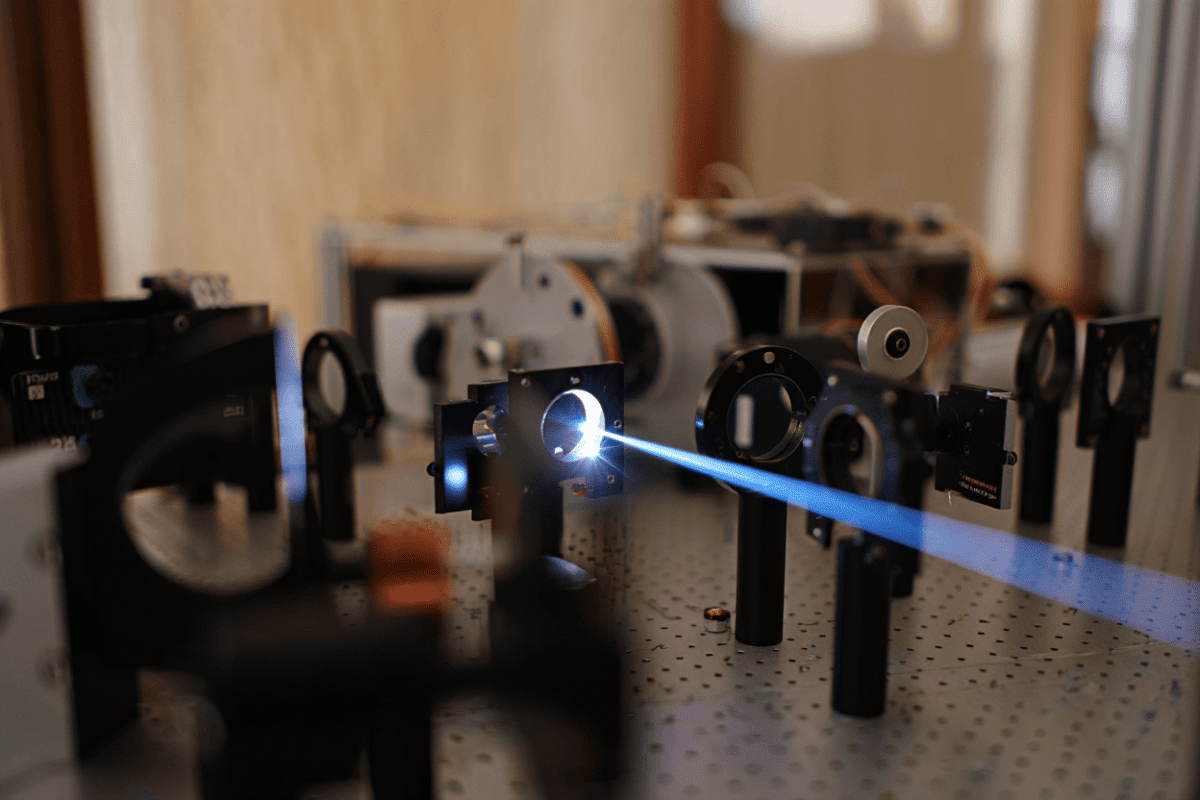
Oratomic’s neutral-atom approach uses lasers acting as optical tweezers to hold individual atoms in place as qubits. Because these atoms can be rearranged during computation, researchers believe they offer greater flexibility for connecting qubits and implementing error correction compared with other quantum architectures.
A Competitive Quantum Funding Landscape
The $300 million Series A arrives amid unprecedented investor enthusiasm for quantum computing. The sector has attracted significant capital in 2025 and 2026, with PsiQuantum raising $1 billion in a Series E round in September 2025 at a $7 billion valuation—the largest single private funding round in quantum computing history. Quantinuum raised $1.68 billion in its June 2026 IPO, while other notable rounds included Photonic’s $200 million Series A in May 2026 and IQM Finland’s $372 million financing in August 2025.
Oratomic’s funding is among the largest Series A rounds in the quantum sector, underscoring investor confidence in the neutral-atom modality and the company’s specific technological approach. The timing also reflects broader market momentum: quantum computing startups secured $4.68 billion across 30 deals from Q1 2025 to Q1 2026, according to market data, as breakthroughs at major research institutions accelerated commercial interest.
The company has stated its goal to build a fault-tolerant quantum computer capable of commercial utility before the end of the decade. If successful, such a system could accelerate breakthroughs in chemistry, materials science, artificial intelligence, and optimization—fields where quantum computers could solve problems beyond the reach of classical machines.
Oratomic has also emphasized the cybersecurity implications of its work. A sufficiently capable fault-tolerant quantum computer running Shor’s algorithm could eventually break widely used public-key encryption systems, prompting governments and standards organizations worldwide to begin transitioning to post-quantum cryptography, with many migration plans targeting completion by 2035.
Sources
- The Quantum Insider — Oratomic’s Series A announcement, lead investors, and company mission
- TechCrunch — Funding details, CEO quotes, competitive context, and neutral-atom technology explanation
- Tech in Asia — Confirmation of ARCH, Khosla, and Spark Capital as co-leads
- The Funding Letter — Complete investor list and round structure
- Caltech — Breakthrough research on utility-scale quantum computers with 10,000 qubits
- Oratomic official announcement — Company use of funds and founding team details