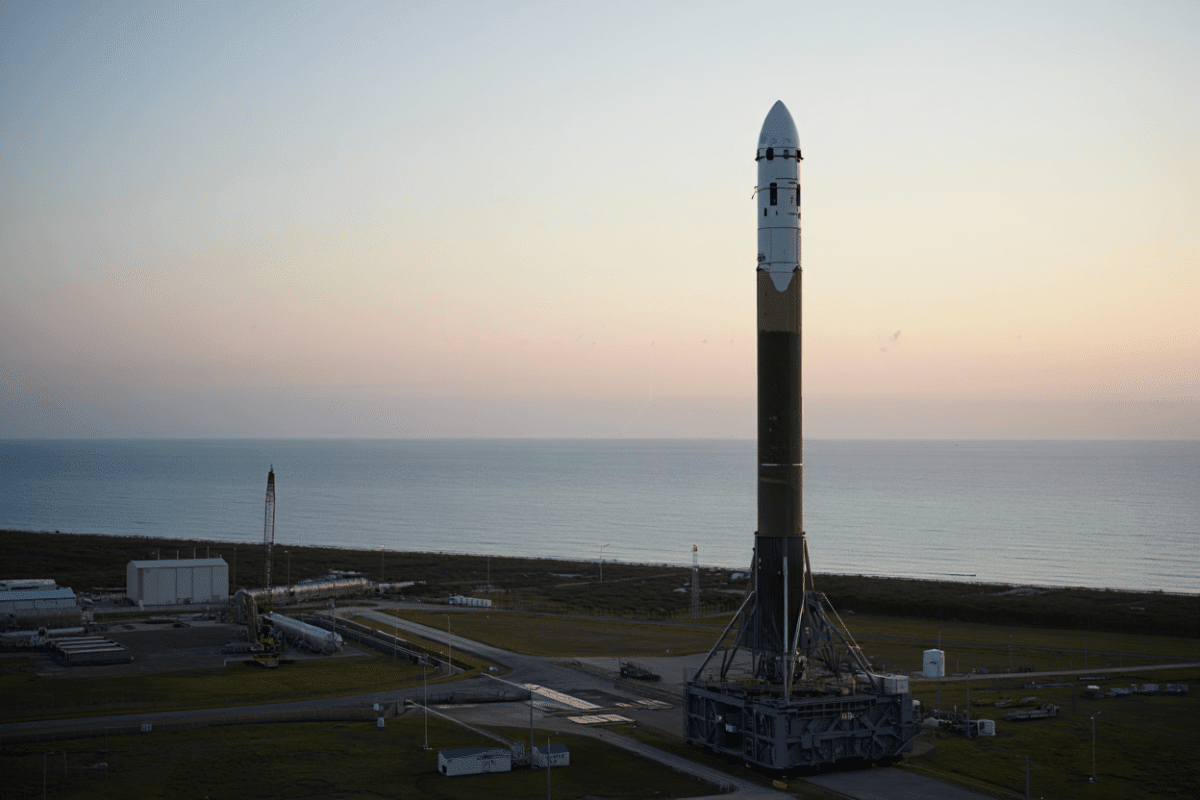
SpaceX is launching its most-flown Falcon 9 booster for a record-breaking 36th flight early Thursday morning from Space Launch Complex 40 at Cape Canaveral Space Force Station in Florida. Liftoff is scheduled for 5:25 a.m. EDT, with the rocket carrying 29 Starlink satellites to low Earth orbit as part of the Starlink 10-42 mission.
The booster, designated B1067, holds the distinction of being the first orbital-class rocket ever to reach 36 flights. No booster in history has flown this many times, according to spaceflight tracking sources. The achievement underscores SpaceX’s pioneering work in rocket reusability—a capability that has fundamentally transformed the economics of space launch.
B1067 began its operational life in June 2021, flying its first mission as part of NASA’s Commercial Resupply Services-2 contract. Over five years, the booster has gone on to support Crew-3 and Crew-4 human spaceflight missions alongside 24 batches of Starlink satellites. The booster’s longevity far exceeds its original design specifications; SpaceX initially estimated a useful life of 10 flights per booster, yet B1067 has now tripled that benchmark.
About eight minutes after liftoff, B1067 will target a landing on the drone ship “A Shortfall of Gravitas” positioned in the Atlantic Ocean. If successful, this will mark the 160th landing for that vessel and the 635th booster landing in SpaceX’s history. Weather forecasters predict a 90 percent chance of favorable conditions Thursday morning, with light southwesterly winds and only minor concerns from cumulus cloud development.
Reusability and the New Economics of Space
The reusability demonstrated by boosters like B1067 has had profound economic consequences for the space industry. By recovering and refurbishing the first stage—the most expensive component of a rocket—SpaceX has drastically reduced launch costs. Research from NSTXL indicates that using a reusable rocket can be up to 65 percent cheaper than launching a traditional expendable vehicle. More specifically, reusing a booster just 10 times can save more than $46 million per launch compared to building a new rocket for every mission, according to analysis by spaceflight economists.
The cost-per-kilogram to orbit has plummeted as a result. Falcon 9 has dropped from approximately $10,000 per kilogram to about $2,500 per kilogram, and some estimates place current costs below $2,000 per kilogram as reuse improves. This dramatic reduction in launch costs has enabled SpaceX to deploy its Starlink mega-constellation—now comprising more than 10,700 satellites in orbit—and has allowed the company to reach profitability, fundamentally reshaping the commercial space sector.
Falcon 9 is the world’s first orbital-class reusable rocket, according to SpaceX. The booster’s success has demonstrated that rockets need not be discarded after a single flight, a principle that was once considered technically impossible. With B1067 now approaching the all-time reuse record set by NASA’s space shuttle orbiter at 39 flights, the achievement highlights both how far reusable spaceflight has advanced and how much further the technology may yet go.
Sources
- Spaceflight Now — Launch details, booster history, drone ship information, and weather forecast
- Space.com — Confirmation of 36th flight record and shuttle comparison
- NSTXL — Cost savings data on reusable vs. expendable rockets
- PatentPC — Cost-per-kilogram figures for Falcon 9 reusability
- TalkOfTitusville.com — Confirmation that B1067 holds the orbital rocket reuse record
- SpaceX official website — Falcon 9 description as world’s first orbital-class reusable rocket