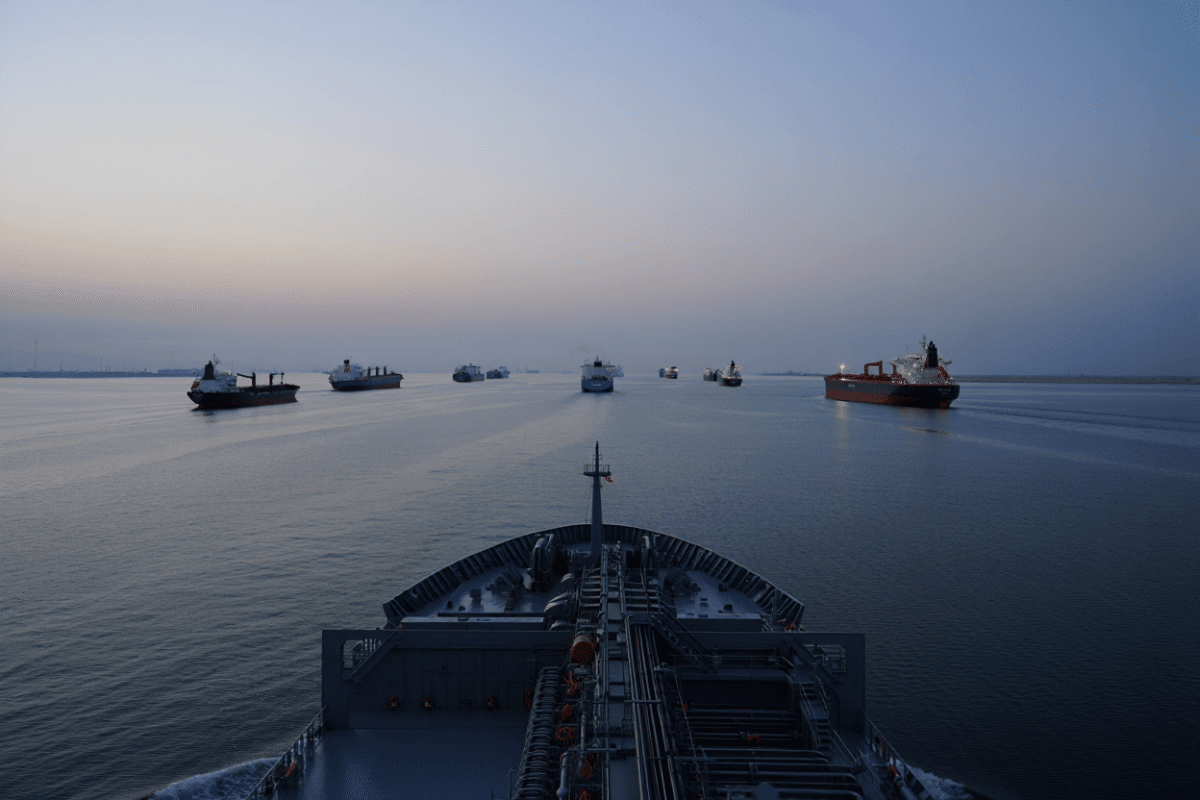
Strait of Hormuz shipping traffic has rebounded following a U.S.-Iran agreement to stand down after days of escalating strikes tested a fragile ceasefire, with the two sides agreeing to pause military operations and allow vessels to resume transit through the critical waterway.
The U.S. and Iran signed an initial deal on June 17, 2026, that calls for reopening the Strait of Hormuz to commercial traffic without tolls for 60 days, according to details released by both countries. The agreement waives U.S.-backed sanctions, immediately allowing Iran to sell its oil freely in a major concession from Washington.
In the week following the ceasefire announcement, 125 transits were recorded between June 15-21, marking the highest weekly total since the war began in late February, according to CNBC reporting. Tankers rushed to move stored Gulf crude before the 60-day truce window expires. On June 24, AXS Marine recorded 62 commercial vessel crossings, the highest single-day count since the war started, though only equivalent to 53% of the traffic on the same day last year.
The recovery proved fragile. On June 24, the Ever Lovely, a Singapore-flagged Evergreen container ship, was struck on its starboard side by a projectile off the Omani coast. A U.S. official said the Islamic Revolutionary Guard Corps had carried out the strike, marking the first attack on a cargo vessel since the ceasefire took effect. The incident sent some tankers into reverse and halted the United Nations’ evacuation plan.
The Stand-Down and Renewed Negotiations
Following the weekend exchange of strikes, the U.S. and Iran agreed to pause their attacks and allow vessels to move through the Strait of Hormuz, according to a U.S. official statement. A Washington Post report on June 28 stated that the U.S. official said attacks would stop “for now,” though Iran had not publicly confirmed the agreement and insisted it had a right to full control of the Strait of Hormuz.
The stand-down came after Iranian strikes on U.S. military sites in Bahrain and Kuwait, followed by U.S. strikes on Iranian targets, according to Reuters. The two sides agreed to halt attacks and renew talks, with the U.S. official saying both countries had agreed to pause their operations.
The agreement extends the ceasefire announced on June 15, when U.S. and Iranian officials reportedly reached a preliminary framework aimed at extending the ceasefire and reopening the Strait of Hormuz, as well as ending hostilities in Lebanon. The initial deal calls for a permanent end to hostilities and starts a 60-day negotiating clock to reach a final deal on the future of Iran’s nuclear program, according to AP News.
Shipping Uncertainty Persists
Despite the rebound in transits, shipping companies face a difficult choice: take the risk to transit or hold back and potentially cede ground to rivals willing to take that risk. Shipowners are navigating two competing authorities with no agreed rules, with a northern corridor under Iranian control and a southern passage through Omani waters.
Tim Huxley, CEO of Mandarin Shipping, told CNBC that uncertainty over safe navigation guidelines remains a major barrier to recovery. “Until there is a more concrete set of guidelines on safe navigation, people are going to be very reticent to go through,” he said. Insurance premiums remain very high on ships and cargoes going through the straits, he added.
War-risk premiums have shot up from 0.05% to over 0.7% of hull value per transit, according to analysis cited by CNBC. One vessel seizure doesn’t just cost the cargo—it costs the client relationship, insurance renewal, and board confidence. The Strait of Hormuz typically handles around 20% of the world’s oil traffic and is recognized as one of the world’s most critical energy chokepoints.
Aristidis Alafouzos, CEO of Okeanis Eco Tankers Corp, told CNBC that he doesn’t expect the June 24 attack on a ship in the Gulf of Oman to “significantly change” the trend of transits through the waterway. “We’ve seen a large increase, especially on the crude oil passages, and I think this is set to continue,” he said. However, he noted that Saudi Arabia has not yet resumed exports from inside the Arabian Gulf, with everything coming from Yanbu in the Red Sea.
Sources
- CNBC — Shipping traffic rebound data; 125 transits June 15-21; 62 vessel crossings June 24; Ever Lovely attack details; war-risk insurance premiums; Tim Huxley quote; Aristidis Alafouzos quote
- The Washington Post — U.S. official statement on stand-down; Iran’s lack of public confirmation; Iran’s insistence on control of Strait
- Reuters — Iranian strikes on U.S. military sites; U.S. strikes on Iranian targets; agreement to halt attacks and renew talks
- AP News — June 17 agreement details; sanctions waivers; 60-day negotiation timeline; nuclear program talks
- DW.com — U.S. official statement on pausing attacks and allowing vessels through Strait of Hormuz