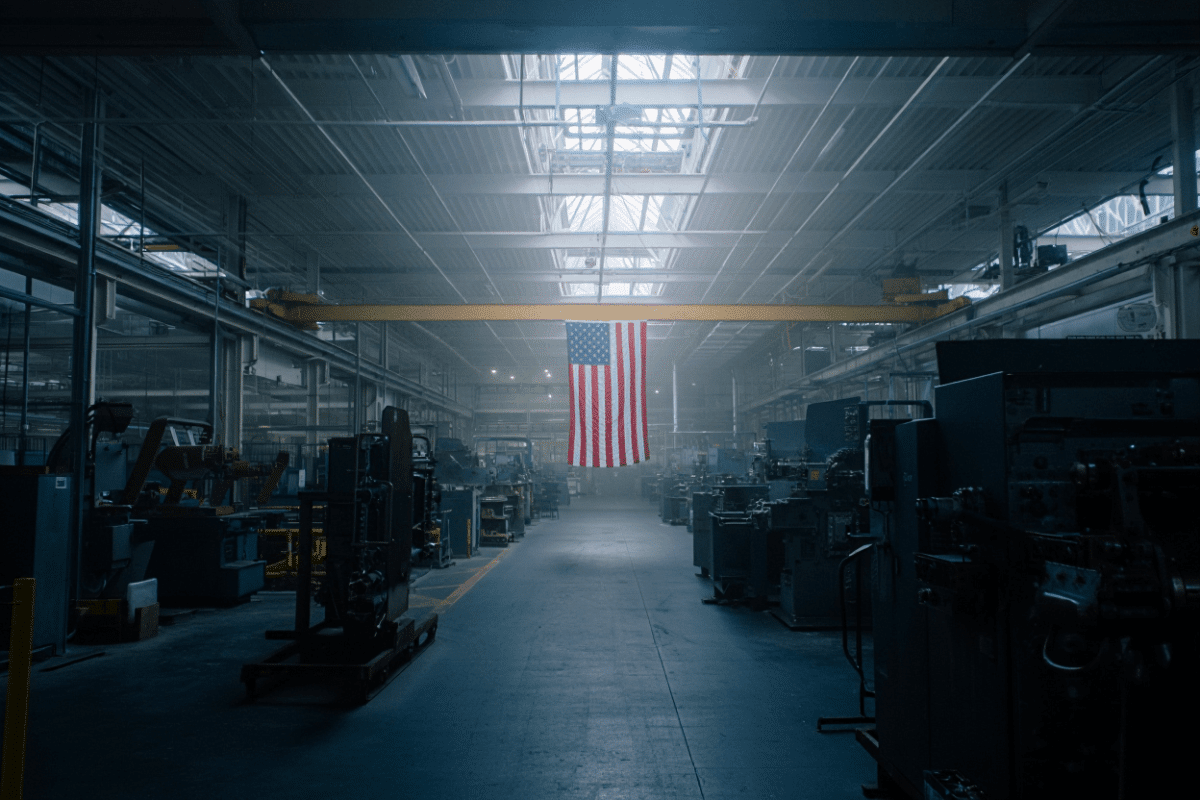
Treasury Secretary Scott Bessent has made clear that his vision for the American economy rejects the notion that cheap goods and consumer access define prosperity, instead calling for a rebalancing toward Main Street businesses and stable, well-paying jobs. In a series of high-profile speeches this spring, Bessent has articulated a philosophy of “economic statecraft” that prioritizes domestic manufacturing capacity and supply chain resilience over low-cost consumption.
In a March 2025 speech to the Economic Club of New York, Bessent stated directly: “Access to cheap goods is not the essence of the American dream.” He argued that the American dream is instead rooted in stable jobs, upward mobility, affordable housing, education, health insurance, and economic security—not the ability to purchase inexpensive imports.
This philosophy gained fuller expression in Bessent’s May 29, 2026 address at the Reagan National Economic Forum, titled “While America Slept.” There, he warned that decades of prioritizing cheap goods and “just in time” supply chains had left the United States strategically vulnerable. “In reducing economics to consumption, we forgot production,” Bessent said, arguing that the nation had allowed industrial capacity to erode in states like Michigan, Ohio, and Pennsylvania in pursuit of lower consumer prices.
The Treasury Secretary emphasized that manufacturing is more than economic output. “It is a reservoir of practical capability: engineers and welders, tool-and-die makers and logistics networks, plant managers and workers who know how to solve problems on the factory floor,” he stated. When that ecosystem is strong, he argued, a nation can adapt quickly to crises; when hollowed out, adaptation becomes slower and more costly.
On June 23, 2026, Bessent delivered another major address at The Economic Club of New York, laying out five core principles of what he calls economic statecraft—the disciplined use of American economic power in service of national sovereignty. The first principle is that “economic security begins with national capacity.” Drawing on Alexander Hamilton’s writings, Bessent argued that every nation “ought to endeavor to possess within itself all the essentials of national supply.” He listed semiconductors, AI, quantum computing, advanced manufacturing, shipbuilding, critical minerals, and pharmaceuticals as industries where America must lead.
The fifth and most important principle, according to Bessent, is that “economic statecraft must serve the American people.” He stated that the purpose of this approach is to “connect national power with household prosperity,” creating an economy in which working families are “not merely consumers of what the world produces, but participants in what America builds.” This directly challenges the model of a consumer-driven economy built on access to cheap imports.
Bessent’s rhetoric reflects a broader shift in Trump administration economic policy away from the post-Cold War consensus that favored global trade and consumer access to low-cost goods. His speeches emphasize that the pursuit of cheaper goods abroad came at the cost of American manufacturing jobs, community stability, and national resilience. This represents a significant reorientation of Treasury Department messaging toward industrial policy and domestic production as central to American prosperity and security.
Sources
- U.S. Department of the Treasury — Official press releases containing Treasury Secretary Scott Bessent’s remarks at the 2026 Reagan National Economic Forum (May 29, 2026) and at The Economic Club of New York (June 23, 2026).
- CNBC — March 6, 2025 report on Bessent’s speech to the Economic Club of New York, including his statement that “access to cheap goods is not the essence of the American dream.”
- Fox Business — June 24, 2026 report on Bessent’s five principles for Trump administration economic statecraft.