
The S&P 500 fell 1.2% on July 23 as oil surged past $100 a barrel amid escalating Middle East tensions, dragging the broader market lower despite gains in energy and defense stocks.
Benchmark Brent crude climbed 4.7% to $100.60 per barrel after President Donald Trump threatened to bomb Iranian infrastructure and Yemen’s Houthi militant group claimed attacks on two Saudi oil tankers in the Red Sea, according to TheStreet. Iran fired four missiles toward Jordan on Thursday, three of which were intercepted, while U.S. strikes on Iran killed two people at the Shalamcheh border crossing with Iraq, Iranian state media reported.
The market’s decline reflected a sharp divergence: while energy stocks surged, broader equities stumbled as investors weighed the economic impact of higher crude prices. American Airlines fell 7.4% as the carrier warned that rising jet fuel costs could push it to steep losses for the year, with adjusted earnings guidance for the current quarter slashed to between a loss of 70 cents and 10 cents per share, below the 28 cents Wall Street expected.
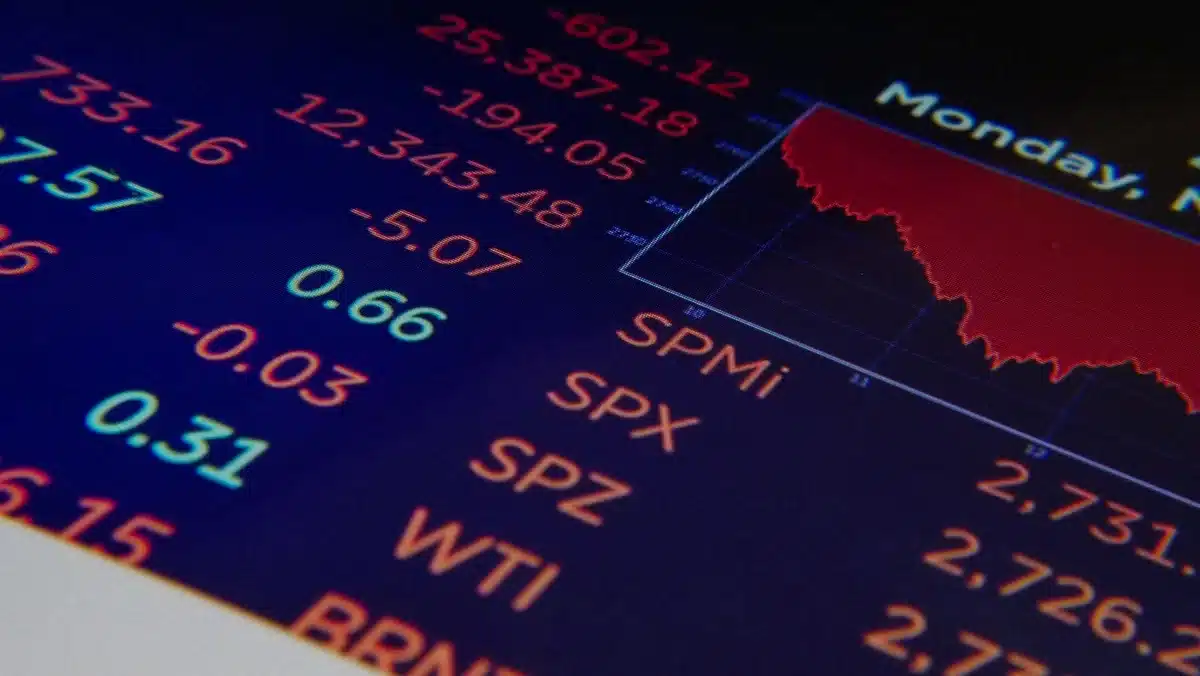
The broader sell-off also reflected concerns about inflation rippling through the supply chain. Bank of America CEO Brian Moynihan warned that businesses are worried about “the cost of goods that’s coming through the pipeline,” as higher energy costs feed into plastics, materials, manufacturing, and transportation, according to TheStreet.
Tech stocks bore additional pressure unrelated to oil. Tesla tumbled 13.3% and Alphabet sank 6.8% after both reported second-quarter earnings Wednesday revealing heavy artificial intelligence spending and negative free cash flow. Tesla CEO Elon Musk described 2026 as a “massive capex year,” while Alphabet raised its forecast for 2026 capital expenditures to as much as $205 billion. The Nasdaq Composite fell 2.2% on the combined weight of tech earnings disappointment and geopolitical uncertainty.
The oil price surge echoed patterns from earlier in 2026. When Iran conflict first escalated in March, oil prices breached $100 a barrel for the first time since Russia’s invasion of Ukraine, according to The Guardian. That earlier spike also weighed on equities, though the relationship between oil and stocks varies: energy companies and defense contractors tend to benefit from supply disruptions and geopolitical risk, while airlines, manufacturers, and consumer-facing businesses face margin pressure.
Defense and industrial stocks capitalized on the tension. Lockheed Martin surged 10.8% following strong second-quarter earnings and a record order backlog, while Cleveland-Cliffs climbed 12.2% on improved steel demand guidance. These gains underscored how a single shock — in this case, renewed Middle East conflict — can produce winners and losers within the same market session.
Sources
- TheStreet — S&P 500 close, oil prices, American Airlines guidance, Alphabet and Tesla earnings, Lockheed Martin and Cleveland-Cliffs performance, Bank of America CEO commentary on energy costs and inflation
- GuroFocus — confirmation of S&P 500 decline on July 23, 2026
- The Guardian — oil price history during March 2026 Iran conflict