Tesla reported record Q2 2026 revenue of $28.24 billion, beating consensus by $1.92 billion, but the earnings call revealed a company in the midst of a costly pivot toward AI and robotics that is squeezing profitability and burning cash.
The company posted adjusted earnings per share of $0.33, missing Wall Street’s consensus of $0.50 to $0.53 by roughly 35 percent. That shortfall overshadowed the revenue beat, sending shares down roughly 4 percent in after-hours trading on July 22.
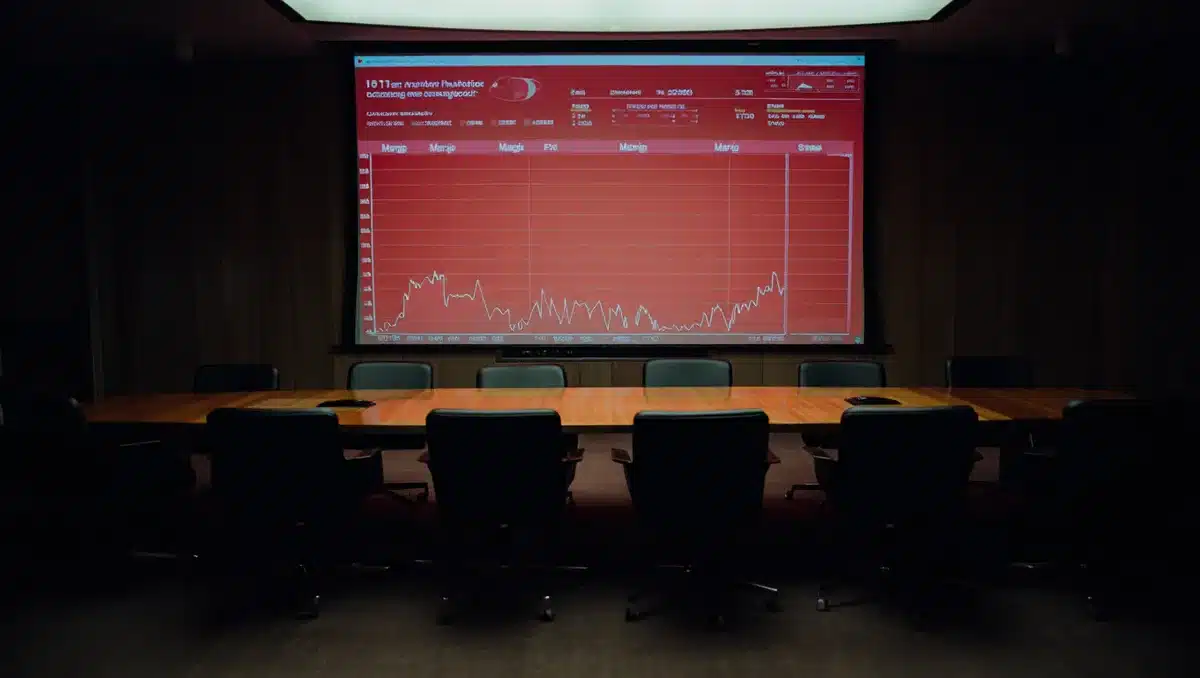
Revenue growth of 26 percent year-over-year masked severe margin compression. Operating income collapsed 57 percent to $398 million, dragging the operating margin down to just 1.4 percent from 4.1 percent a year earlier, according to CNBC reporting. Gross margin fell to 16.8 percent from 17.2 percent, hurt by lower average selling prices per vehicle and a sharp decline in regulatory credit revenue as the company sold cheaper Model 3 and Y variants after discontinuing the premium Model S and X.
The bigger shock was free cash flow: Tesla swung to negative $1.1 billion in the quarter, a reversal from positive $146 million a year ago. Capital expenditures soared 142 percent to $5.79 billion, driven by Elon Musk’s aggressive push into AI chips, solar manufacturing, battery material production, and semiconductor fabrication. Chief Financial Officer Vaibhav Taneja told investors that capex would exceed $25 billion for the full year 2026, the company’s largest investment period on record.
Operating expenses climbed 47 percent to $4.35 billion, fueled by research and development spending on artificial intelligence and the Optimus humanoid robot. Musk acknowledged on the call that manufacturing Optimus would be the hardest scaling challenge Tesla has ever faced, with no existing supply chain for its components.
The earnings miss mirrors a pattern from Tesla’s recent history. In Q2 2025, the company also beat on revenue but missed on profit, with operating income falling 42 percent year-over-year and operating margin collapsing to 4.1 percent. At that time, Musk warned of “a few rough quarters” ahead as the company navigated rising costs and competitive pressure from Chinese automakers like BYD and Xiaomi.
Tesla’s shift in strategy is deliberate. The company has moved away from maximizing automotive profit margins toward building what Musk frames as a broader ecosystem of energy, autonomous vehicles, and AI. On the earnings call, he noted overlaps between Tesla and SpaceX, including shared AI development through xAI and planned use of SpaceX’s Starlink for Cybercab connectivity. When asked if the two companies might merge, Musk said it was not appropriate to discuss on an earnings call but acknowledged “more and more overlap, especially with Terafab.”
The Cybercab, Tesla’s two-seater driverless vehicle, is in early production, though Musk emphasized caution: “If we injure even one person, it will be worldwide headline news, and regulators will immediately clamp down on our activities.” Full Self-Driving subscriptions grew 56 percent to 1.48 million, but the company is still lagging competitors like Waymo and Baidu’s Apollo Go in deploying truly autonomous ride-hailing service.
Investors have shown some tolerance for margin pressure in pursuit of long-term ecosystem growth, but the scale of Q2’s cash burn and the breadth of capex guidance suggest Tesla is betting heavily on breakthroughs in AI and robotics to justify near-term profit sacrifice. Whether that gamble pays off will likely dominate Tesla earnings calls for quarters to come.
Sources
- CNBC — Tesla Q2 2026 earnings report with detailed operating margin, capex, and cash flow figures.
- Yahoo Finance — Tesla Q2 2026 revenue and adjusted EPS beat/miss data.
- Electrek — Operating profit and regulatory credit revenue decline details.
- Crypto Briefing — Free cash flow negative $1.1 billion figure and AI/robotics investment context.
- Investing.com — Operating expense surge and capex guidance for full-year 2026.
- Business Insider — Analyst reaction to margin miss and stock decline.