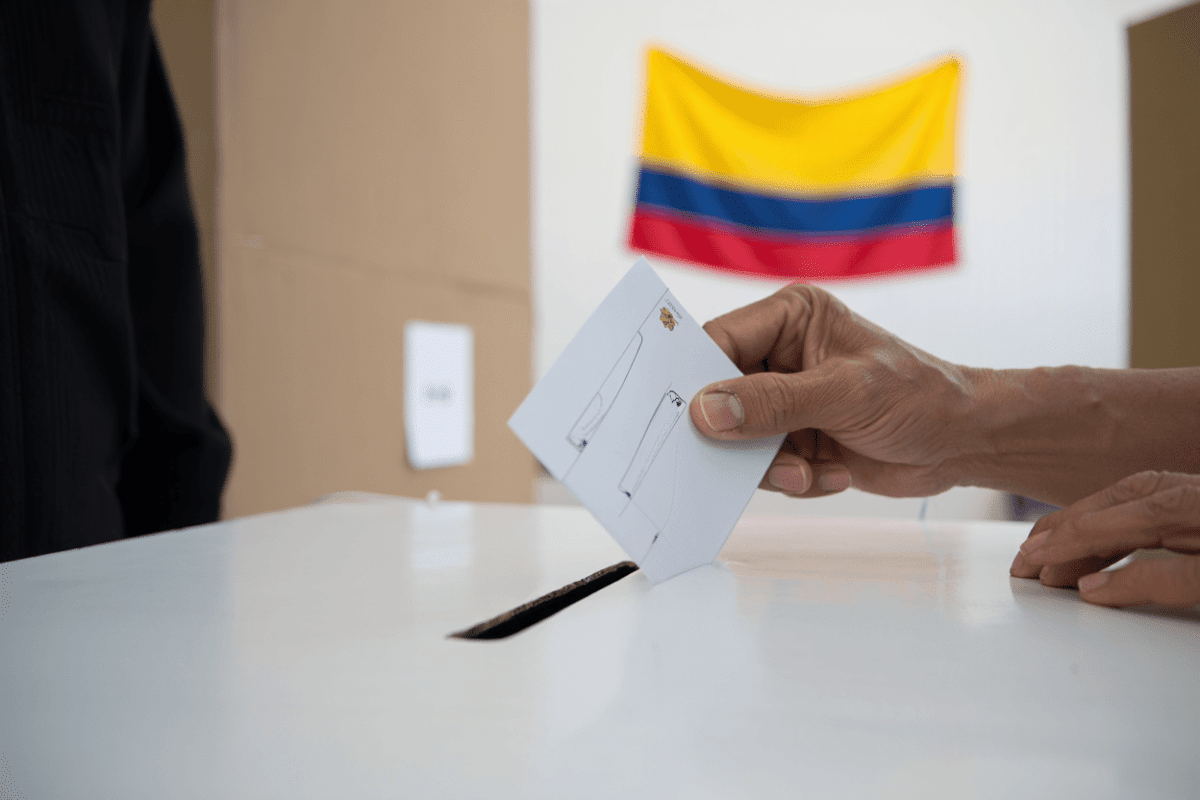
Colombia held a presidential runoff election on June 21, 2026, with early partial results showing far-right outsider Abelardo de la Espriella leading leftist senator Iván Cepeda in a race expected to determine the country’s approach to its decades-long armed conflict.
Polls had consistently shown de la Espriella, a Trump-admiring lawyer and millionaire businessman, leading ahead of the runoff. The Trump-backed candidate has vowed to abandon President Gustavo Petro’s “total peace” plan—a strategy of negotiating the disarmament of all criminal organisations—and instead return to full-scale military confrontation with armed groups, according to The Guardian.
De la Espriella’s opponent, Cepeda, was the main architect of the “total peace” initiative and has pledged to continue it with “necessary changes.” Cepeda led polls throughout most of the campaign but lost the first round of voting on May 31 and has since struggled to attract centrist voters.
The election represents a dramatic shift in Latin American politics. Colombia has been locked in armed conflict for six decades, a struggle that has left more than 10 million people—roughly one in five Colombians—as victims of killings, kidnappings, forced displacement, and other violence, according to The Washington Post. A landmark peace agreement with the Revolutionary Armed Forces of Colombia (FARC) was signed in November 2016, but violence has surged in recent years, with the past year marking the most violent period since that accord.
De la Espriella’s rise mirrors broader Latin American trends favoring far-right, anti-establishment candidates promising tough-on-crime solutions. The election comes as other right-wing leaders—Keiko Fujimori in Peru and José Antonio Kast in Chile—have gained ground in the region. If de la Espriella wins, only Mexico, Brazil, Uruguay, and Guatemala would remain under leftist governments in South America.
Sandra Borda Guzmán, an associate professor of political science at Los Andes University in Bogotá, told The Guardian that de la Espriella successfully tapped into two global trends: presenting himself as an anti-establishment “outsider” and promising quick solutions to violence. He has pledged to “capture or kill” 10 major narcoterrorist and organised crime leaders within his first three months in office, though he later appeared to backtrack on his promise to solve the security crisis in 90 days.
The runoff has exposed deep polarisation over how to handle Colombia’s violence. Victims of the conflict are split: some, like those who suffered state violence during past military offensives, fear a de la Espriella presidency could resurrect extrajudicial killings. Others, traumatised by guerrilla kidnappings and recent armed group resurgence, believe only aggressive military action can restore order. Preliminary results are expected to emerge in the coming hours, with official scrutiny taking approximately two more days.
Sources
- The Guardian — Reported that de la Espriella has vowed to abandon “total peace” and return to military confrontation; confirmed the runoff election date and candidate positions on armed conflict.
- The Washington Post — Provided context on Colombia’s six decades of armed conflict, the 10 million victims, and the 2016 FARC peace agreement; documented the surge in violence since 2016.
- Reuters — Confirmed de la Espriella’s military crackdown platform and Cepeda’s dialogue-focused approach.
- Al Jazeera — Confirmed the runoff matchup and the policy contrast between candidates.
- AP News — Reported on the polarisation in Colombian society over conflict resolution approaches and victim perspectives.