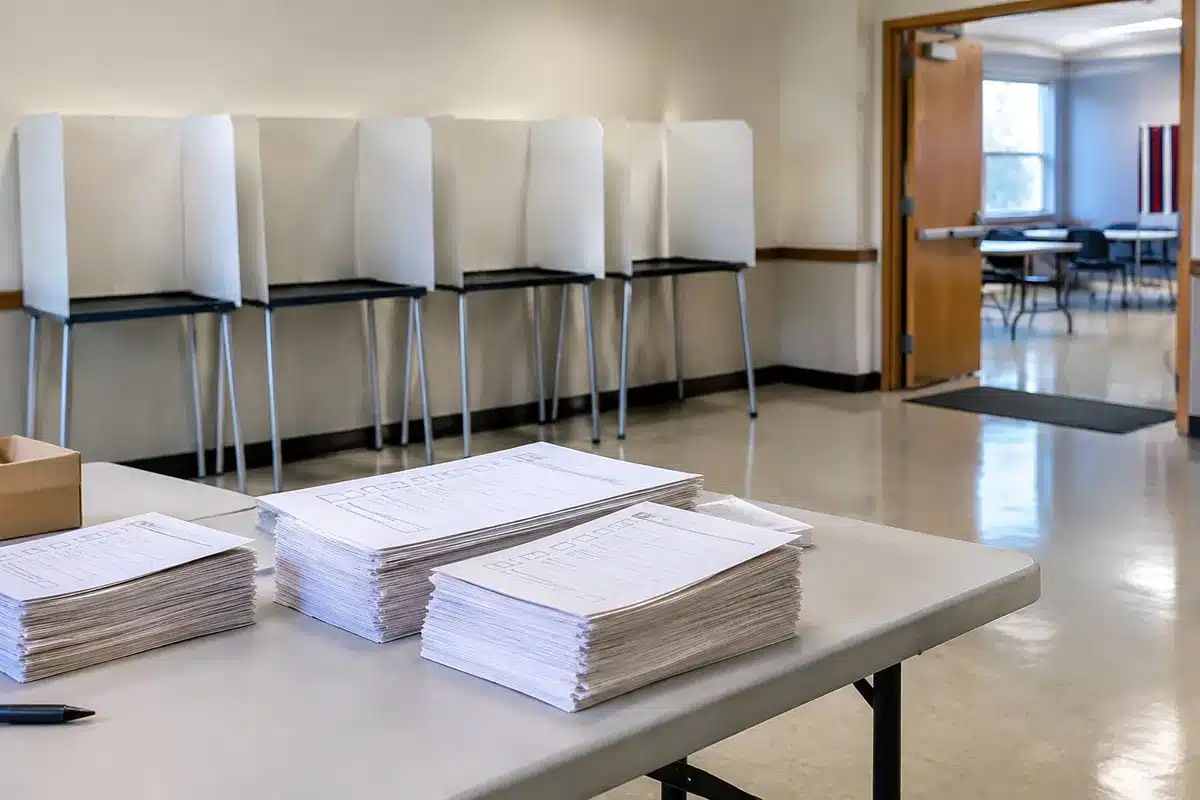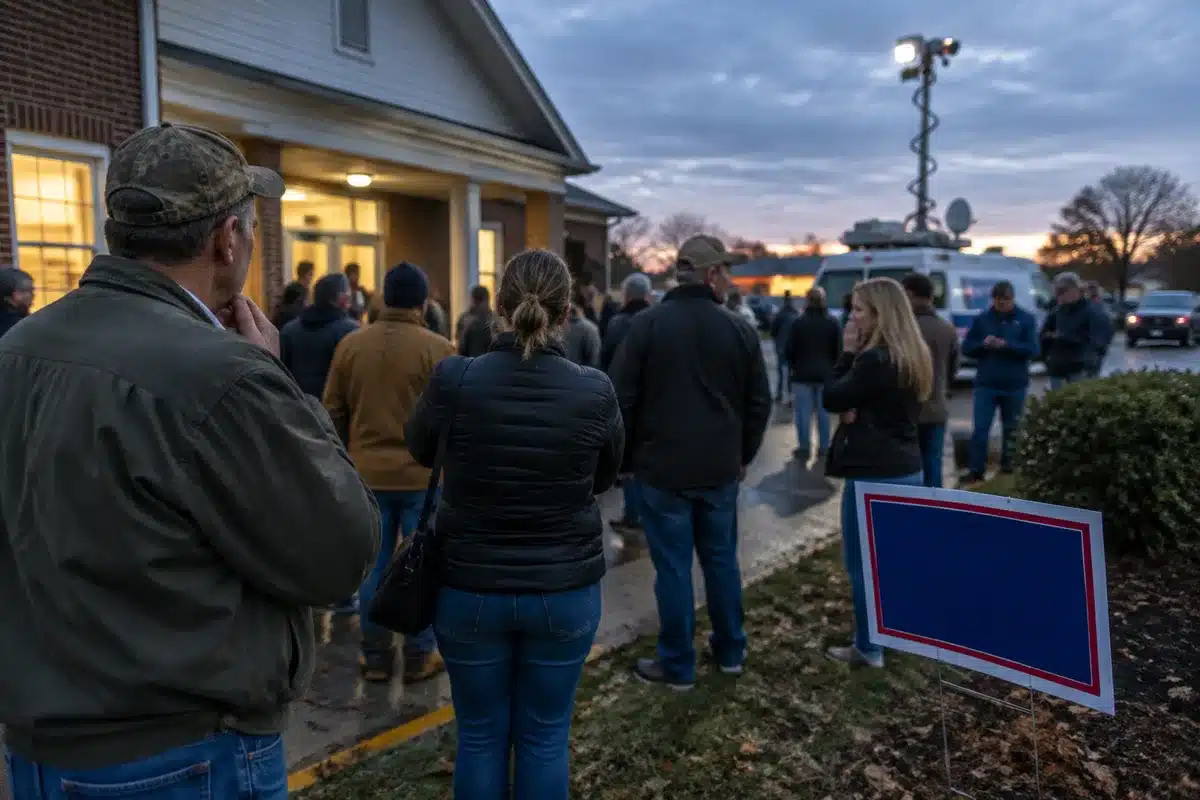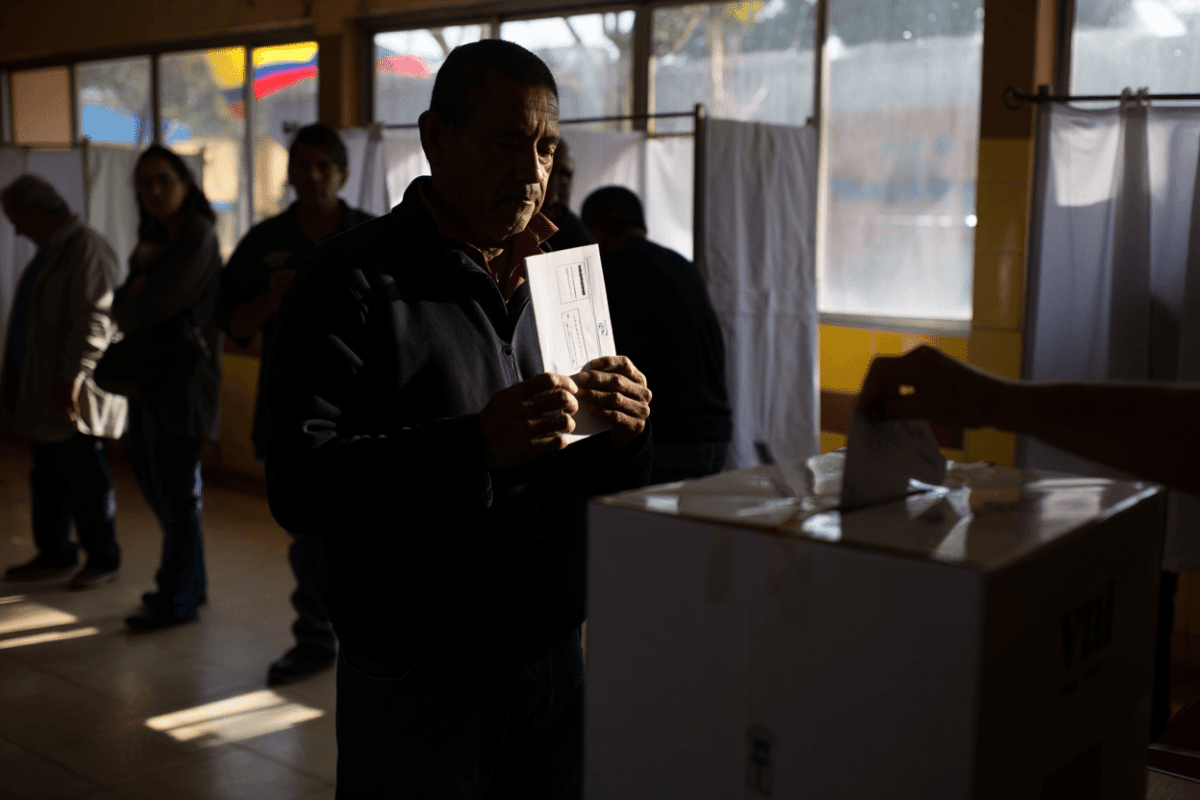
Colombia held a tight presidential runoff today between leftist senator Iván Cepeda and conservative businessman Abelardo de la Espriella, two candidates with starkly opposing visions for tackling the country’s escalating violence and insecurity. The June 21 vote pitted Cepeda, an ally of outgoing President Gustavo Petro, against de la Espriella, a right-wing outsider endorsed by U.S. President Donald Trump.
De la Espriella finished first in the May 31 first round with 43.7 percent of the vote, edging out Cepeda’s 41 percent, according to official results certified by Colombian authorities. The narrow margin set up today’s runoff after no candidate secured the majority required to win outright.
Insecurity has dominated voters’ minds throughout the campaign. Colombia’s six decades of conflict between armed groups, the state and cartels has killed hundreds of thousands of people, and illegal armed groups have roughly doubled their membership in the last five years, according to reporting from the BBC. These include Revolutionary Armed Forces of Colombia (FARC) dissident factions, the National Liberation Army (ELN), and the Clan del Golfo, who have expanded their control of rural areas key to drug trafficking and illegal mining.
De la Espriella has promised a heavy-handed approach, proposing to build 10 mega-prisons and pursue a tough military crackdown against armed groups, saying he has the “balls” to take them on. His strategy echoes policies pursued by El Salvador’s President Nayib Bukele, which have lowered homicide rates but have fueled accusations of human rights abuses. Cepeda, by contrast, wants to carry on Petro’s fraught “total peace” strategy by negotiating pacts with guerrillas and criminal gangs. That strategy took until Thursday to see the first armed group—one with about 100 members—give up its weapons and begin reintegration into civilian life, according to AP reporting, though Colombia’s illegal groups have more than 27,000 members.
Forced displacement has surged as violence has escalated. According to BBC reporting, displacement rose 300 percent between 2024 and 2025, driven by rising cocaine production, territorial voids left after the FARC demobilized in 2016, and what government officials describe as a failure of the current peace strategy. A brutal offensive between the ELN and FARC dissidents near the Venezuela-Colombia border last year displaced tens of thousands of people.
Trump’s endorsement of de la Espriella marked a significant intervention in the race. Trump said the election would determine Colombia’s relationship with the United States, adding that “if Abelardo wins…[Colombia] will have the total support and strength of the United States behind him,” and called Cepeda a “radical left Marxist,” according to BBC reporting. The endorsement came as the U.S. takes a more interventionist stance toward criminal groups in Latin America.
Beyond security, the two candidates offered differing solutions for Colombia’s struggling health system, ballooning public debt, and entrenched corruption. More than 41 million people were eligible to vote, with polls remaining open until 4 p.m. local time.
Sources
- AP News — first-round results, candidate platforms, security approaches, and “total peace” strategy details
- BBC News — insecurity statistics, displacement figures, armed group membership data, and voter concerns
- Reuters — election overview and candidate positioning
- Al Jazeera — candidate profiles and campaign details