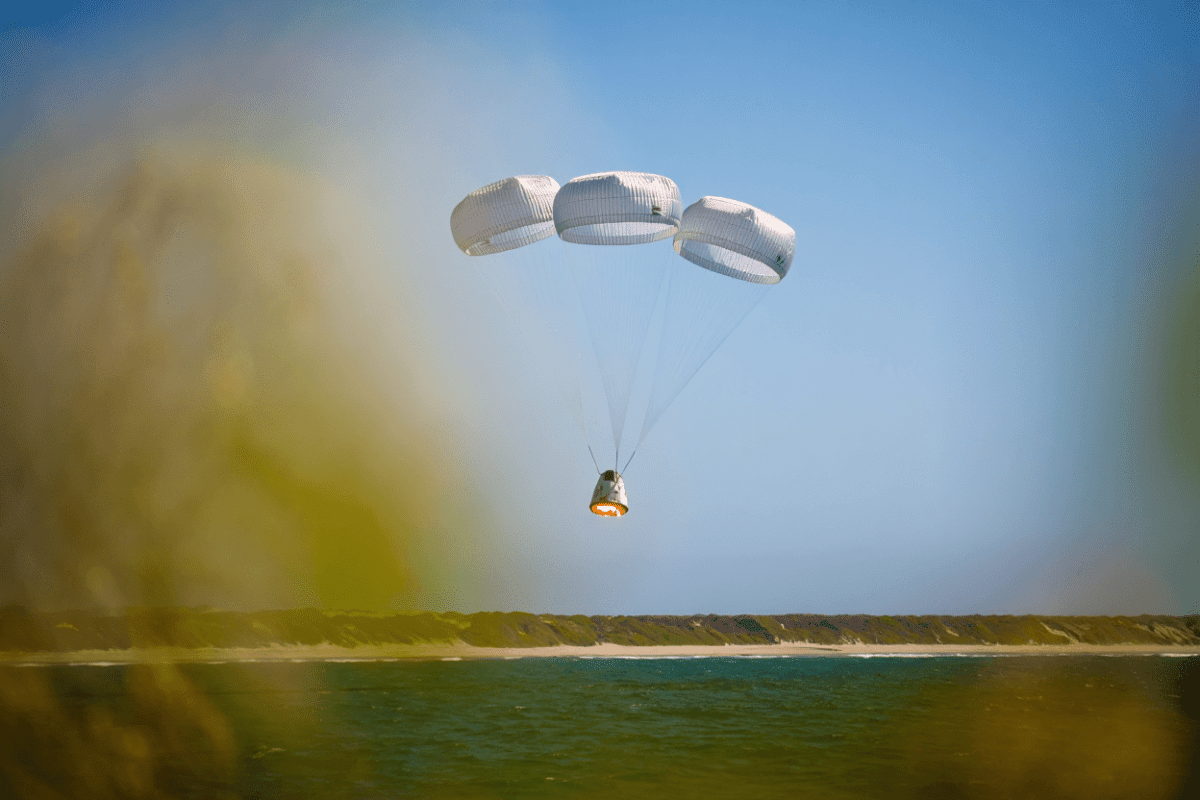
A SpaceX Dragon cargo spacecraft splashed down off the coast of California near Oceanside on June 17, 2026, at 5:11 a.m. PDT, completing the 34th commercial resupply mission to the International Space Station and returning a historic payload: bioprinted organ and cartilage tissue grown in microgravity.
The uncrewed capsule undocked from the ISS on June 16 at 12:25 p.m. EDT after a month-long stay. Beyond the bioprinted samples, the Dragon carried research with direct applications to life on Earth, including data on improving cryogenic fuel storage for future space missions, DNA-inspired materials being developed into cancer treatments, and hardware for crew health monitoring and life support.
The bioprinting research represents a milestone in regenerative medicine. More than 900,000 knee cartilage injuries occur in the United States each year, many requiring surgery, according to NASA. Printing cartilage in microgravity spreads cells more evenly than is possible on the ground, potentially improving tissue quality for transplants. The Dragon also carried 3D-printed cartilage samples and bioprinted organ tissue—part of ongoing work to use the unique environment of space as a fabrication platform for human tissues.
This is not the first successful return of bioprinted material from the international space station. In 2023, Redwire Corporation’s BioFabrication Facility (BFF) aboard the ISS successfully printed the first human knee meniscus in orbit, which was returned to Earth. In 2024, the facility bioprinted live human heart tissue and returned it to researchers. The BFF enables scientists to create intricate 3D structures using living human cells to build functional replicas of human tissues—work that would be difficult or impossible under Earth’s gravity.
Why Microgravity Changes Bioprinting
Microgravity enables a more uniform distribution of cells within the bioink, according to research cited by NASA. Scientists use 3D bioprinting in space to create tissues and organoids that would otherwise be difficult to make in the presence of gravity. The absence of gravitational stress allows cells to settle and organize differently than they would on Earth, potentially resulting in stronger, more viable tissues with better biological properties.
The Dragon also carried other health-focused experiments. Researchers grew blood-forming stem cells in microgravity, where they believe the cells better retain their ability to develop into the red and white blood cells used to treat blood diseases and cancers. Another investigation, called MVP Cell-09, sent up lab-grown heart tissue deliberately infected with pneumonia-causing bacteria to study a poorly understood link between pneumonia and heart disease. The European Space Agency’s Green Bone study tested a scaffold made from wood and designed to mimic real bone, work aimed at osteoporosis.
Once the Dragon is recovered, its cargo will be distributed to research teams across the United States and Europe. The slower work of the mission begins there: analyzing what weeks in microgravity did to the samples. NASA frames these as early-stage investigations; the samples still have to be analyzed back on Earth, and the medical and engineering payoffs remain prospective rather than proven. The international space station, as a research platform, continues to unlock capabilities that could reshape how tissues for transplant and treatment are made on Earth.
Sources
- NASA — SpaceX Dragon splashdown date, time, location, bioprinted organ and cartilage tissue cargo, cryogenic fuel storage data, DNA-inspired cancer treatment materials, crew health hardware, bioprinting research details, stem cell and heart tissue experiments, Green Bone study
- Space.com — Splashdown confirmation and location details
- Space Daily — Undocking time, cargo details including heart, liver, kidney, and brain tissue models, cartilage injury statistics, research team distribution
- Redwire Corporation — BioFabrication Facility history, first knee meniscus bioprinting in 2023, cardiac tissue return in 2024
- ISS National Laboratory — BioFabrication Facility capabilities and prior tissue returns
- Drug Discovery News — Microgravity bioprinting advantages and tissue creation in space