
National Grid and Keen AI have secured £355,985 in Alpha-phase funding from Ofgem’s Strategic Innovation Fund to develop Foundational Shared Model Operations (FoSMo), Britain’s first shared AI system for electricity network asset management across the UK.
The project, announced in June 2026, brings together all three of Great Britain’s electricity transmission operators—National Grid as lead partner, SP Energy Networks, and SSEN Transmission—alongside distribution operators UK Power Networks and Electricity North West. Rather than each operator building its own AI detection tools in isolation, FoSMo allows the pooling of anonymized data from across the industry to create a single, continuously improving foundational model that any participating operator can use and fine-tune for its own network.
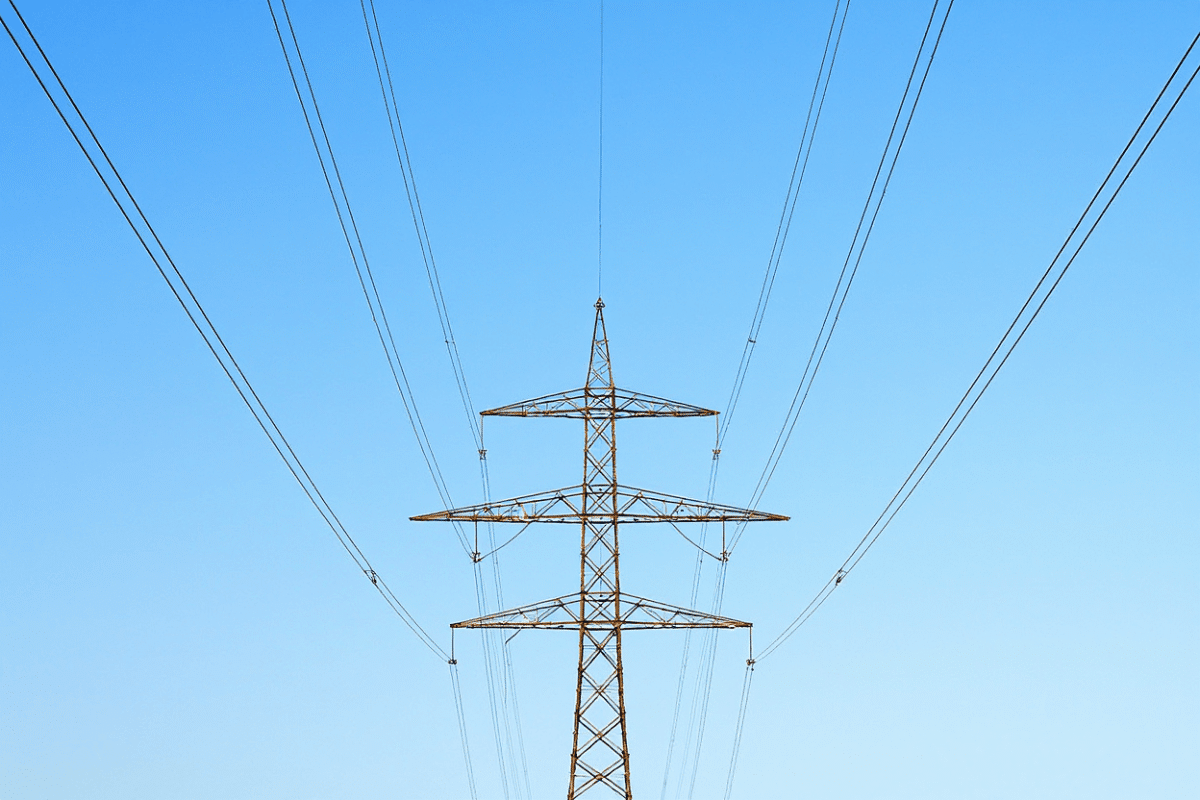
The UK’s electricity network comprises around 500,000 miles of wires and cables, yet each operator has historically developed its own detection tools from scratch. Defects and components are rare, meaning a single operator often lacks enough examples to train a robust AI model. FoSMo addresses this fragmentation by standardizing how electricity network operators collect, analyze, and act on visual data from physical assets such as pylons, cables, insulators, and fittings.
Keen AI, which has already processed over one billion images for UK electricity transmission and distribution customers, will serve as the technical steward responsible for developing, maintaining, and hosting the models. Matthew Ward, innovation engineer at National Grid Electricity Transmission, said in a statement: “By pooling data and expertise, the model has the potential to support our upgrades of the grid while also making considerable cost savings across the industry.”
If adopted across all participating operators, the shared approach is expected to save the industry around £22.6 million over five years from 2027, according to National Grid’s assessment. The savings come from avoided spending on operators independently building their own models and fewer faults from improved condition assessment. The model is projected to prevent around 85,000 consumer interruptions and 5.2 million minutes of power loss annually once fully adopted.
The FoSMo model mirrors a similar approach deployed in the United States. In April 2025, PJM Interconnection, the nation’s largest grid operator, partnered with Google and Tapestry to deploy AI-enhanced tools to streamline PJM’s generation interconnection process. The UK project differs in focus—asset monitoring rather than interconnection planning—but shares the same principle of using collaborative AI to solve grid challenges that individual operators struggle with alone.
Amjad Karim, CEO and founder of Keen AI, emphasized the domestic advantage: “When every major network operator shares what they know about their assets, we end up with something more robust than any of them could build alone. That’s how the UK can future-proof a grid that’s about to double in size.” The project ensures the work is done in the UK, by UK operators, with data held domestically—a critical consideration as the government has designated electricity network infrastructure a “critical national priority” under its revised National Policy Statement for Energy.
Sources
- Data Center Dynamics — Reported the funding amount, FoSMo project details, participating operators, and projected industry savings
- National Grid official statement — Confirmed Alpha-phase funding from Ofgem Strategic Innovation Fund, project scope, participating operators, consumer impact projections, and quotes from Matthew Ward and Amjad Karim
- Utility Dive — Reported on PJM and Google’s Tapestry partnership for AI grid interconnection as a comparable precedent










