Southwest Airlines has banned human-like and animal-like robots from flights, prohibiting the devices from both the cabin and checked baggage regardless of size or purpose, following a viral incident in May 2026 when a Dallas entrepreneur flew a 3.5-foot humanoid robot from Love Field to Las Vegas.
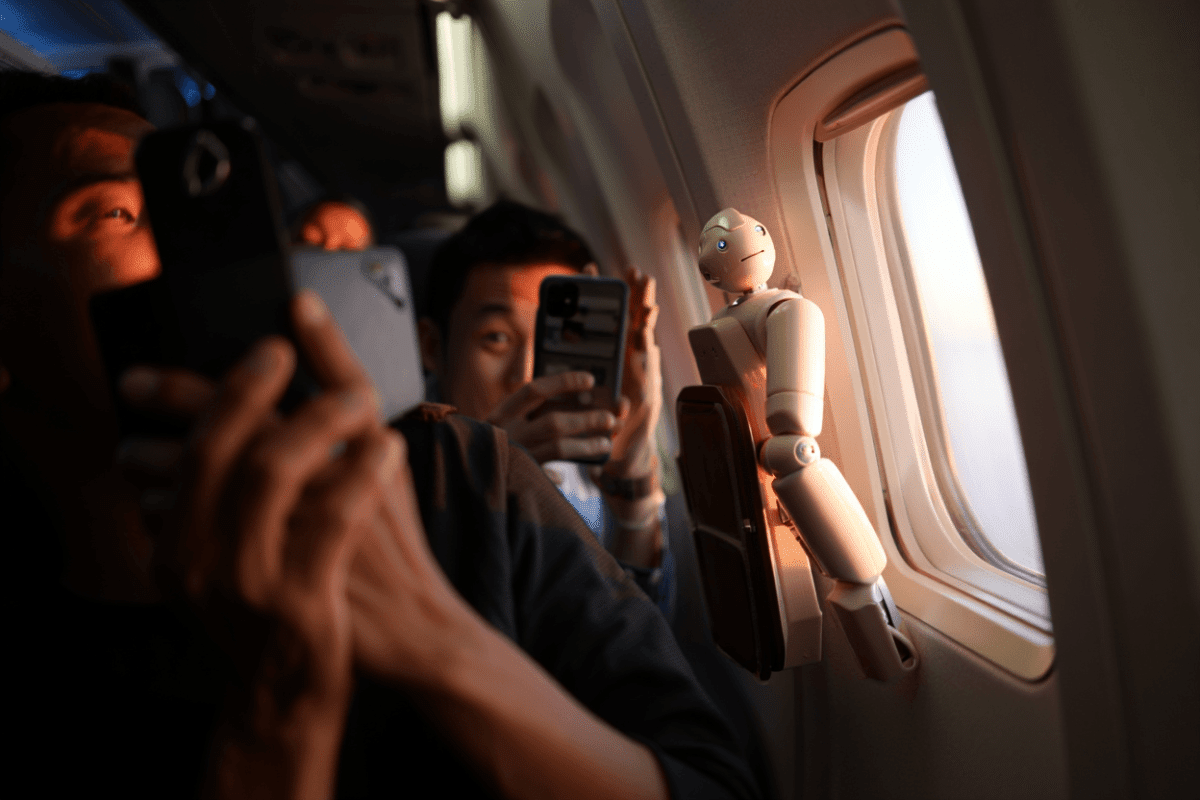
On May 7, Aaron Mehdizadeh, owner of The Robot Studio, a Dallas-based robot rental company, purchased a passenger seat for his humanoid robot named Stewie and flew it from Dallas Love Field to Las Vegas. The robot walked through the airport terminal and onto the aircraft under its own power, drawing attention from passengers and confusing flight crew members, according to FOX 4 News.
Two days later, Southwest Airlines updated its baggage policy to exclude human-like or animal-like robots. The airline defined human-like robots as those designed to resemble or imitate humans in appearance, movement, or behavior, and animal-like robots as those modeled on animals. All other robots, including toys, remain permitted if they fit inside a carry-on bag and comply with existing battery restrictions.
Southwest framed the ban as a safety measure, citing concerns over lithium-ion batteries commonly used in humanoid robots. “To ensure compliance with our guidelines for traveling safely with lithium-ion batteries, Southwest clarified its baggage policy to include robotic devices,” the airline said in a statement to FOX 4.
Mehdizadeh pushed back on the airline’s rationale. He stated that Stewie’s battery was “fully FAA compliant” and “essentially a laptop battery,” and that the company had followed every precaution to ensure the flight was safe. “The battery that we used was not a safety hazard,” he told CBS News Texas. He expressed hope that Southwest would reconsider the policy once the aviation industry established clear safety criteria for humanoid robots on flights.
The incident created a logistical puzzle mid-flight: because Stewie was classified as a carry-on item, it technically had no business occupying a paid passenger seat. Southwest crew members relocated the robot to a window position and disconnected its battery so the plane could proceed to Dallas, according to Quartz.
Sources
- FOX 4 News Dallas-Fort Worth — Robot passenger details, airline statement, and Mehdizadeh interview
- CBS News Texas — Mehdizadeh background, battery compliance claims, and flight logistics
- Quartz — Policy definition, robot specifications, and mid-flight crew response