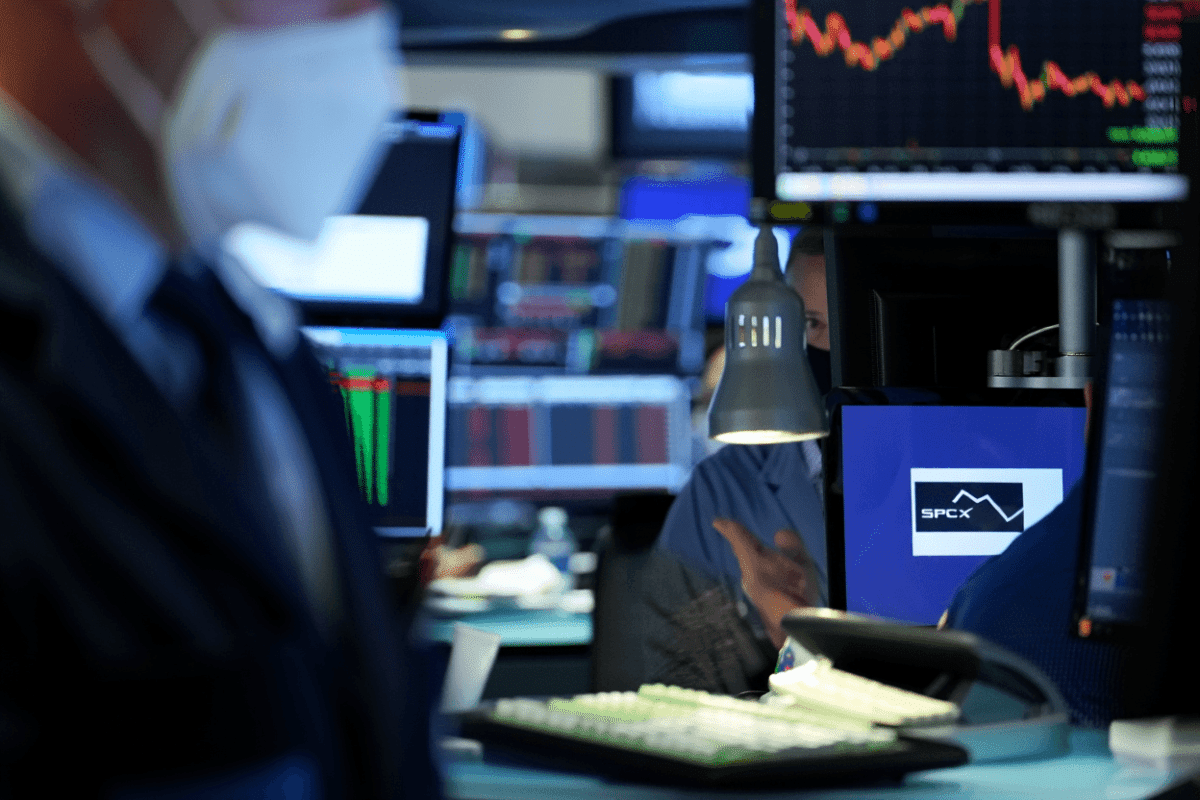
SpaceX stock declined 2.4% on Wednesday as the rocket company’s remarkable post-IPO rally faced its first meaningful pullback, though shares remain up nearly 50% since the company’s record-breaking debut on the Nasdaq.
The stock closed at $196.91 on June 17, down from $201.71 the previous day, according to Barron’s reporting. This marks the first significant retreat after SpaceX shares surged from their $135 IPO price on June 12 to close above $200 earlier in the week.
SpaceX completed the largest initial public offering in history on June 12, raising $75 billion and valuing the company at approximately $1.75 trillion. Shares opened at $150 on the first trading day, closing at $160.95 for a 19% gain, then climbed another 20% on Monday June 15 before gaining 4.8% on Tuesday, according to multiple sources including CNBC and Reuters.
The pullback on Wednesday reflects natural market dynamics after an extraordinary run. SpaceX’s limited float of tradable shares—only about 640 million shares available for trading—has created intense competition for ownership among institutional investors, ETFs, and options traders, according to Barron’s analysis. Heavy call option activity, which was four times as active as Tesla options normalized for available shares, had fueled the upward momentum.
Several factors have artificially elevated the stock price in the short term. New exchange-traded funds seeking SpaceX exposure, including Direxion’s SpaceX Bull 2x ETF and the Procure Space ETF, have been accumulating shares. SpaceX is also set to join the Nasdaq-100 index later in June, which will trigger passive buying as index funds rebalance, according to Barron’s. The company’s staggered lockup schedule, which differs from traditional 180-day lockups, means that only 20% to 30% of insider shares will become available after the first quarterly earnings report, keeping supply constrained.
Comparable mega-IPOs have shown similar volatility. When Saudi Aramco completed the previous record IPO in December 2019 for $25.6 billion, its stock also experienced sharp swings in the weeks following its debut before settling into longer-term patterns, according to Yahoo Finance’s historical analysis of the five largest IPOs.
The real test for SpaceX stock will come when investor lockups expire and more shares flood the market. Analysts at Future Fund Active ETF have noted that the stock’s current elevation is partly artificial given the limited supply and the inability of traders to short the stock easily. When 20% to 30% of shares unlock after the first quarterly earnings report, expected in August, the dynamics could shift significantly, according to Barron’s.
For now, SpaceX remains one of the world’s most valuable companies. Even after Wednesday’s decline, the stock has delivered extraordinary returns for those who purchased at the IPO price, and the company’s market capitalization sits above $2.6 trillion, according to Barron’s reporting.
Sources
- Barron’s — SpaceX stock trading activity on June 17, lockup schedule details, and options activity analysis
- CNBC — SpaceX IPO debut details, June 12 closing price, and first-day trading performance
- Reuters — SpaceX IPO pricing at $135 per share, June 12 opening and closing prices, and market valuation
- Yahoo Finance — Historical performance of largest IPOs and Saudi Aramco comparison
- New York Post — June 15 second-day trading performance with 20% gain