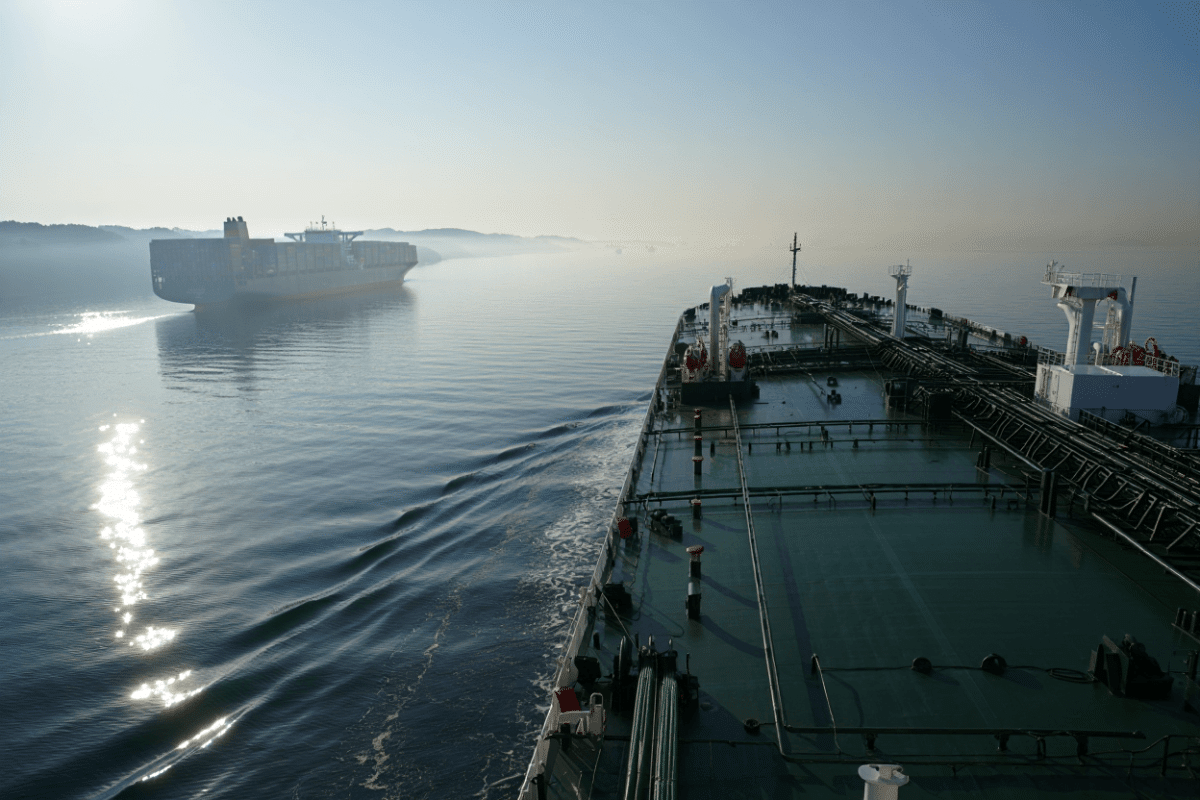
Investors rallied on news of a U.S.-Iran peace deal that would reopen the Strait of Hormuz and ease a historic oil supply crisis, sending stock futures higher while crude prices tumbled to their lowest levels in three months on June 15.
Crude oil prices fell over 4% after the U.S. and Iran announced they had reached a preliminary peace agreement to end their nearly four-month war. Brent crude, the global benchmark, dropped 3.6% to $84.21 per barrel, while West Texas Intermediate fell over 4% to $81.38 per barrel, according to Axios. The Guardian reported that Brent crude extended losses to just over $82 a barrel, its lowest level since the early days of the conflict in March.
Stock markets responded with broad gains. S&P 500 futures climbed roughly 1%, while the tech-focused Nasdaq 100 and small-cap Russell 2000 rose even more, according to Investopedia. The Dow Jones industrial average rose 1% to hit a new record high, and European markets rallied, with the UK’s FTSE 100 and the French CAC 40 each up around 1%, per The Guardian. In Asia, Japan’s Nikkei and South Korea’s Kospi jumped 5%, while China’s CSI300 rose 1.9%.
The deal’s significance lies in its potential to reopen the Strait of Hormuz, a critical shipping chokepoint that has been effectively closed since late February when the conflict began. The waterway handles roughly a fifth of the world’s oil and gas trade. Restrictions on traffic through the strait have removed approximately 20 million barrels per day from global supply, creating what sources describe as the greatest energy supply crisis in market history.
President Trump announced on social media that he would “fully authorize the toll free opening of the Strait of Hormuz” once the peace deal is signed on Friday in Switzerland, according to The Guardian. The deal would allow tanker traffic to resume and Gulf oil producers to restore exports that have been cut off for months. A signing ceremony is expected to be held on Friday in Switzerland, with Iranian officials and Pakistan’s Prime Minister confirming the agreement.
The energy shock from the Strait’s closure has weighed heavily on the global economy. U.S. gasoline prices soared to roughly $4.56 per gallon in May but have retreated to $4.07 on average, still over $1 higher than pre-war levels, per Axios. Annual inflation in the U.S. hit 4.2% in May, its highest level in three years, as higher transportation costs rippled through the economy. The prospect of lower oil prices and restored supply is expected to ease inflationary pressures and reduce recession risks tied to sustained energy shocks.
The deal marks a major diplomatic breakthrough after months of tentative negotiations. A signing ceremony is expected to be held on Friday in Switzerland, according to Investopedia. However, many details remain unclear, including the exact timing of the strait’s reopening, who will oversee safe passage, and whether conditions will be applied. Iranian authorities have said there would be a 60-day negotiating period for a final deal addressing wider issues such as Tehran’s nuclear program and sanctions relief.
Sources
- Axios — Oil prices fall over 4% to lowest levels in three months; Brent crude at $84.21, WTI at $81.38
- Investopedia — Stock futures surge; S&P 500 futures up 1%, Nasdaq and Russell 2000 rise more; signing ceremony Friday in Switzerland
- The Guardian — Brent crude drops to $82, lowest since early March; Dow hits record at 1% gain; Asian markets surge; Trump authorizes Strait reopening
- Axios — U.S. gasoline prices average $4.07 per gallon; Strait closure removed 20 million barrels per day from market
- Investopedia — U.S. inflation hit 4.2% in May, highest in three years; 60-day negotiating period for final deal