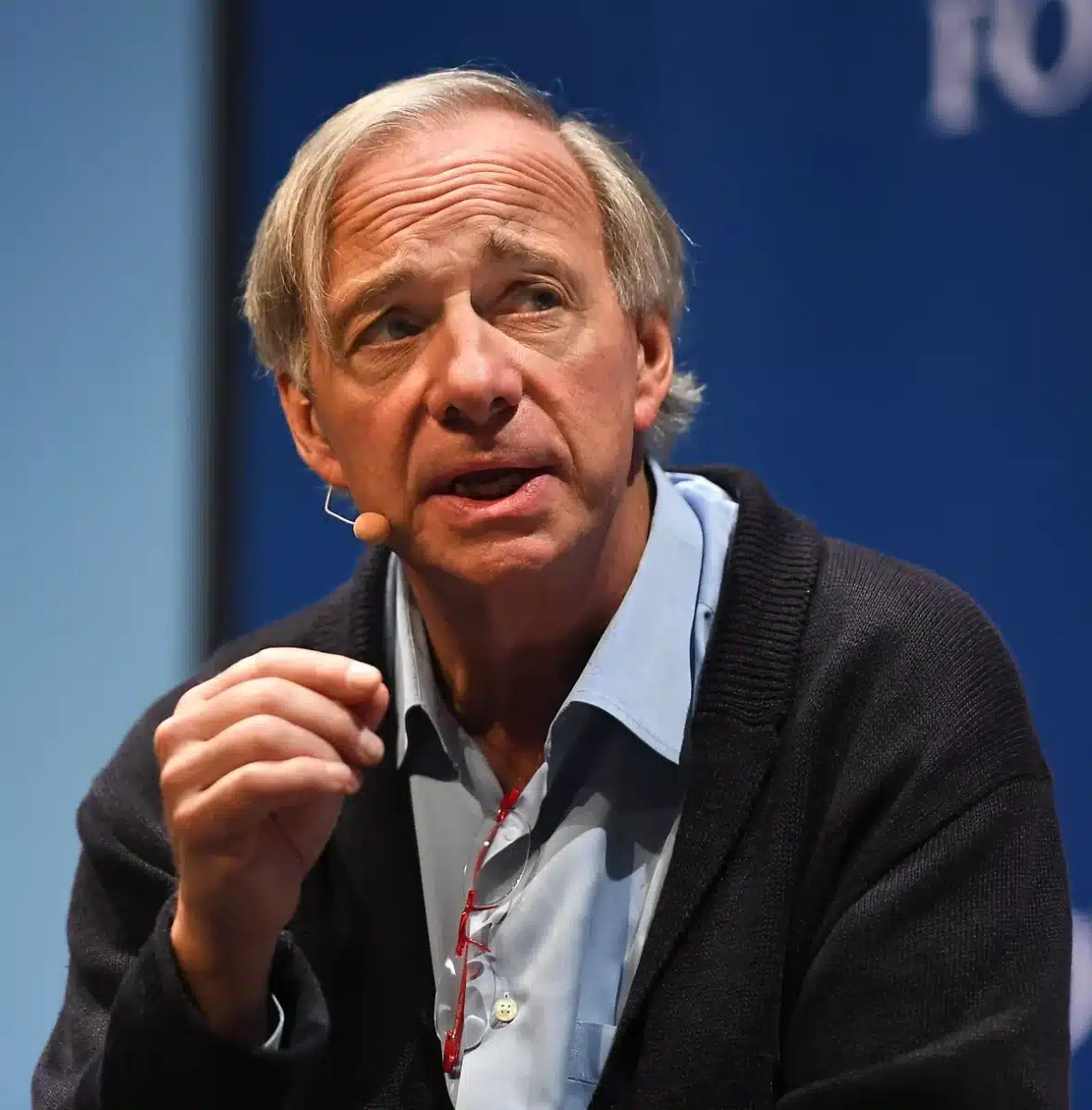
Ray Dalio, the billionaire founder of Bridgewater Associates, delivered one of his starkest warnings yet on the current market environment during a wide-ranging appearance on The Diary of a CEO with host Steven Bartlett, arguing that artificial intelligence enthusiasm has pushed markets into bubble territory reminiscent of 1929 and 2000. His warning arrives as SpaceX has already gone public in the largest IPO ever, while Anthropic and OpenAI are barreling toward trillion-dollar valuations—precisely the kind of speculative issuance surge that market historians treat as a bubble’s clearest warning sign.
When host Steven Bartlett referenced Jeremy Grantham’s warning that markets are facing “the biggest investment bubble in American history,” Dalio’s response was direct: “He’s right,” he said. Grantham, the GMO co-founder, called the Japanese asset bubble before it collapsed in the early 1990s, the dot-com bubble before it burst, and warned in September 2007 that U.S. housing was in “genuine bubble territory” months before the Great Financial Crisis.
Dalio identified surging stock issuance as one of the two primary forces that “prick” a bubble, alongside rising interest rates. “There’s almost nothing that’s easier to produce than stock,” he said, describing how a company can raise $50 million, get valued at a billion, and mint a paper billionaire without a billion dollars ever changing hands. His core distinction is between wealth and money: “Wealth is not the same as money,” he said. “You see a lot of people getting wealthy but you can’t spend the wealth. You have to sell the wealth to get money because you can only spend money.”
When asked whether he’s seeing signs of a bubble, Dalio didn’t hedge: “Yeah. Yeah. Yeah. Classic signs that we’re in [one].” He stressed a bubble is “a degree thing” rather than binary, pointing to weak-handed, unsophisticated investors piling into leveraged bets, including leveraged ETFs tracking the stock market. “It’s more like they’re crapshooting,” he said.

The Big Cycle and Political Unrest
Dalio situated this moment within what he calls the “Big Cycle”—a roughly 80-year pattern combining debt dynamics, growing wealth gaps, domestic political conflict, and shifting geopolitical power. His bigger warning wasn’t about the market alone—it was about what comes after. In Dalio’s telling, the bursting of an AI bubble isn’t just a financial event but the spark for the kind of political and geopolitical conflict that historically accompanies the end of an 80-year cycle. When a bubble bursts, “you have people at each other’s throats,” he said, citing the UK’s six prime ministers in seven years as a symptom of governments lacking money and voters turning on each other over how to raise it.
This warning aligns with Dalio’s broader thesis on American decline. Throughout 2026, he has argued that the US faces a “breaking global order,” citing fiscal pressures, Treasury demand uncertainty, and election gridlock as factors creating a fragile period between 2026 and 2028. In May, he published an opinion piece in the New York Times warning of America’s coming “heart attack,” framing the current environment through the lens of his Big Cycle theory. He has also warned that the post-1945 world order has “officially broken down,” with countries increasingly pursuing power politics over rules-based cooperation.
Dalio’s AI bubble warning echoes similar concerns from other tech leaders. Wall Street’s own research is beginning to align with his diagnosis: Goldman Sachs argued on August 3 that while “there does not appear to be a valuation bubble,” there may be an “earnings bubble” in technology. The same day, Apollo’s Torsten Slok declared “the 60/40 portfolio is broken,” arguing that neither stocks nor bonds have been responding as decades of market history would predict, upending 40 years of investment strategy.
Sources
- Fortune — Ray Dalio’s appearance on The Diary of a CEO, his warnings on AI bubble characteristics, wealth-versus-money distinction, stock issuance mechanics, Big Cycle theory, and political consequences of bubble bursts
- New York Times — Dalio’s May 2026 opinion piece on America’s coming “heart attack” and fiscal challenges
- Bloomberg — Dalio’s June 2026 warnings on AI bubble and debt burden
- CNBC — Dalio’s January 2026 comments on capital wars and the breaking global order