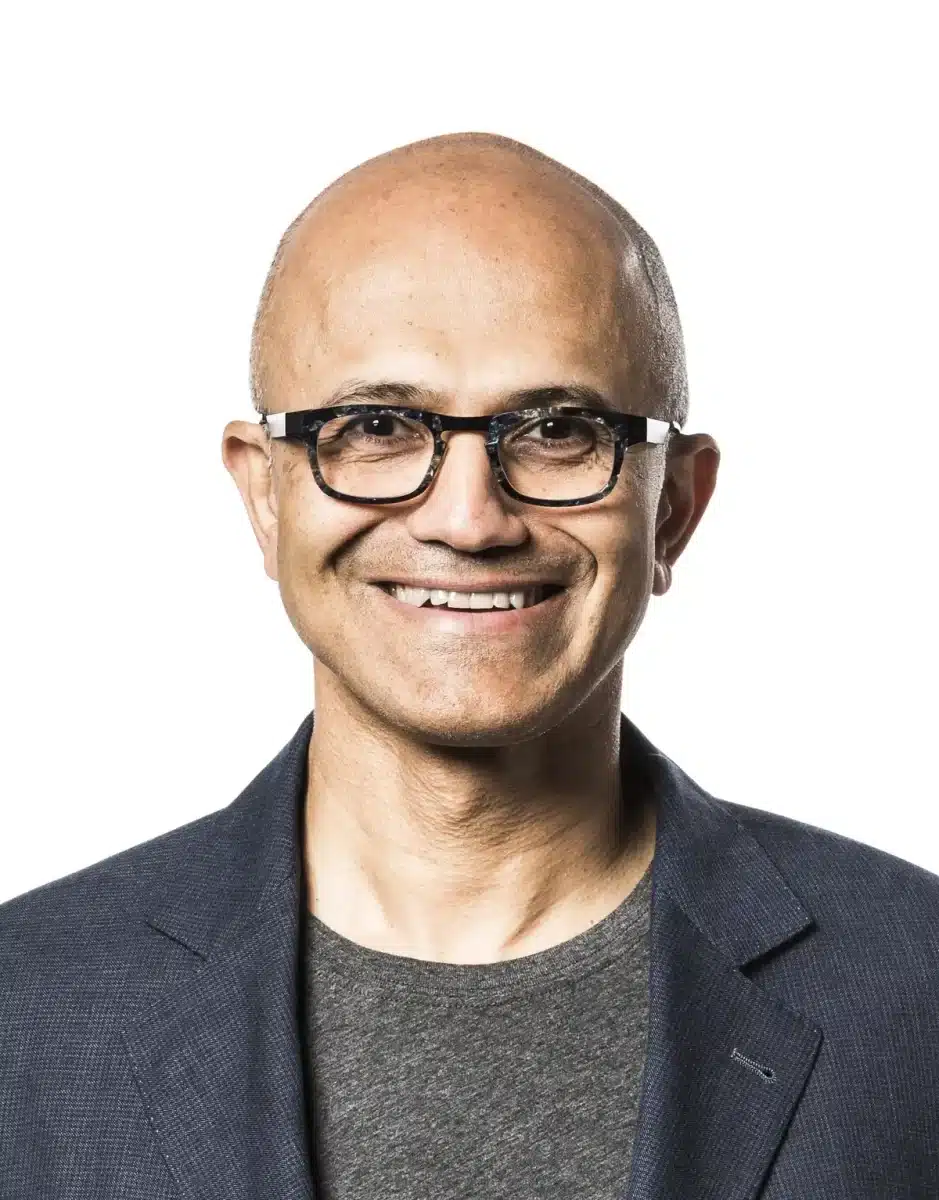
Microsoft CEO Satya Nadella has warned that artificial intelligence risks becoming a speculative bubble unless its benefits spread broadly across industries and economies. Speaking at the World Economic Forum in January 2026, Nadella said the technology would remain confined to a narrow sector if adoption stayed limited to big tech companies, a hallmark of bubble dynamics. “For this not to be a bubble by definition, it requires that the benefits of this are much more evenly spread,” he said at Davos.
Nadella’s concern centers on diffusion — the speed and breadth with which AI moves beyond large technology firms into smaller businesses, emerging markets, and traditional industries. “The real question in front of all of us is how do you ensure that the diffusion of AI happens, and happens fast,” he explained, arguing that the technology must deliver tangible economic gains to communities and countries, not just drive spending.

In June 2026, Nadella expanded this warning in a sweeping essay, arguing that the real danger lies in concentration — a handful of frontier models capturing the expertise of entire industries and rendering businesses commoditized. “The last thing any of us want is a world where every company across every sector is ceding value to a few models that eat everything they see,” he wrote. He compared the risk to the outsourcing wave of early globalization, which hollowed out industrial economies while GDP figures looked healthy on the surface. “There is no societal permission for an AI future that hollows out entire industries,” Nadella warned.
Nadella introduced the concept of “token capital” — a firm’s proprietary AI capability and institutional knowledge — as distinct from human capital. The danger, he argued, is that without proper architecture, companies could lose their competitive differentiation as frontier models absorb and commoditize their expertise. He called for enterprises to build learning systems that sit between their workforce and whatever model they use, creating “portable knowledge” that survives vendor changes and prevents lock-in to a single provider.
The Cost Reality Behind the Warning
Nadella’s philosophical warnings about concentration and broad diffusion arrive against a backdrop of mounting operational pressure. The five largest hyperscalers — Alphabet, Amazon, Meta, Microsoft, and others — are set to spend over $1 trillion on AI-related capital expenditure from 2025 through 2026, according to the Bank for International Settlements. Yet major tech companies are simultaneously hitting budget ceilings as token-based billing makes AI consumption exponentially more expensive.
Microsoft itself has faced acute cost pressures. The company cut 4,800 jobs in July 2026 as AI spending strained the tech industry, and in June the company canceled most of its internal Claude Code licenses after per-engineer API costs ranged between $500 and $2,000 monthly. Uber burned through its entire 2026 AI coding tools budget in four months after encouraging employee adoption through an internal leaderboard, then instituted a monthly $1,500 cap per employee. Meta created a leaderboard tracking which workers consumed the most AI tokens, and Amazon pushed employees to maximize token usage — creating a perverse incentive structure where productivity gains translate directly into runaway costs.

The emerging pattern reveals a fundamental tension in Nadella’s warning. Enterprise AI adoption has delivered genuine productivity gains, but the consumption-based economics of frontier models create budget crises that traditional software licensing never would. Bryan Catanzaro, vice president of applied deep learning at Nvidia, captured the dynamic: “For my team, the cost of compute is far beyond the costs of the employees.” This cost concentration mirrors the value concentration Nadella warns about — as a small number of model providers control the infrastructure, they capture an outsize share of economic returns.
Other technology leaders have echoed Nadella’s concerns about value concentration. Snowflake CEO Sridhar Ramaswamy warned in February 2026 that big model makers want to create a world where all enterprise data flows to them, reducing other software to “a dumb data pipe.” Box CEO Aaron Levie raised a parallel question: in a world where everyone has access to the same expert AI intelligence, how does a company differentiate?
Nadella’s essay prescribes a three-layer architecture — private evaluations, reinforcement learning, and retrieval systems — to decouple institutional knowledge from whatever frontier model a company uses. But whether enterprises can afford to build these systems while managing the token costs of frontier models remains an open question. The CEO has articulated an eloquent case for why AI’s value must distribute broadly to avoid both a speculative bubble and a repeat of globalization’s hollowing effect on entire industries. Whether the economic incentives of the AI industry — where five hyperscalers are spending over $1 trillion in two years — will permit that distribution is the challenge Nadella’s warning cannot yet answer.
Sources
- Business Standard — Nadella’s January 2026 World Economic Forum warning on AI diffusion and bubble risks
- VentureBeat — Nadella’s June 2026 essay on AI concentration, token capital, and industry hollowing
- Reuters / Yahoo Finance — Microsoft’s $37.5 billion capital spending in Q2 2026 and shareholder lawsuit over infrastructure costs
- TechCrunch / Fortune — Uber and Meta’s token cost overruns and budget constraints in 2026
- Bank for International Settlements — Five largest hyperscalers’ $1 trillion AI capital expenditure forecast 2025-2026
- Axios — Nvidia executive commentary on compute costs exceeding employee costs