Sam Altman, CEO of OpenAI, believes artificial intelligence will eventually perform the job of running his company better than he can. Speaking at the AI Impact Summit in New Delhi in February 2026, Altman stated that “AI superintelligence at some point on its development curve would be capable of doing a better job being the CEO of a major company than any executive, certainly me.” He added that this timeline is not distant: on OpenAI’s current trajectory, the company may be only a couple of years away from early versions of true superintelligence.
Altman has repeatedly signaled his openness to being replaced. In November 2025, he said on the “Conversations with Tyler” podcast that he would be ashamed if OpenAI is not the first major company run by an AI CEO. He framed this as a thought experiment: “What would have to happen for an AI CEO to be able to do a much, much better job of running OpenAI than me?”
In a more recent interview from July 2026, Altman laid out a detailed timeline. He said a single division of OpenAI could be 85% run by AI within a “small single-digit number of years.” For the full CEO role, he acknowledged complications: “CEO is tricky because the public role of a CEO becomes more and more important.” He predicted that “billion-dollar companies run by two or three people with AI” will emerge, though he acknowledged that human psychology—people’s greater trust in other people over AI—will slow adoption of AI leadership even as the technology becomes capable.
Altman’s most sweeping forecast came in his February 2026 remarks, when he predicted that by the end of 2028, more of the world’s intellectual capacity could reside inside data centers than outside them. He framed this not as dystopian but as inevitable technological progress. “We always find new and better things to do,” he said. “I’m confident we will keep being driven to be useful to each other, to express our creativity, to gain status, to compete, and much more.”
The Broader White-Collar Threat
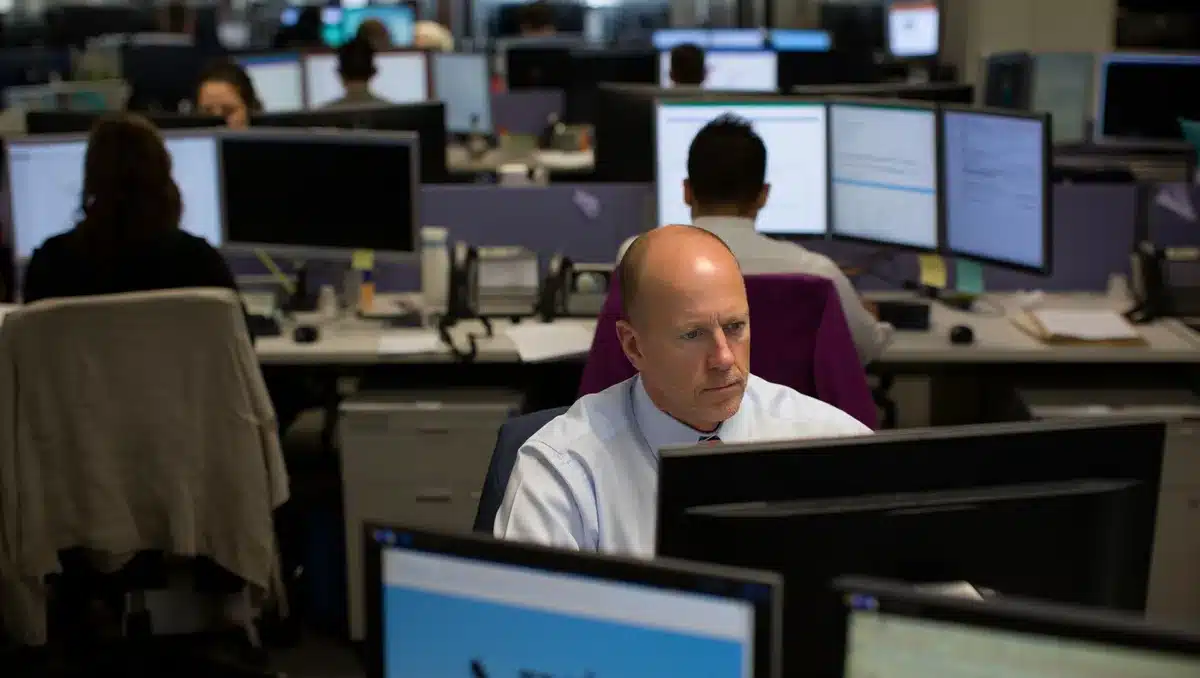
Altman’s comments reflect a wider anxiety across the tech industry about AI’s impact on professional work. Microsoft AI chief Mustafa Suleyman warned in February 2026 that white-collar work has between one year and 18 months until AI completely automates it. Anthropic CEO Dario Amodei predicted in May 2025 that AI could eliminate 50% of entry-level white-collar jobs, though by May 2026 both Altman and Amodei had begun walking back those more apocalyptic forecasts, with Altman pivoting toward talking about AI augmenting workers rather than replacing them.
Yet Altman’s personal readiness to be displaced stands out. He has already thought through how OpenAI’s organizational design should adapt. When hiring, he looks for people who think seriously about what their work will look like in three years—what he calls a “green flag”—rather than those who treat AI as merely a better search engine. He has also signaled what he plans to do after stepping aside: farming. “I have a farm that I live some of the time and I really love it,” he told Axel Springer CEO Mathias Döpfner in October 2025. “Before ChatGPT took off, I had more time on the farm. I used to drive tractors and pick stuff.”
Sources
- Fortune — Sam Altman’s February 2026 remarks at the AI Impact Summit in New Delhi, including his prediction that AI superintelligence could be a better CEO and his 2028 data-center forecast; context on Microsoft’s Mustafa Suleyman’s one-to-18-month timeline and Anthropic CEO Dario Amodei’s earlier 50% job-elimination prediction.
- Business Insider — Altman’s November 2025 podcast statement on “Conversations with Tyler” that he would be ashamed if OpenAI is not the first company run by an AI CEO, and his reference to his farm plans.
- Final Round AI — Altman’s July 2026 interview detailing the single-digit years timeline for 85% AI-run divisions, the billion-dollar two-to-three-person company prediction, and his acknowledgment of human psychology as a barrier to AI leadership adoption.
- Forbes — Dario Amodei’s May 2025 prediction that AI could eliminate 50% of entry-level white-collar jobs.