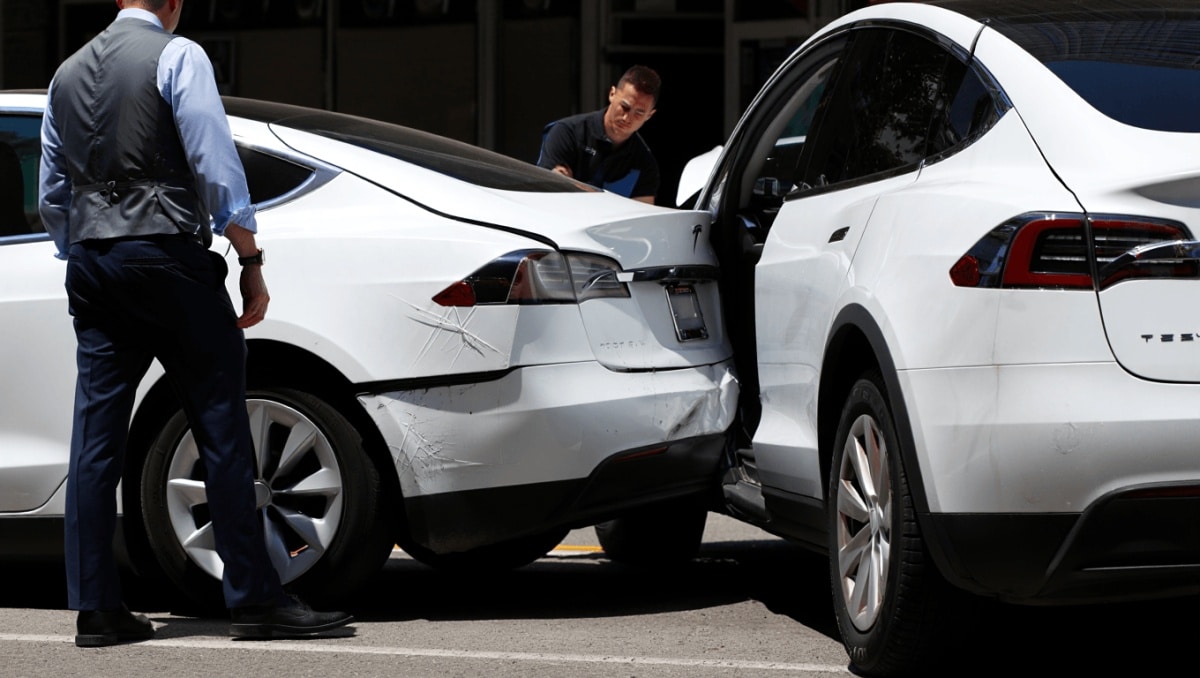
Newly unredacted reports filed with the National Highway Traffic Safety Administration show that at least two Tesla Robotaxis were involved in crashes while a company teleoperator was remotely driving the vehicle. Both incidents were low-speed, occurred in Austin, Texas, and had a safety monitor behind the wheel with no passengers on board.
The filings—part of routine crash reports required by the NHTSA—reveal narratives Tesla had previously redacted. The company had told regulators it permits remote operators to control vehicles when speeds remain under 10 mph to reposition a vehicle or recover it from a difficult spot. This week’s disclosure makes the details of 17 recorded incidents since last year publicly available for the first time.
What the records describe
One of the teleoperated collisions took place in July 2025 shortly after Tesla launched its Robotaxi service in Austin. According to the report, the vehicle’s automated driving system (ADS) was stopped and a safety monitor sought remote assistance. A teleoperator assumed control, nudged the car forward and steered it toward the left side of the street; the vehicle mounted a curb and struck a metal fence.
In a separate incident reported from January 2026, the ADS was traveling straight when the monitor again requested help. The teleoperator took control while the vehicle was stationary and drove it forward. The car struck a temporary construction barricade at about 9 mph, damaging the front-left fender and tire.
Most of the other newly disclosed episodes mirror patterns seen across the robotaxi sector: Tesla vehicles were more often struck by other road users than they caused collisions. Still, a handful of entries show the Robotaxis making minor contact with objects or other cars—ranging from clipped mirrors to an unprotected turn into a parking lot that resulted in contact with a metal chain.
- July 2025: Teleoperator-driven maneuver mounted a curb and hit a metal fence; safety monitor present, no passengers.
- September 2025: Vehicle could not avoid a dog that ran into the street; report states the dog was able to run away.
- September 2025: Robotaxi made an unprotected left into a parking lot and struck a metal chain.
- January 2026: Teleoperator took control and vehicle struck a temporary construction barricade at ~9 mph, scraping the front-left fender and tire.
- Other entries: Several incidents involved side-swipe or mirror contact when other vehicles struck the Tesla cars.
Context and implications
Tesla had long withheld narrative details from public crash reports citing proprietary concerns; the recent change to unredact descriptions gives regulators, journalists and the public clearer insight into how its early Robotaxi operations are performing. For safety investigators, the difference between a vehicle being struck and a vehicle causing a crash matters for assessing system behavior and liability.
The timing is notable: Tesla allows remote control below a 10 mph threshold, but the July and January cases show that even at low speeds remote interventions can end with property damage. That complicates the argument that teleoperation is a simple duct-tape fix for moments when an automated system needs help.
Regulators have been scrutinizing issues that surface repeatedly in autonomous vehicle deployments. The NHTSA has previously looked into Tesla’s Full Self-Driving software for tendencies to hit parking bollards, chains and gates; last year other companies, including Waymo, also addressed similar problems through recalls or software updates.
Scale also matters. Although Tesla has reported fewer crashes than some competitors, it is operating a much smaller robotaxi fleet. Tesla CEO Elon Musk recently acknowledged that achieving a high level of safety is a core constraint on expanding the service, and company officials say they are proceeding cautiously.
For riders, city planners and regulators, the newly released narratives are more than detail; they shape how policymakers evaluate remote-control policies, fleet expansion and where to focus oversight. The unredacted files will likely be parsed by safety investigators and advocacy groups as Robotaxi deployments grow and the stakes for public trust rise.