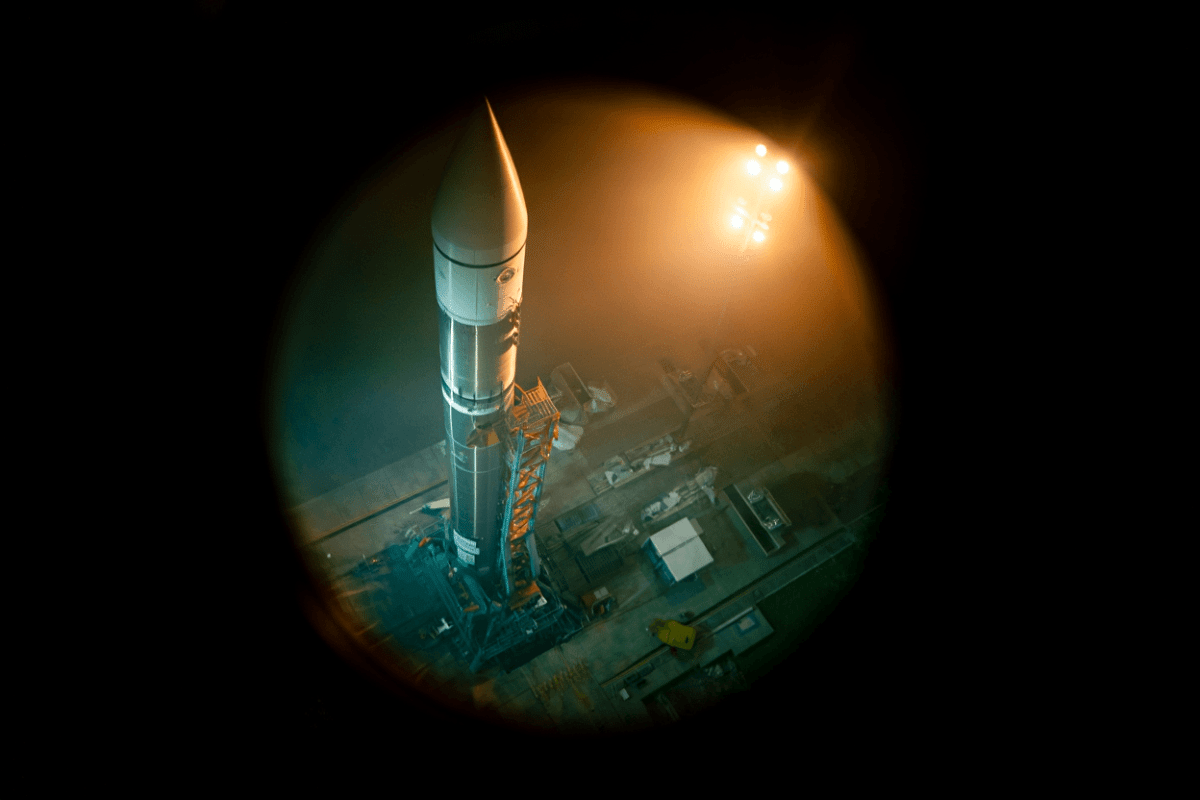
Blue Origin’s New Glenn rocket experienced a catastrophic failure on the evening of May 28, 2026, during a static fire test at Space Launch Complex 36 (LC-36) in Cape Canaveral, Florida. The 321-foot-tall heavy-lift vehicle demonstrated a structural breach during the hotfire engine test, which occurred approximately 9:00 PM local time. This represents a significant setback for the company’s ambitious space launch provider goals and highlights the inherent risks in rocket development during critical ground testing phases.
🔥 Quick Facts
- Explosion occurred May 28, 2026 at 9:00 PM ET during static fire test at LC-36
- New Glenn measures 321 feet tall and 7 meters in diameter, powered by seven BE-4 engines
- Static fire test is standard industry procedure: engines ignited at full thrust while vehicle remains secured to launch pad
- Fourth hotfire test in New Glenn’s development campaign following successful NG-3 launch on April 19, 2026
- No personnel injuries reported during the Cape Canaveral incident; test areas isolated per safety protocols
Understanding New Glenn’s Role in Commercial Space
New Glenn represents Blue Origin’s flagship heavy-lift rocket platform, competing directly with SpaceX’s Falcon Heavy and designed for cargo delivery to geostationary transfer orbit (GTO) and low Earth orbit (LEO). The vehicle can deliver 13+ metric tons to GTO and 45 metric tons to LEO, making it a critical asset for the company’s commercial and government contracts.
The successful NG-3 mission on April 19, 2026 marked the first time Blue Origin reused a New Glenn booster—a key milestone for long-term mission economics. That flight carried Telesat satellites and culminated a series of ground tests validating the rocket’s systems.
The Static Fire Test: Standard Procedure and Anomaly
A hotfire test (also called static fire) involves firing the rocket’s engines at full operational thrust while the vehicle remains firmly bolted to the launch pad. This is a routine validation step across the space industry—SpaceX performs them before each Falcon 9 launch, and Blue Origin had successfully conducted similar tests ahead of NG-3 in April. The test allows engineers to confirm engine performance, measure vibration patterns, and validate structural loads before flight.
The May 28 test was intended to be part of the pre-launch preparation for a fourth New Glenn flight, expected in the coming weeks. That mission was scheduled to deploy commercial satellite payloads. The anomaly during this hotfire represents a critical failure point—occurring after the rocket had already demonstrated successful flights and reusability.
Technology, Performance Metrics, and Impact
| Specification | Details |
| Total Height | 321 feet (98 meters) |
| Diameter | 7 meters (23 feet) |
| First Stage Engines | 7 BE-4 engines (same engines power ULA Vulcan) |
| Payload to GTO | 13+ metric tons |
| Payload to LEO | 45 metric tons |
| Test Type | Static fire (hotfire) with full thrust simulation |
| 2026 Flight Record | 1 successful orbital launch (NG-3, April 2026) |
The specifications reveal New Glenn’s competitive positioning: nearly as tall as NASA’s Space Launch System (SLS), which measures 322 feet, and equipped with proven BE-4 engines that also power United Launch Alliance’s Vulcan rocket. This dual-sourcing of BE-4 propulsion by both ULA and Blue Origin underscores the engine’s importance to the U.S. launch provider ecosystem.
“This was a planned test to validate the readiness of the rocket for upcoming missions. Blue Origin is investigating the root cause of the anomaly and will implement any necessary corrective actions to ensure mission success going forward.”
— Statement from Blue Origin, issued on May 28, 2026
Strategic Implications for Commercial Space and Defense Contracts
The timing of this failure carries significant implications. On May 26, 2026 (just two days before the explosion), NASA confirmed Blue Origin for its Artemis lunar lander program, selecting the company for three uncrewed lunar cargo missions. This contract—part of NASA’s broader strategy to establish sustained human presence on the Moon—depends on New Glenn’s reliability and operational cadence.
Additionally, Blue Origin’s expansion plans at Cape Canaveral include significant infrastructure development. The company operates multiple launch facilities and recently announced expansion initiatives at the spaceport. Any delays to New Glenn’s flight rate cascades into production and facility utilization metrics.
Commercial satellite operators who have booked New Glenn launches—including companies dependent on the rocket’s cost-competitive economics—will face potential schedule impacts. The recent Telesat deployment via NG-3 demonstrated market demand, but mission success hinges on vehicle reliability during critical test phases.
Investigation, Recovery, and What’s Next?
Blue Origin has initiated immediate investigation procedures standard in aerospace engineering. These typically include structural analysis of recovered components, sensor telemetry review, and material testing. The company previously completed an investigation into the NG-3 flight issue in May 2023, which involved an engine anomaly during ascent, demonstrating its access to rigorous failure analysis protocols.
Recovery timeline remains uncertain. Static fire test failures can indicate design issues, manufacturing defects, or procedural gaps—each requiring different solutions and validation methods. Blue Origin must conduct root cause analysis, implement corrective actions, and conduct additional test flights before resuming New Glenn operations.
The incident reignites broader industry conversations about test-driven development in commercial spaceflight. Historic data shows that early-stage rocket programs typically experience ground test failures as part of iterative development. SpaceX’s Falcon 9 program saw multiple static fire anomalies during its development phase before achieving operational reliability. Blue Origin’s response to this failure—in terms of transparency, engineering rigor, and schedule recovery—will significantly impact its competitive position.
What Does This Setback Mean for Blue Origin’s Public Markets Path?
Blue Origin remains a privately held company under Jeff Bezos’s ownership, but the organization has indicated interest in external funding and potential public markets entry. These kinds of high-profile test failures, while recoverable, impact investor confidence in execution and timeline predictability. The company must balance transparent communication about the incident with rapid corrective action to restore stakeholder confidence.
Will New Glenn’s development timeline shift into 2027, or can Blue Origin recover operational cadence within months? How will NASA’s lunar lander contracts adapt to any flight schedule changes? These questions will shape the commercial space landscape for the remainder of 2026 and beyond.
Sources
- NPR, CNN, CBS News, The New York Times, Fox News, Spaceflight Now — Real-time reporting on May 28-29, 2026 explosion event
- Blue Origin official statements — Company confirmation and initial anomaly description
- NASA announcements (May 26, 2026) — Artemis lunar lander contract award to Blue Origin
- SpaceNews, Space.com — Industry analysis and technical background on New Glenn and commercial launch market
- WCTV, WFTV, ABC7, WESH — Local Cape Canaveral updates and event documentation