
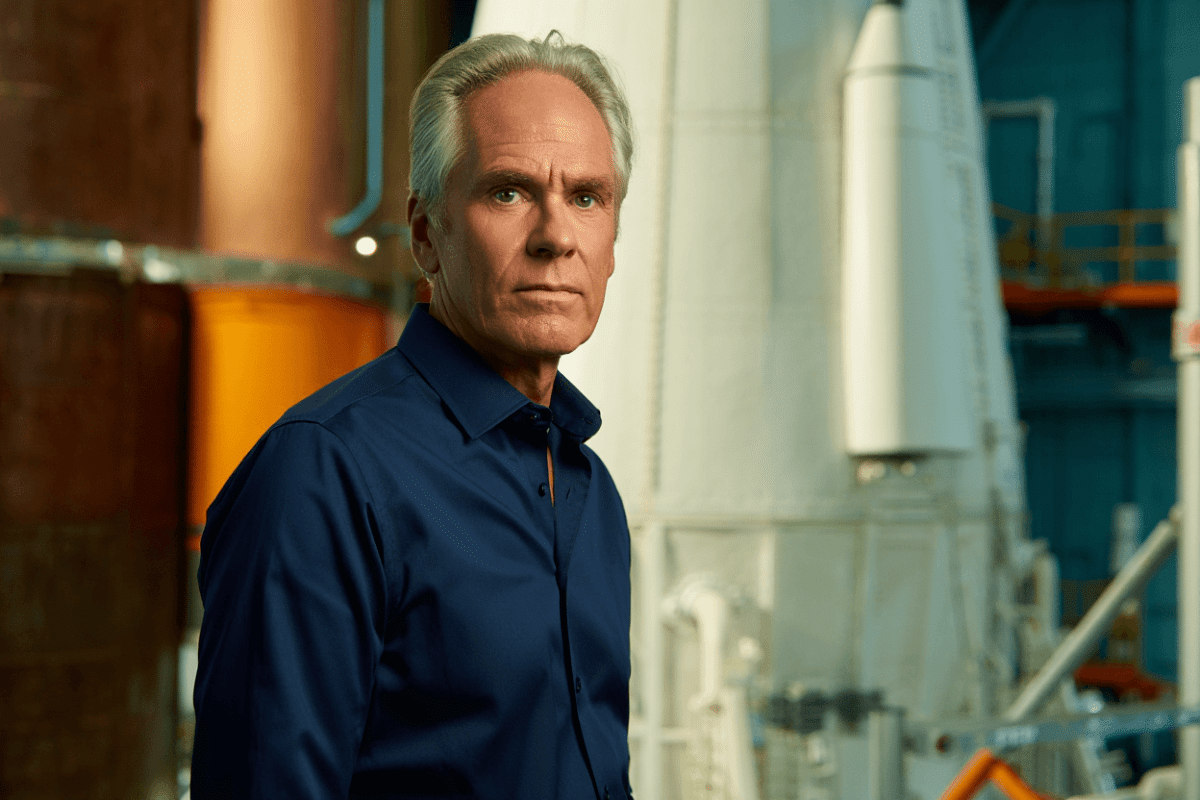
Blue Origin, founded by Jeff Bezos in 2000, remains a privately held aerospace company headquartered in Kent, Washington. Unlike competitors, this American spaceflight enterprise has never pursued public markets or external investors, maintaining complete control under Bezos’s ownership while scaling operations through massive personal funding and government contracts.
🔥 Quick Facts
- Founded September 8, 2000 by tech entrepreneur Jeff Bezos
- Still privately owned with no plans for initial public offering (IPO)
- Funded by Bezos’s personal wealth, primarily through Amazon stock sales
- Two main platforms: New Shepard (suborbital tourism) and New Glenn (orbital launches)
- May 2026: Company reportedly considering first external fundraising round in 26-year history
The Founding Vision and Early Secrecy
Jeff Bezos established Blue Origin with an ambitious but patient mission: enabling millions of people to live and work in space while preserving Earth. Unlike SpaceX, which launched publicly in 2002 with venture funding, Bezos structured Blue Origin as a stealth operation funded entirely by his personal investments. This approach gave the company operational autonomy but limited its ability to attract top talent through equity incentives.
For the first decade and a half, Blue Origin operated with minimal public visibility. The company conducted private development of suborbital vehicles and engines without significant government contracts. This changed in 2015 when Blue Origin achieved its first major success: the vertical landing of its New Shepard rocket booster, a capability that would define the company’s technical reputation.
Ownership Structure and Capital Requirements
Bezos maintains 100% ownership of Blue Origin Enterprises, L.P., with no external shareholders or venture capital involvement. According to financial filings, he has funded the company almost exclusively through his nearly 9% stake in Amazon. Between 2000 and 2026, Bezos invested an estimated $10+ billion personally into Blue Origin’s development, making it the most expensive private aerospace project in history.
Amazon’s relationship with Blue Origin adds complexity to the ownership picture. In 2026, Amazon paid approximately $1.8 billion to Blue Origin for launch services. This relationship, while commercially standard, has drawn criticism from Amazon shareholders who question whether the tech giant is “funneling” contracts to Bezos’s space company. However, Blue Origin remains legally and financially distinct from Amazon—it is not an Amazon subsidiary.
The company’s growth has accelerated significantly as Blue Origin scales manufacturing and launch operations. As detailed in recent expansion announcements, Blue Origin committed to a $600 million manufacturing facility expansion at Cape Canaveral, projected to create 500 jobs by 2027.
Operational Platforms and Revenue Sources
Blue Origin operates two distinct revenue streams, both central to its business model:
New Shepard is the company’s suborbital vehicle for space tourism. Since commercial flights resumed in 2023, the company has conducted multiple crewed missions carrying wealthy passengers to the edge of space. While profitable per flight, New Shepard has limited annual capacity and serves a niche market.
New Glenn represents the company’s orbital-class heavy-lift rocket. Following FAA commercial launch licensing in December 2024, New Glenn successfully completed multiple government missions in 2025, including deployments for NASA’s ESCAPADE Mars mission and U.S. Space Force contracts. Recent launches have carried commercial satellite payloads, diversifying revenue beyond government work.
Government contracts represent the majority of Blue Origin’s current revenue. The company holds contracts worth approximately $2.4 billion from the U.S. Space Force for future National Security Launch System (NSLS) missions, contingent on New Glenn certification. Additional contracts span lunar landers, engine development, and competitive launch services.
Financial Independence Under Scrutiny
| Metric | Value/Status |
| Ownership Structure | 100% privately held by Jeff Bezos |
| Total Personal Investment (2000-2026) | $10+ billion from Bezos’s Amazon wealth |
| Operational Profitability | Still not operationally profitable |
| IPO Status | No public offering; remains private |
| External Fundraising (May 2026) | Reportedly considering for first time |
| Government Support | $2.4B USSF contracts + NASA partnerships |
Blue Origin remains the longest-funded private aerospace project ever. Unlike SpaceX, which became operationally profitable via high-volume launches, Blue Origin has invested heavily in vertical integration—building engines, manufacturing components, and constructing facilities rather than outsourcing. This strategy requires sustained capital but provides long-term strategic control.
“Blue Origin is spending heavily as it scales operations, including building an 800,000 square foot manufacturing facility and a second launch pad in Texas. The company’s capital intensity and lack of external investors means continued reliance on Bezos’s personal wealth.”
— Financial Times analysis, May 2026
The External Fundraising Question
For 26 years, Blue Origin remained entirely self-funded. In May 2026, reports emerged that the company was exploring external investment for the first time. This potential shift signals several realities: Blue Origin’s expansion requires capital beyond what Bezos comfortably allocates from Amazon stock sales, competition from SpaceX’s commercial launch dominance is intensifying, and future lunar and deep-space missions demand additional resources.
Government contracts alone cannot sustain Blue Origin’s ambitions. The company’s Blue Moon lunar lander program and Terawave satellite constellation (announced January 2026, deployment planned Q4 2027) represent significant capital requirements. External investors would provide growth capital but potentially dilute Bezos’s control for the first time.
However, Blue Origin’s private status remains its defining characteristic. Even if external funding occurs, the company would likely remain private—avoiding the quarterly earnings pressures and public disclosure requirements of public companies. This structure allows long-term thinking impossible for public shareholders.
Will Blue Origin Ever Go Public?
Speculation about Blue Origin’s IPO has persisted for years, but Bezos has given no indication of pursuing one. Several factors make an IPO unlikely: Bezos controls Amazon and his family’s legacy through patient, private management; Blue Origin’s massive capital needs can be met without public markets; and maintaining private control protects strategic decisions from shareholder activism around space industry risks.
Further, an IPO would invite regulatory scrutiny of Blue Origin’s relationship with Amazon and government contracts, potentially constraining business flexibility. For Bezos, the power of private ownership outweighs the liquidity benefits of public markets.
The company’s trajectory suggests that even with external investors, Blue Origin will remain privately held—perhaps with minority shareholders, but never answerable to public capital markets.
Sources
- Wikipedia – Blue Origin – Company founding, ownership, and technical milestones
- GeekWire (April 2026) – Amazon’s $1.8B in payments to Blue Origin and shareholder concerns
- Financial Times (May 2026) – Blue Origin’s first external fundraising exploration and capital requirements
- PitchBook – Private company valuation and investor information
- Spaceflight Now – FAA commercial launch licensing and New Glenn mission data
- U.S. Space Force contracts – Official government awards to Blue Origin
- Ars Technica (March 2026) – Blue Origin’s operational profitability analysis and workforce equity initiatives










