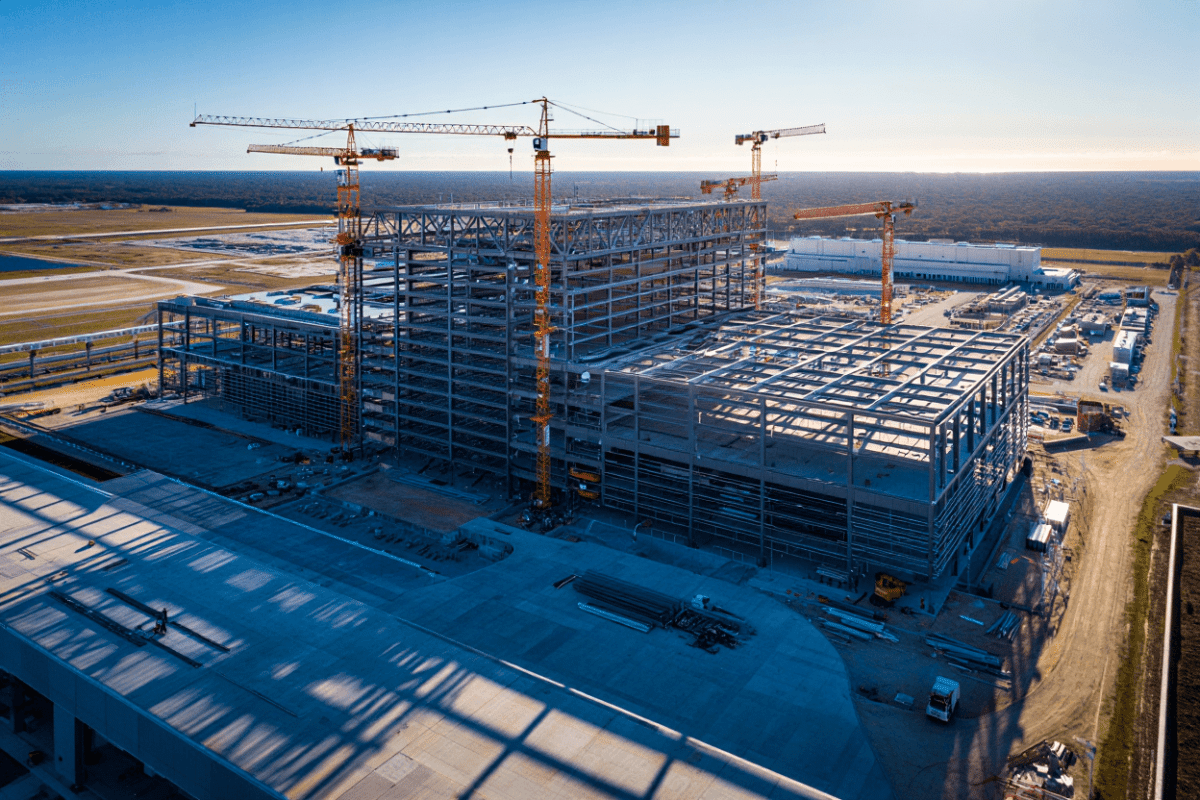
Blue Origin announced a $600 million expansion of its manufacturing operations in Cape Canaveral, Florida on May 22, 2026, creating an estimated 500 aerospace jobs with average salaries exceeding $98,000. The project, dubbed Project Horizon, represents a significant investment in commercial rocket production capabilities as the space industry accelerates orbital missions and satellite deployment schedules.
🔥 Quick Facts
- $600 million investment by Blue Origin for manufacturing expansion
- 830,000 square feet of new upper-stage production facility
- 500 high-wage aerospace jobs with average compensation exceeding $98,000
- Launch Complex 36 located nine miles away at Cape Canaveral Space Force Station
- New Glenn rockets will use upper stages manufactured at expanded facility
Strategic Expansion in Florida’s Space Coast
Blue Origin‘s expansion builds on the company’s existing presence in Brevard County, where it currently employs nearly 4,000 workers and has invested over $2.3 billion across operations and supplier networks since beginning operations in the region. Florida Governor Ron DeSantis announced the project as part of the state’s continued commitment to commercial space development and job creation.
The new facility will focus exclusively on manufacturing upper stages for Blue Origin‘s New Glenn orbital rocket system. New Glenn completed its third successful mission on April 19, 2026, launching from Launch Complex 36 at Cape Canaveral Space Force Station. By consolidating upper-stage production into a dedicated 830,000-square-foot manufacturing complex, Blue Origin aims to increase production volume and capacity for anticipated commercial demand.
Market Position and Manufacturing Capacity
The expansion addresses growing demand in the commercial satellite and national security launch markets. Blue Origin‘s strategy differs from competitors: while SpaceX dominates high-volume orbital missions through Starship and Falcon systems, Blue Origin positions New Glenn for medium-to-heavy payload orbital deployment with emphasis on reusability and cost efficiency.
Manufacturing capacity constraints remain a bottleneck for aerospace companies meeting 2026-2030 demand forecasts. The space industry workforce is expanding at approximately 5% annually, outpacing traditional aerospace employment growth. Upper-stage production requires precision engineering, welding expertise, avionics integration, and materials science specialization—creating technical career pathways in Florida‘s labor market.
Economic Impact and Employment Metrics
| Metric | Value | Impact |
| Investment Amount | $600 Million | Largest private aerospace expansion in Florida |
| Facility Size | 830,000 sq ft | Comparable to 11 American football fields |
| New Jobs | 500 positions | Specialized aerospace manufacturing roles |
| Average Salary | $98,000+ | Above regional and national averages |
| Blue Origin Florida Employees | ~4,000 (pre-expansion) | 12.5% workforce increase projected |
| Regional Supplier Network | 500+ companies | $2.3 billion in cumulative investment |
The facility will support component supply chains across Florida, creating indirect job growth in machining, materials supply, logistics, and engineering support. Brevard County, home to Kennedy Space Center and Cape Canaveral Space Force Station, already supports over 170,000 aerospace and defense workers regionally.
“Blue Origin’s continued commitment to Florida exemplifies the growing strength of our commercial space industry. This expansion will create high-wage jobs and strengthen our position as the world’s leading space destination.”
— Governor Ron DeSantis, Office of the Governor of Florida, May 22, 2026
Production Timeline and Operational Roadmap
Blue Origin expects the 830,000-square-foot facility to begin operations within the next 24-36 months, pending construction and equipment installation. The facility will manufacture complete upper stages for New Glenn, integrating engine rings, structures, avionics, and thermal management systems before shipment to Launch Complex 36.
Recent New Glenn successful missions demonstrate operational readiness. NG-3 lifted off on April 19, 2026, with payload deployment confirming the launch system’s reliability. Each additional New Glenn mission requires a new upper stage, establishing steady production demand that justifies the expanded manufacturing footprint.
What This Expansion Signals for Space Industry Competition
The $600 million commitment represents Blue Origin‘s confidence in sustained commercial demand for medium-to-heavy lift orbital access. Unlike competitors entering or exiting space tourism markets, Blue Origin invests in production infrastructure—a signal that management expects recurring, high-volume mission rates through the 2030s.
Expansion announcements from aerospace manufacturers typically follow confirmed contracts with government agencies (Department of Defense, Space Force, National Reconnaissance Office) or commercial satellite operators. Blue Origin‘s scale of investment suggests long-term agreements securing New Glenn missions beyond currently announced manifests. This contrasts with SpaceX‘s model of vertical integration and extreme manufacturing velocity, and Virgin Galactic‘s focus on point-to-point suborbital space tourism.
Sources
- Reuters — New $600 million facility announcement and employment details
- Office of Governor Ron DeSantis — Official project announcement and salary metrics
- Manufacturing Dive — Pre-expansion Blue Origin employment figures and regional context
- U.S. Census Bureau — Space industry workforce growth statistics
- Blue Origin Official Missions Page — New Glenn mission launch data and operational status