
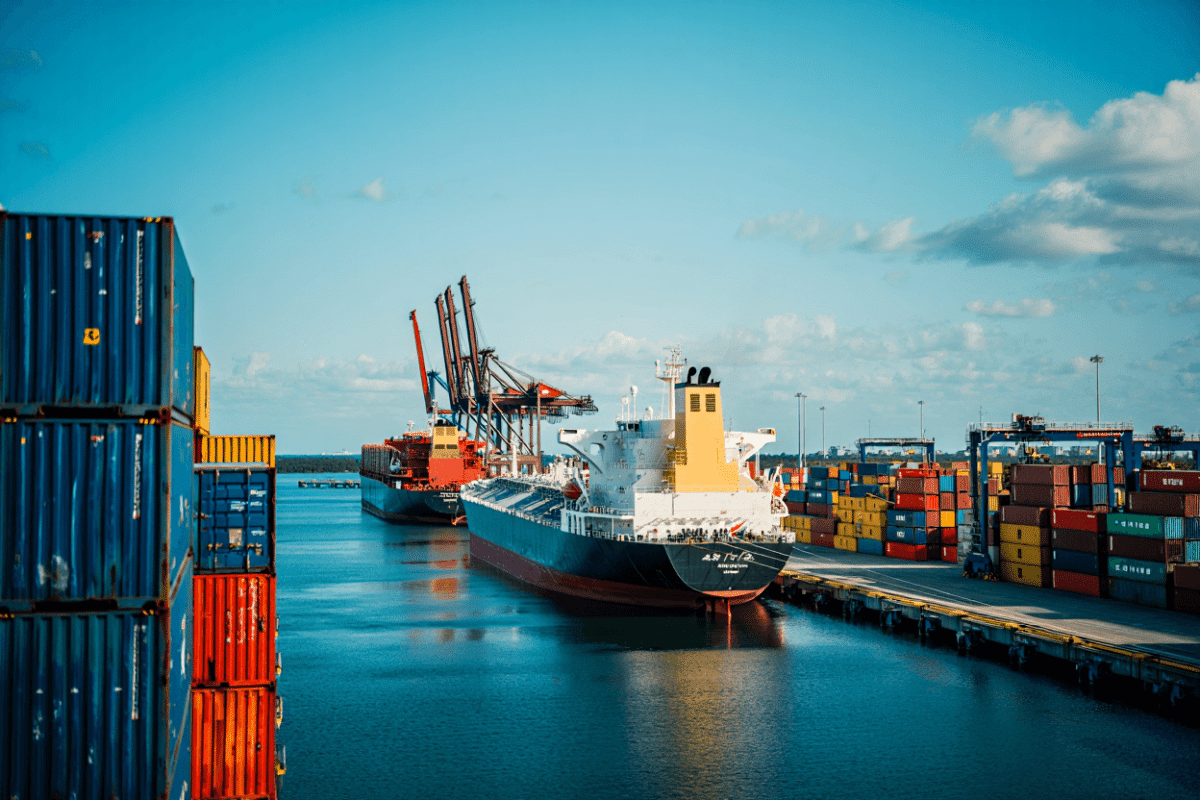
Port Canaveral has secured a $20.21 million federal grant to rehabilitate its North Cargo Berths 1 and 2, marking a strategic infrastructure investment in Florida’s maritime commerce hub. The U.S. Department of Transportation grant, administered through the Maritime Administration’s Port Infrastructure Development Program (PIDP), represents a 54 percent federal contribution toward a $37.43 million total project—underscoring national commitment to strengthening commercial port capabilities that support fuel supply chains across the southeastern United States.
🔥 Quick Facts
- $20.21 million federal grant awarded in April 2026 via Department of Transportation
- Project scope: $37.43 million total with 54% federal funding coverage
- 16-18 month construction timeline beginning early 2027
- Port Canaveral economic impact: $6.06 billion annually with 32,650+ jobs supported
- Rep. Mike Haridopolos (FL-8) secured the funding through PIDP competitive selection
Strategic Cargo Infrastructure for Refined Fuel Supply Chain
The North Cargo Berths 1 and 2 serve specialized tanker vessels that transport refined petroleum products, liquefied petroleum gas, and other critical commodities essential to regional energy security. These berths face operational constraints from aging infrastructure—a common challenge at U.S. deepwater ports competing for federal modernization funds. The $37.43 million rehabilitation project addresses deteriorating dock structures, equipment, and cargo-handling systems through systematic upgrades. This investment recognizes that Port Canaveral handles approximately 34 percent of Florida’s waterborne cargo, connecting supply networks to manufacturers, refineries, and distribution centers across the state and beyond.
The port’s cargo division processed millions of tons of petroleum products last fiscal year, cementing its role as a critical energy infrastructure asset. Federal funding through the PIDP reflects national policy priorities: strengthening supply chain resilience, reducing transportation bottlenecks, and maintaining U.S. port competitiveness against international terminals.
Federal Funding Mechanism and Competitive Selection Process
The Port Infrastructure Development Program (PIDP) distributes discretionary grants administered by the Maritime Administration under the Department of Transportation. The April 2026 announcement included 37 port infrastructure projects nationwide receiving $774 million—reflecting national investment in maritime gateways. Port Canaveral’s selection demonstrated strong merit against competing applicants through multiple evaluation criteria: project readiness, economic impact, supply chain significance, and infrastructure condition assessment. The 16-to-18-month work window beginning early 2027 allows precise scheduling to minimize operational disruption to existing cargo operations.
Rep. Mike Haridopolos, representing Florida’s 8th Congressional District, played a key role in securing this allocation through sustained advocacy for Port Canaveral’s federal funding priorities. Haridopolos emphasized the grant’s significance for regional maritime commerce, stating that improved cargo infrastructure strengthens Florida’s competitive position while supporting workforce development across the Space Coast region.
Economic and Operational Impact Projections
| Infrastructure Metric | Current Status | Post-Rehabilitation Target |
| Berth Capacity (simultaneous tanker vessels) | 2 vessels maximum | Enhanced dock strength for modern tanker designs |
| Cargo-Handling Equipment Age | 20+ years (some systems) | Modern, standardized equipment |
| Port Canaveral Annual Economic Impact | $6.06 billion (2023) | Projected 5-8% growth trajectory |
| Jobs Supported (direct/indirect) | 32,650+ | Workforce expansion in cargo handling |
| Operational Efficiency Rating | Constrained by aging berth infrastructure | Extended operational window and faster turnaround times |
Independent economic analysis suggests facility upgrades could generate 25-40 additional shipping operations annually through reduced vessel wait times and enhanced dock reliability. These efficiency gains translate to measurable impacts: faster cargo turnover reduces logistics costs for refineries; improved equipment reliability minimizes operational downtime; expanded capacity accommodates larger, modern tanker vessels currently bypassing Florida ports for competing southeastern terminals.
“This investment strengthens Port Canaveral’s position as a critical infrastructure asset while supporting the region’s economic resilience and energy security. The rehabilitated berths will enhance operational efficiency for tanker operators while generating sustained economic returns across Florida’s maritime sector.”
— John W. Murray, Port Canaveral CEO
Alignment with National Port Modernization Strategy
This Cape Canaveral region infrastructure development reflects broader federal policy objectives outlined in the National Infrastructure Investment and Jobs Act—specifically provisions strengthening U.S. maritime gateways against international commercial competition. Port modernization initiatives worldwide have accelerated: European deepwater terminals upgraded in 2021-2024; Asian ports invested heavily in automated cargo systems; U.S. ports historically received inconsistent federal support. The PIDP represents corrective investment, allocating $488.6 million for FY 2026 across competing projects.
Florida seaports experience 20.4% cargo growth since 2015, while cruise passenger volume jumped 29.7 percent—demonstrating sustained demand for port services. Port Canaveral’s dual mission—supporting maritime commerce and space industry infrastructure development—positions the facility differently than traditional cargo ports. Commercial space companies utilize Port Canaveral’s upland facilities for processing rocket boosters and aerospace components, creating unique operational complexity that infrastructure investment must accommodate.
Construction Timeline and Operational Considerations
Work begins early 2027 under a 16-to-18-month construction schedule—a compressed timeline reflecting modern project management practices. Phased berth rehabilitation allows one dock to remain operational during construction, minimizing cargo service interruptions. Preliminary work includes structural assessment, environmental compliance documentation, and equipment procurement. The main rehabilitation phase involves dock face reinforcement, piping system modernization, manifold equipment replacement, and safety system upgrades meeting current federal maritime standards.
Port management has coordinated with major fuel suppliers and shipping operators to establish contingency mooring arrangements at alternative nearby facilities during peak construction phases. This preparation demonstrates sophisticated supply chain planning—critical given petroleum product supply’s time-sensitive nature. Successful project completion positions Port Canaveral to accommodate expanded commercial space industry logistics alongside traditional maritime cargo, reinforcing its role as a multi-purpose regional infrastructure hub.
What Will Modernized Cargo Infrastructure Mean for Florida’s Maritime Future?
The berth rehabilitation project represents one component of Port Canaveral’s broader expansion strategy. The port announced a $2.6 billion cruise terminal expansion targeting three new terminals by 2030, alongside the announced $37.43 million cargo infrastructure investment. Collectively, these initiatives position Port Canaveral for 5-8 percent annual growth in cargo throughput and sustained leadership in U.S. cruise traffic—currently the busiest cruise port globally. Questions remain about how cargo expansion intersects with capacity limitations, environmental considerations, and labor workforce scaling. Port leadership signals confidence through continued federal funding pursuit and private sector partnerships, suggesting robust projected demand offsets infrastructure constraints. The real-time outcome measure will emerge in 2028-2029 when rehabilitated berths enter full operation under modern operational protocols.
Sources
- U.S. Department of Transportation — Port Infrastructure Development Program awards announcement, April 2026
- Port Canaveral — Official media release and economic contribution analysis, 2023-2026
- Representative Mike Haridopolos — Federal funding announcement and project advocacy statement
- Maritime Administration — PIDP grant program guidelines and competitive selection criteria
- Florida Department of Transportation — Statewide seaport economic impact analysis, 2025










