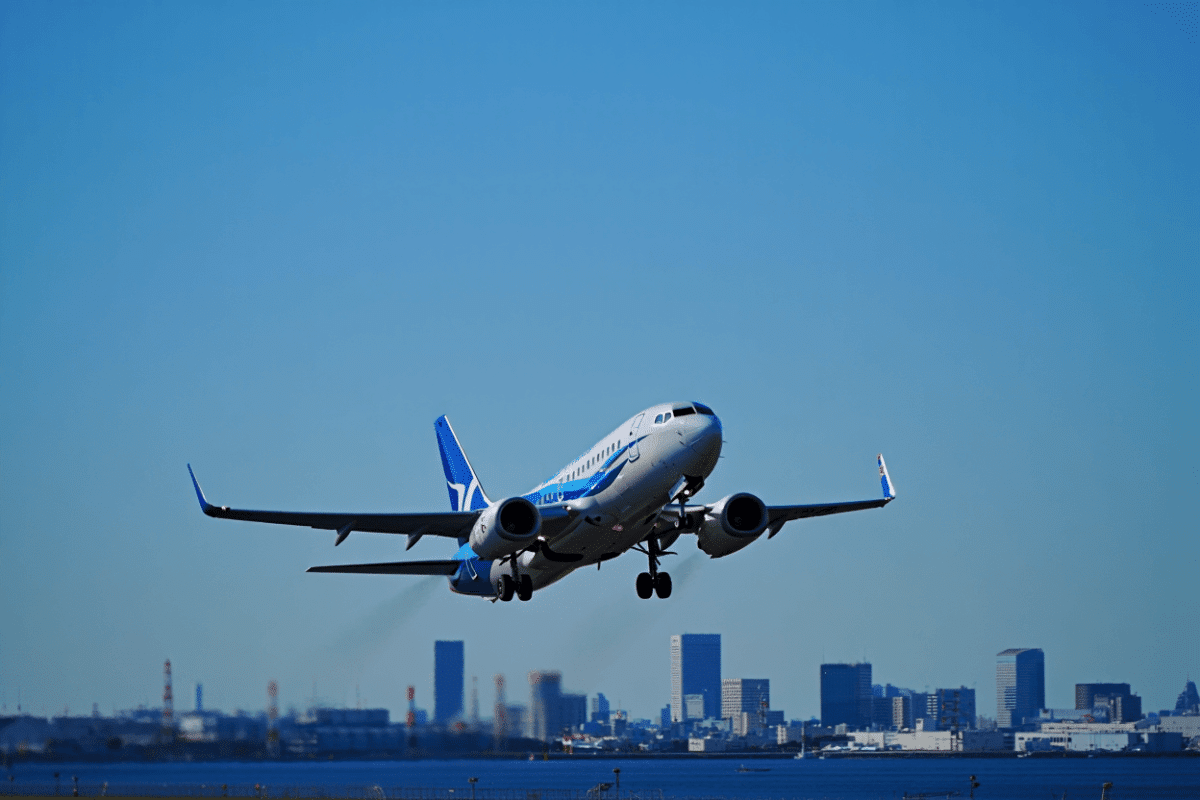
Skymark Airlines is bringing the Boeing 737 MAX to commercial service in Japan for the first time, with the carrier scheduled to begin operations this week. The historic debut marks May 28, 2026, when Skymark‘s first MAX 8—registration JA738A—will launch service on the Tokyo Haneda to Fukuoka route, operating 3 of 12 daily flights. This achievement positions Japan as the latest major aviation market to embrace the Boeing 737 MAX family following its safety recertification and demonstrates the aircraft’s growing acceptance in the Asia-Pacific region.
🔥 Quick Facts
- First Japanese airline to operate the 737 MAX: Skymark Airlines
- Aircraft arrived at Haneda on May 4, 2026 from Seattle manufacturing facility
- Initial route: Tokyo Haneda to Fukuoka with 177-seat mono-class configuration
- Commercial operations begin: May 28, 2026 with three daily flights
- Fuel efficiency gain: 20% more efficient than Boeing 737-800 predecessor
Japan Embraces the 737 MAX After Recertification
The Boeing 737 MAX endured a global grounding from 2019 to 2020 following two fatal accidents. Since the FAA recertified the aircraft in November 2020, airlines worldwide have gradually resumed operations. However, Japan lagged behind other major markets in adoption, with Japan Airlines and All Nippon Airways deferring deliveries. Skymark Airlines‘s move this week represents a turning point, signaling confidence in the aircraft’s safety record and operational reliability. The carrier placed its original order in November 2022 for up to 12 MAX aircraft as part of a broader fleet modernization strategy.
Skymark operates from a strong competitive position in Japan’s domestic market. Based at Tokyo Haneda, the airline serves underserved routes and leisure destinations. The 737 MAX directly supports Skymark’s expansion strategy by offering superior fuel economy, allowing the carrier to operate longer routes profitably while reducing operational costs. The Haneda-Fukuoka corridor is one of Japan’s busiest domestic routes, handling millions of passengers annually, making it an ideal choice for the initial deployment.
Technical Specifications and Operational Advantages
The Boeing 737 MAX 8 configuration arriving at Haneda features CFM LEAP-1B engines—a critical upgrade from the older 737-800‘s CFM56 powerplants. These next-generation engines deliver 20% greater fuel efficiency while reducing emissions by 50% compared to their predecessors. The aircraft achieves a range of 3,550 nautical miles, sufficient for all domestic Japanese routes and many regional international flights.
| Specification | Boeing 737 MAX 8 | Boeing 737-800 (Current Skymark Fleet) |
| Seating Capacity (Single-Class) | 177 passengers | 162 passengers |
| Fuel Capacity | 25,817 liters | 23,860 liters |
| Engines | 2x CFM LEAP-1B turbofans | 2x CFM56-7B turbofans |
| Maximum Thrust per Engine | 27,451 lbf (12,470 kg) | 26,730 lbf (12,121 kg) |
| Range (Nautical Miles) | 3,550 nm | 3,060 nm |
| Fuel Efficiency Improvement | 20% better | — |
For Skymark, the 737 MAX 8‘s increased capacity and extended range unlock new commercial opportunities. An extra 15 seats per flight translates directly to incremental revenue. On the Fukuoka route, where Skymark operates multiple daily frequencies, this capacity gain compounds significantly. The aircraft’s extended 3,550 nm range also positions Skymark for potential expansion into underserved regional markets across Japan that current equipment cannot economically serve.
Japan’s Broader MAX Adoption Outlook
Japan Airlines (JAL) has ordered 21 Boeing 737 MAX 8 aircraft, with the first deliveries expected during fiscal year 2027 (beginning April 2027) according to recent guidance. All Nippon Airways (ANA) similarly committed to the MAX family, though with later delivery schedules. Skymark’s early adoption demonstrates that Japanese carriers recognize the economic case for the aircraft. The MAX family already serves multiple Japanese airlines indirectly through international codeshares and partnerships, but domestic operations represent a critical milestone in regional acceptance. As commercial aviation globally advances with new technologies and sustainable operations, Japan’s embrace of modern efficient aircraft aligns with broader industry trends toward fuel efficiency and carbon reduction.
What This Debut Means for Japan’s Aviation Sector
Beyond Skymark’s operational gains, the 737 MAX debut carries symbolic weight. Japanese aviation regulators have imposed rigorous oversight since the MAX certification crisis, reflecting the nation’s safety-first aviation culture. Skymark’s confidence in deploying the aircraft signals that regulatory confidence has solidified. The move also reinforces competition in Japan’s domestic market. Skymark, JAL, and ANA all compete fiercely on high-frequency routes. The ability to deploy newer, more efficient aircraft gives Skymark a competitive edge on fuel costs and fare flexibility before JAL and ANA fully transition their fleets. This competitive dynamic benefits passengers through improved service and fare options. Additionally, Skymark’s MAX expansion mirrors broader industry dynamics—where commercial operators invest in modern infrastructure to scale operations efficiently, whether in aviation or satellite communications.
When Will Passengers Fly the Skymark 737 MAX?
Travelers can book Skymark 737 MAX flights beginning May 28, 2026 on three designated daily frequencies between Tokyo Haneda and Fukuoka. The remaining nine daily frequencies on this route will continue operating with the older 737-800 fleet. Skymark has not yet announced specific flight numbers or schedules, but these are expected via the carrier’s website shortly. Passengers should note that the 737 MAX 8 typically offers modern in-flight entertainment systems, updated cabin lighting, and improved lavatory facilities compared to older 737 variants. The aircraft’s modern design means wider aisles and higher ceilings relative to the fuselage diameter, contributing to passenger comfort even in single-class configurations. As Skymark expands its MAX fleet over coming months, additional routes may transition to the new aircraft, with potential expansion to leisure destinations like Naha (Okinawa), Sapporo, and Kobe.
Sources
- AeroRoutes — Skymark 737 MAX service launch date and Haneda-Fukuoka schedule confirmation
- Ch-Aviation — Japanese airline MAX adoption timeline and fleet modernization strategy
- Scramble Civil News — Skymark first commercial flight announcement and aircraft registration details
- Boeing Commercial (Official) — 737 MAX technical specifications and performance metrics
- Japan Airlines Press Release (Official) — JAL 737 MAX delivery schedule and domestic operations plan
- Wikipedia: Boeing 737 MAX — Historical context on FAA recertification and global operations timeline