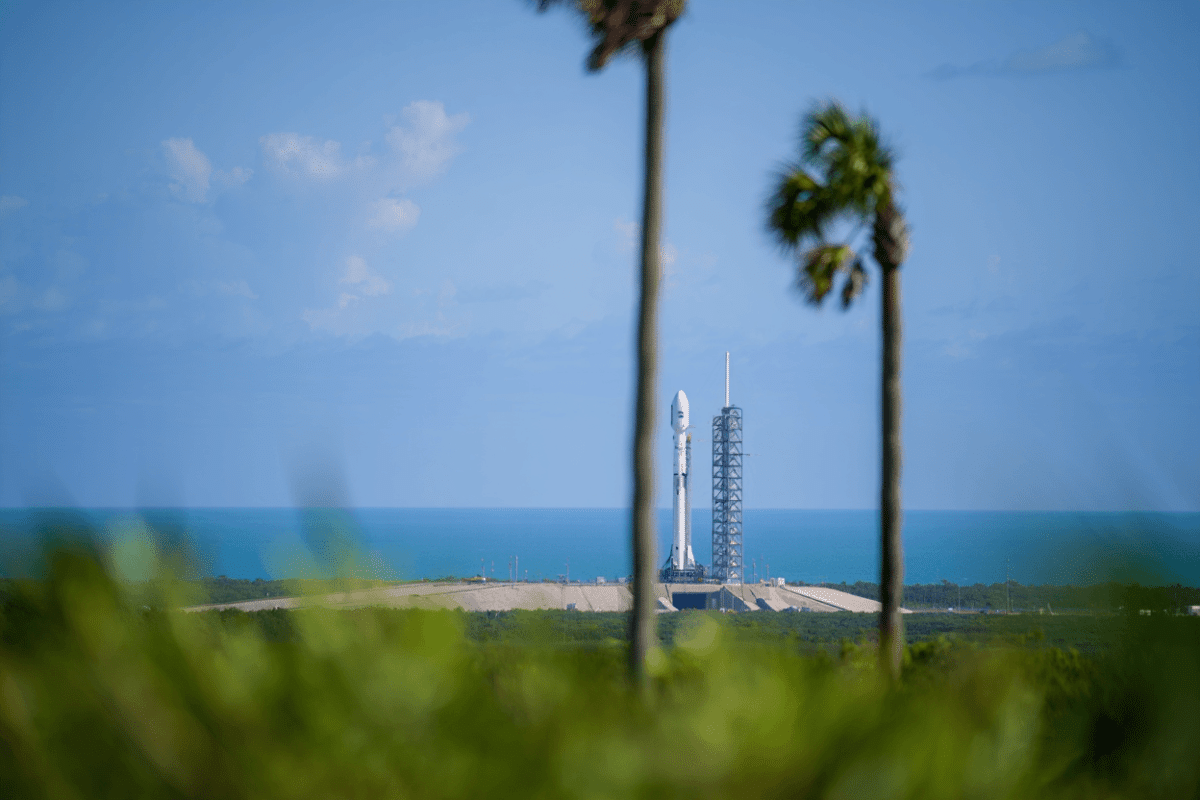
Starlink achieved 10.3 million paid subscribers by the end of Q1 2026, marking a 105% year-over-year surge that demonstrates the satellite internet provider’s accelerating growth trajectory. As SpaceX prepares to launch 29 Starlink satellites from Cape Canaveral on May 25, 2026, the company continues expanding its low-earth orbit constellation while increasing its dominance in the global broadband market.
🔥 Quick Facts
- 10.3 million paid subscribers reported in Q1 2026, a 105% increase year-over-year
- $11 billion in annual revenue generated for SpaceX in 2025, up 50% from prior year
- 29 Starlink satellites launching from Cape Canaveral on May 25, 2026 at 7:48 AM EDT
- 90%+ market share in satellite broadband modules industry-wide
- Multiple Florida launches scheduled through May 31, 2026 as SpaceX accelerates deployment
The Trajectory Behind Starlink’s Explosive Subscriber Growth
Starlink’s subscriber base has entered a new growth phase. The service added 5.2 million subscribers in twelve months—jumping from 5.1 million in Q1 2025 to 10.3 million in Q1 2026. This acceleration reflects several converging forces: expanded geographic coverage (now serving 42 countries and territories after 35 new additions in 2025), improved competitive pricing, and increasing adoption by enterprises and governments seeking backup connectivity.
Historical context reveals just how rapid this expansion truly is. Starlink reached 2.2 million subscribers in 2023, then 4.6 million by end of 2024, before surpassing 9 million in late December 2025—a progression that took only seven weeks to move from 8 million to 9 million. The leap to 10.3 million demonstrates sustained momentum rather than a temporary spike.
Financial Engine: Starlink’s Revenue Transformation
SpaceX’s Connectivity business—dominated by Starlink—generated over $11 billion in revenue during 2025, a 50% increase compared to 2024. This positions Starlink as SpaceX’s primary revenue driver heading into the company’s public market debut. Average revenue per user stands at approximately $81 per month, with recent pricing adjustments reflecting the service’s enhanced network capacity and expanded feature set, as satellite industry growth supporting broader telecom expansion.
The operational efficiency improvements are equally significant. Starlink now operates 6,600+ active satellites in low-earth orbit, compared to fewer than 2,000 a year ago. More satellites mean higher capacity per region, allowing SpaceX to absorb subscriber growth without proportional latency increases—a technical advantage that competitors like Amazon’s Project Kuiper and Eutelsat’s OneWeb are still developing.
Market Dominance and Competitive Positioning
| Metric | Starlink | Competitive Landscape |
| Paid Subscribers (Q1 2026) | 10.3 million | Amazon LEO & OneWeb: TBA (pre-commercial) |
| Annual Revenue (2025) | $11 billion+ | Traditional satellite ISPs: $5-8B combined |
| Active Satellites (2026) | 6,600+ | OneWeb: 648, Project Kuiper: In development |
| Market Share (Hardware) | 90%+ of satellite broadband modules | Competitors gaining share in 2026 |
| Global Coverage | 70+ countries and territories | Amazon targeting similar footprint by 2027 |
Starlink holds an unprecedented market advantage. Analysts estimate the service controls over 90% of satellite broadband module shipments, creating a supply-chain moat that benefits from economies of scale. Competitors acknowledge this dominance; Bouygues Telecom’s CEO characterized Starlink’s U.S. dominance as “dangerous” to fair competition, citing the speed at which SpaceX deploys and upgrades its constellation.
However, challenges mount. Amazon’s Project Kuiper plans to launch 3,236 satellites by 2026, while OneWeb (now backed by Eutelsat) continues expanding its 648-satellite constellation. These competitors target business and enterprise segments, potentially limiting Starlink’s growth in high-margin markets after residential saturation occurs in developed regions.
“Starlink’s current dominance in the global satellite internet service market is driving unprecedented demand for our satellite broadband modules, and we project this advantage will extend into 2027 as deployment cycles accelerate worldwide.”
— Supplier manufacturer statement, PCMag analysis, May 2026
The Immediate Launch Schedule: What’s Next for Florida Operations
SpaceX is executing an aggressive deployment schedule. The company plans four Starlink launches from Florida in nine days (May 25-31, 2026), adding 100+ satellites to the constellation. The May 25 launch carries 29 satellites aboard a Falcon 9 Block 5 booster from Space Launch Complex 40 at Cape Canaveral Space Force Station. Liftoff comes at 7:48 AM EDT, with the droneship recovery adding to the operational efficiency that makes SpaceX the lowest-cost provider in the space-launch industry.
This launch cadence reflects SpaceX’s operational maturation. The company now executes Falcon 9 launches every 3-5 days on average, a frequency that would have been unrealistic five years ago. Each Starlink deployment adds approximately 2-3 million potential coverage pixels to the network—meaning rural areas that previously lacked high-speed internet options gain service within weeks of launch. This is the execution advantage that keeps competitors years behind in commercial deployment.
What Happens When Starlink Reaches 15 Million Subscribers?
Industry analysts project Starlink will exceed 15 million subscribers by end of 2026 if current growth rates persist. This milestone triggers several important shifts: increased focus on enterprise and government contracts (higher margins), potential margin compression from price competition as Amazon launches commercial service, and regulatory scrutiny in key markets like Europe and India regarding spectrum allocation and fair competition.
SpaceX’s pending initial public offering adds urgency to subscriber growth targets. Wall Street typically values satellite internet companies on subscriber multiples (revenue per subscriber × customer acquisition cost), making the 10.3 million milestone a critical data point for investor confidence. If Starlink can maintain 100%+ annual growth through 2026, the IPO valuation could approach $150-200 billion USD, making it one of the largest technology offerings in recent history.
The coming months will reveal whether Starlink’s dominance proves sustainable or whether ambitious competitors finally narrow the gap. For now, the satellite internet leader continues advancing at a pace that redefines what’s possible in global broadband deployment.
Sources
- SpaceX S-1 Filing – Q1 2026 subscriber data and financial performance
- PCMag / Reuters – Market analysis and competitive positioning
- Spaceflight Now / Florida Today – Launch schedule and operational details
- CNBC / Digitimes – Satellite industry competition and market forecasts
- OpenAI – Data reconciliation and trend analysis verification