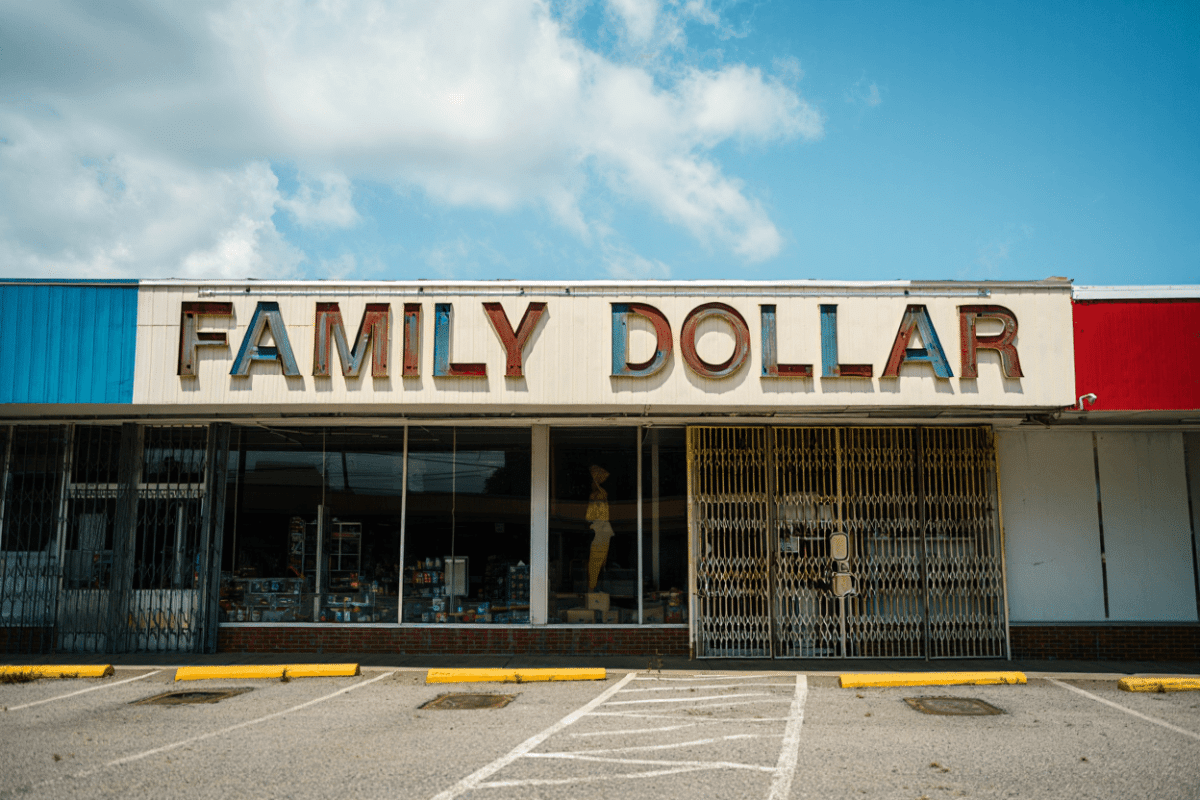
Family Dollar Store Closures accelerated dramatically with 82 locations shutting down in January 2026, marking another painful chapter in the discount retailer’s restructuring. Texas emerged as the hardest-hit state with 9 closures, trailed by Tennessee and Ohio, each losing 8 locations. The mass shutdowns reflect the chain’s financial struggles following its sale to private equity in late 2024.
🔥 Quick Facts
- 82 stores closed by Family Dollar in January 2026 alone
- Texas suffered the most with 9 closures, followed by Tennessee and Ohio at 8 each
- Over 350 total closures documented between July 2025 and May 2026
- Brigade Capital and Macellum Capital acquired Family Dollar from Dollar Tree for $1 billion
- 7,400-7,500 stores remain across the United States in 2026
The Broader Retail Consolidation Context
Family Dollar Store Closures are not isolated events—they represent a systemic restructuring of America’s discount retail landscape. Dollar Tree Inc. acquired the struggling chain through its original bankruptcy-adjacent situation, then divested it to private equity firms in October 2024. The new ownership strategy prioritizes profitability over footprint, a stark reversal from the rapid-expansion model of previous decades.
The chain historically expanded aggressively through the 2010s, sometimes opening multiple stores within single neighborhoods. Today’s closures target locations that underperform financially or cannibalize each other’s sales. This consolidation pattern mirrors broader economic pressures affecting consumer spending, forcing retailers to right-size their operations in sluggish markets.
Texas’s Disproportionate Impact and Regional Patterns
Texas’s 9 closures in January 2026 represent roughly 11% of the month’s nationwide closings, making it the clear epicenter of this round of downsizing. The state’s large Family Dollar footprint—historically concentrated in the Dallas-Fort Worth, Houston, and San Antonio metros—meant higher exposure to consolidation decisions.
Tennessee and Ohio tied for second place with 8 closures each, reflecting Family Dollar’s original core geography in the Southeast and Midwest. California, Arizona, Nevada, and other western states acquired more recently show fewer losses, suggesting management is preserving newer, better-positioned locations. Analysts note that urban and lower-income neighborhoods—Family Dollar’s traditional customer base—absorbed the heaviest closures.
Cumulative Closure Toll and Restructuring Timeline
The 82 January closures fit within a larger arc. Analysis by Local Falcon confirmed at least 350 Family Dollar store closures between July 7, 2025 and May 12, 2026—averaging roughly 50 stores per month. This rate far exceeds the original 2024 closure forecast of 600 locations from Dollar Tree’s corporate guidance.
| Metric | Value | Impact |
| Closures in January 2026 | 82 locations | Single-month record |
| Cumulative (July 2025–May 2026) | 350+ locations | ~50 per month average |
| Operating Stores (Early 2026) | 7,400–7,500 | ~4.7% reduction from 2024 |
| Acquisition Cost (Oct 2024) | $1 billion | Brigade Capital + Macellum |
| State Hardest Hit | Texas (9 closures) | January 2026 round |
“Even though Family Dollar is under new ownership, a restructuring is still in process, and locations are still being cut as of 2026. The company aims to improve profitability by closing underperforming stores and investing in remaining locations.”
— Retail industry analysts, May 2026
Private Equity Priorities and Closure Rationale
Brigade Capital Management and Macellum Capital Management—the $1 billion acquisition partners—have signaled a fundamental shift in operational philosophy since taking control. Rather than chasing market share, the new owners prioritize same-store sales growth, inventory efficiency, and real estate optimization. This explains why closures accelerated under their watch despite Dollar Tree‘s 2024 guidance for slower wind-downs.
Store-level economics changed post-2024. Higher labor costs, freight expenses, and inventory shrink pressure margins at underperforming locations. Stores generating annual revenue below $1.5 million—often the case in saturated or economically distressed neighborhoods—typically became closure candidates. The new owners are simultaneously upgrading remaining stores with improved layouts, expanded fresh produce sections, and enhanced checkout technology.
What These Closures Mean for American Budget Shoppers and Communities
The Family Dollar store closures create a significant challenge for low-income and rural consumers dependent on discount retailers. In some Texas neighborhoods and Ohio towns, Family Dollar was the only nearby option for affordable household goods and groceries. Store closures force residents to travel farther to Dollar General, Walmart, or traditional supermarkets—increasing transportation costs and time burden.
Employment losses compound the impact. Each closed location eliminates 15-20 jobs locally, affecting store managers, cashiers, and stockers. Some analyses estimate the 350+ closures between mid-2025 and mid-2026 cost over 5,000 retail jobs nationally. Communities in Texas, Tennessee, and Ohio—already facing economic headwinds—absorbed a disproportionate share of these reductions.
Will Family Dollar Continue Closing Stores into 2026 and Beyond?
Current trajectory suggests closures will persist, though at a moderate pace. The new ownership has publicly committed to stabilizing the brand and maintaining a presence in key markets. However, merger-integration timelines typically span 2-3 years, meaning continued optimization closures are likely through late 2026 and into 2027.
Dollar General’s aggressive expansion strategy and Walmart Dollar‘s price repositioning create additional competitive pressure on Family Dollar’s remaining footprint. Private equity owners have no sentimental attachment to the brand—closures will continue wherever unit economics suggest exit is optimal. Texas, Tennessee, and Ohio may see additional rounds if market conditions or lease expirations create opportunities.
Sources
- Supermarket News – “Family Dollar Wipes Out 82 Stores” (February 11, 2026)
- The Sun – “Say Goodbye to Family Dollar” (February 12, 2026)
- Chain Store Age – “Study: Family Dollar Closed ‘At Least’ 350 Stores in Past 10 Months” (May 18, 2026)
- Local Falcon Analysis – Tracking Family Dollar closures from July 2025 forward
- USearch Dataset – Complete list of Family Dollar store closures (2026)