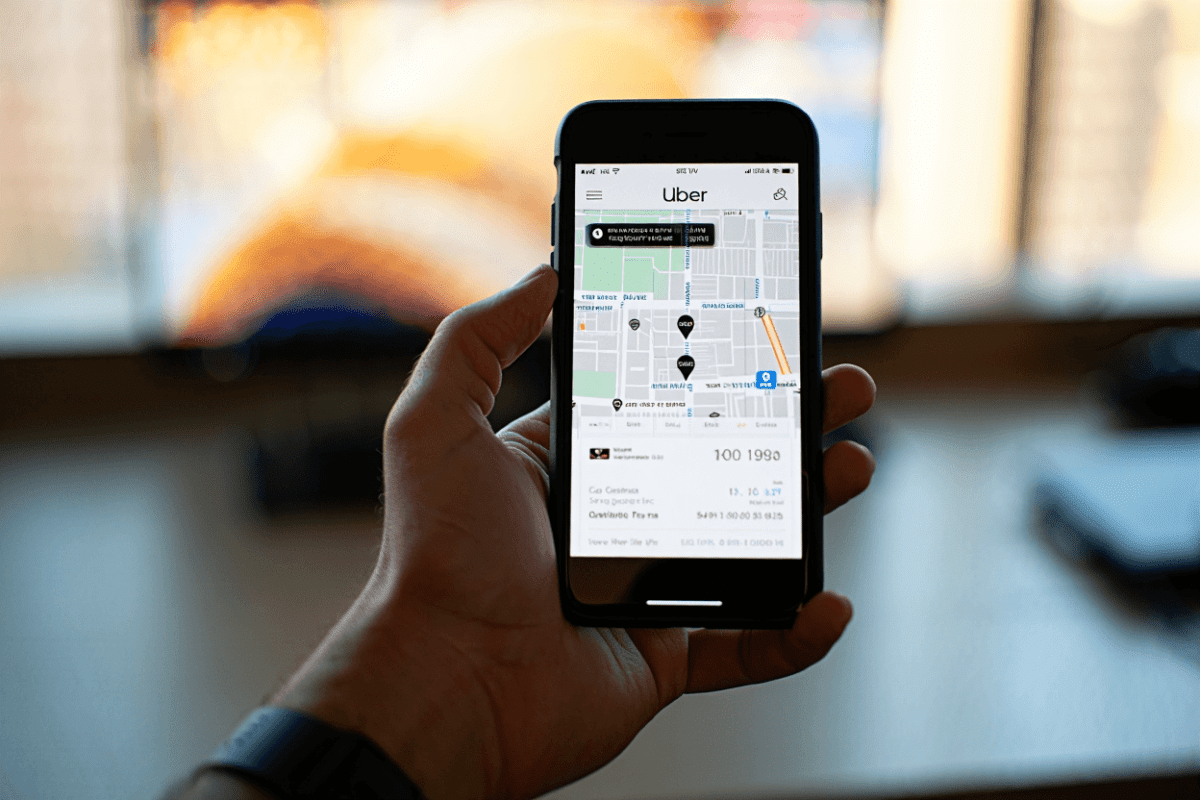
Uber Technologies reported Q1 2026 revenue of $13.2 billion, marking a 14% year-over-year increase, with gross bookings reaching $53.7 billion—25% higher than the prior year. The mobility platform beat earnings expectations with adjusted EPS of $0.72 versus the $0.69 consensus estimate, signaling sustained momentum in ride-sharing and food delivery despite macro headwinds. BMO Capital Markets maintained its buy rating on May 21, reinforcing analyst confidence in the company’s profitability trajectory and growth strategy.
🔥 Quick Facts
- Q1 2026 revenue: $13.2 billion, up 14% year-over-year
- Gross bookings: $53.7 billion, surpassing $52–$53.5 billion guidance
- Adjusted EPS: $0.72, beating the $0.69 consensus by 5.8%
- Non-GAAP EPS growth: 44% year-over-year expansion
- BMO Capital rating: Maintained buy; Street price target $124.33 implies 57% upside
Strong Bookings Growth Reflects Resilient Mobility and Delivery Demand
Gross bookings—a key metric of underlying business activity—grew 25% year-over-year to $53.7 billion, beating Uber’s own guidance range of $52.0–$53.5 billion. This performance signals robust demand across both Mobility (ridesharing) and Delivery (Uber Eats) segments, even as the broader ride-sharing and food delivery markets face cost pressures.
The company reported trip-led growth paired with a 17% increase in audience engagement across both segments, according to earnings call highlights. CEO Dara Khosrowshahi characterized the quarter as an “exceptional start to 2026,” emphasizing momentum in core markets. This growth occurred despite a $1.5 billion negative impact to net income from the revaluation of equity investments—a non-cash charge that did not affect operating performance.
Profitability Metrics Beat Expectations; Non-GAAP EPS Surges 44%
Adjusted earnings per share of $0.72 exceeded analyst estimates by 3.9%, demonstrating Uber’s improving unit economics and margin expansion. More tellingly, non-GAAP EPS surged 44% year-over-year, reflecting significant operating leverage as the company scales without proportional cost increases.
Recent analyst upgrades highlight the broader tech sector’s momentum, and Uber’s profitability improvements position it competitively within the broader transportation and logistics ecosystem. The company’s $3 billion share buyback authorization announced during the call signals management confidence in intrinsic value and capital allocation discipline.
Financial Performance and Guidance Breakdown
The following table compares Q1 2026 results to analyst expectations and prior-year performance:
| Metric | Q1 2026 Actual | Consensus / Guidance | YoY Change |
| Revenue | $13.2B | $13.33B estimate | +14% |
| Gross Bookings | $53.7B | $52.0–$53.5B | +25% |
| Adjusted EPS | $0.72 | $0.69 consensus | +44% (non-GAAP) |
| Audience Engagement Growth | +17% | Company-guided | Trip-led expansion |
| Q2 2026 Bookings Guidance | $56.25–$57.75B | Management outlook | Sustained growth signal |
Q2 2026 guidance of $56.25–$57.75 billion in gross bookings projects continued strength, implying mid-single-digit sequential growth and reflecting durable demand across markets. This forward-looking guidance likely influenced BMO Capital’s decision to maintain its buy outlook.
“We’re off to an exceptional start in 2026, with gross bookings and non-GAAP EPS at or above the high end of our guidance.”
— Dara Khosrowshahi, CEO, Uber Technologies
Analyst Confidence Strengthens; BMO Capital Backs Buy Rating
BMO Capital Markets reaffirmed its buy rating on May 21, 2026—just two weeks after earnings—citing strong operational results and confidence in sustained profitability. Broader Wall Street consensus views Uber as a buy, with 24/7 Wall Street issuing a $124.33 price target implying 57% upside potential from May 22 closing levels.
The analyst community particularly values Uber’s expanding operating margins, trip growth momentum, and capital return initiatives (the aforementioned $3 billion buyback). Autonomous vehicle integration and AI-driven efficiency gains are expected to unlock additional value over the medium term, per management commentary.
What’s Next: Growth Sustainability and Market Expansion
The critical question for Uber stock investors centers on whether the company can sustain 14–15% gross booking growth while maintaining 40%+ non-GAAP EPS expansion. Success hinges on three factors: international market penetration (especially in emerging Asia-Pacific regions), Uber Eats segment recovery from prior-year softness, and cost discipline across driver acquisition and technology infrastructure.
Given BMO Capital’s buy rating and strong Q1 execution, near-term catalysts include Q2 earnings (expected late July 2026), potential Autonomous Vehicle milestone announcements, and regulatory clarity in key markets. If gross bookings track within guidance and non-GAAP margins expand further, the $124+ price target implied by analyst models appears achievable.