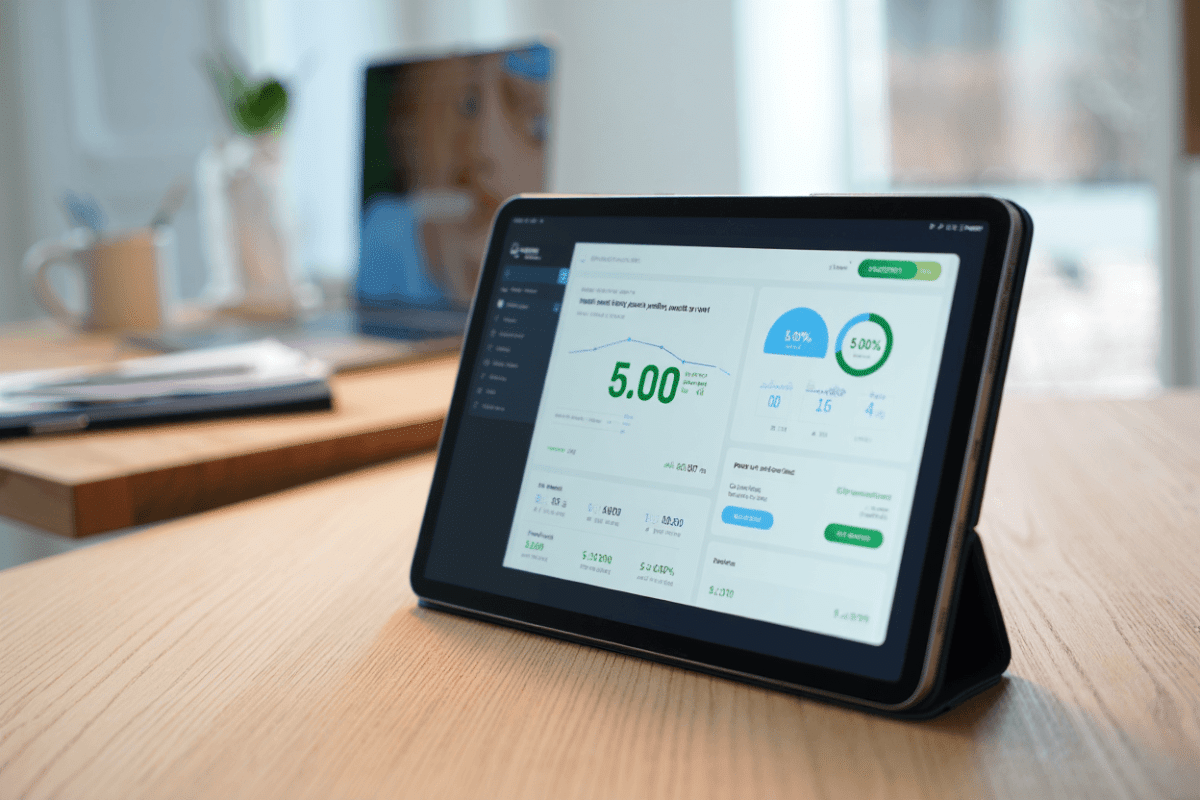
High-yield savings accounts reached their highest rates in months as the Federal Reserve kept interest rates steady at 3.50%-3.75% in May 2026. The best accounts now pay 5.00% APY, making them 13 times more attractive than the national average of just 0.38%. For savers looking to maximize deposits without market risk, this moment offers genuine opportunity amid persistent inflation concerns.
🔥 Quick Facts
- Top rate stands at 5.00% APY from Varo Bank and AdelFi Christian Banking
- Varo offers 5.00% on balances up to $5,000 when qualifying criteria are met
- Federal funds rate remains at 3.50%-3.75% as of April 29, 2026
- National average savings rate is just 0.38% APY per FDIC data
- Online-only banks consistently outpace brick-and-mortar institutions by 10+ times
Why Higher Rates Matter Now in 2026
The Federal Reserve has held interest rates steady at 3.50%-3.75% since January 2026, surprising many who expected continued rate cuts. This pause reflects ongoing inflation concerns: the Fed’s latest projection pegs 2026 inflation at 2.7%, above their traditional 2.0% target. That gap matters for savings decisions.
When inflation outpaces savings rates, your purchasing power erodes. A traditional savings account earning 0.38% APY loses real value if inflation runs 2.7%. But a 5.00% APY account generates meaningful hedge against that pressure. This creates urgency: rates at this level may not persist if economic conditions shift.
Banking industry experts point to Fed policy uncertainty as the key driver. With one possible rate cut projected for late 2026, savers should act soon. Setting up dedicated savings vehicles now locks in attractive rates before potential declines.
The Winners and How Rates Have Climbed
Five years ago, 5.00% APY on savings accounts seemed impossible. Since 2021, high-yield savings accounts have tracked the Fed’s rate decisions closely. As the Fed raised rates to combat inflation, online banks competed aggressively for deposits by raising their own rates. Varo Bank and AdelFi Christian Banking now lead the pack at 5.00%.
The tier below offers solid alternatives: Pibank (4.40% APY), Fitness Bank (4.30%), OMB Bank (4.26%), and CineFi (4.25%). These rates remain far above the national average and come with no minimum deposit or monthly fees in most cases. Key advantage: all balances are FDIC-insured up to $250,000, providing absolute safety.
Online-only models dominate because they avoid costly physical branches, passing savings to customers. As interest rates continue evolving, these institutions maintain pricing flexibility that traditional banks cannot match.
Rate Comparison: Where Savers Stand
Understanding where rates sit requires context on the broader economy. The Federal funds rate at 3.50%-3.75% sits in the middle of its recent range. Banks pass along only a portion of Fed rates to savers, but competition has compressed that gap significantly.
| Institution | APY Rate | Minimum Deposit | FDIC Insured |
| Varo Bank | 5.00% (first $5k) | $0 | Yes |
| AdelFi Christian Banking | 5.00% | $0 | Yes |
| Pibank | 4.40% | $0 | Yes |
| OMB Bank | 4.26% | $0 | Yes |
| National Average | 0.38% | Varies | Yes |
The math is straightforward: a $10,000 deposit at 5.00% APY generates $500 in annual interest. The same amount in a traditional savings account earning 0.38% APY yields just $38. That $462 difference annually represents real money savers are leaving on the table.
“High-yield savings rates at the 5% level reflect a mature interest rate cycle where inflation remains above target. Savers should lock in these rates now because the Fed’s next move will likely be downward, not upward.”
— J.P. Morgan Economist, May 2026 forecast
What Should Happen Next: Timing and Strategy
The Federal Reserve’s current hold pattern suggests rates will remain elevated through at least June 2026. Economists surveyed by Reuters expect the first rate cut in late 2026 at earliest, driven by moderating inflation pressures. That timeline creates a window for action.
Smart savers should consider these moves: First, open a high-yield account at 4%+ APY immediately rather than waiting. Second, split large balances across multiple accounts to maximize FDIC insurance ($250,000 per bank). Third, automate monthly deposits to capture consistent returns without relying on willpower.
The dramatic gap between 5.00% APY and 0.38% won’t last indefinitely. Historical patterns show rates normalize slowly, but eventually they do. For those sitting on cash reserves, this represents a time-sensitive advantage.
Where Do Rates Go From Here?
The Federal Reserve’s May 2026 guidance projects just one quarter-point cut through year-end, with most economists expecting September as the earliest timing. That means 5.00% APY rates should remain stable through summer. By fall, if rate cuts begin, expect 4.75%-4.80% APY to become the new ceiling.
Inflation remains the wild card. Recent geopolitical tensions have raised energy prices, complicating the Fed’s comfort with rate cuts. If inflation remains sticky around 2.7% rather than declining toward 2.0%, the Fed could maintain current rates even longer.
For savers with 12-month planning horizons, locking in 5.00% APY now on at least a portion of savings reduces regret risk. The opportunity cost of earning 0.38% for another year far exceeds the certainty of slightly lower rates at some future date.
Are You Maximizing Your Savings Right Now?
With high-yield savings rates at 5.00% APY and inflation projected at 2.7%, the real return (rate minus inflation) sits at roughly 2.3%. That’s genuine wealth preservation in an uncertain economy. Most Americans keep excess cash in checking accounts earning 0% APY, creating annual losses of thousands of dollars for those with substantial balances.
The question isn’t whether to move money to high-yield accounts—the math clearly favors it. The question is whether you’ll act in May when rates peak, or wait until rates fall and regret the delay. History suggests accounts at 5.00% APY won’t exist in 2027, but accounts below 3.00% APY likely will.
Sources
- Investopedia – Best High-Yield Savings Account Rates for May 2026
- Federal Reserve – FOMC Minutes and Interest Rate Decisions, April 29, 2026
- Wall Street Journal – Best High-Yield Savings Accounts for May 2026: Up to 5.00%
- Bankrate – Best High-Yield Savings Accounts Of May 2026
- NerdWallet – Best High-Yield Online Savings Accounts (updated May 21, 2026)
- Fortune – Top high-yield savings rates May 19, 2026: Up to 5.00% APY
- FDIC – Average Savings Account Interest Rates (national data)