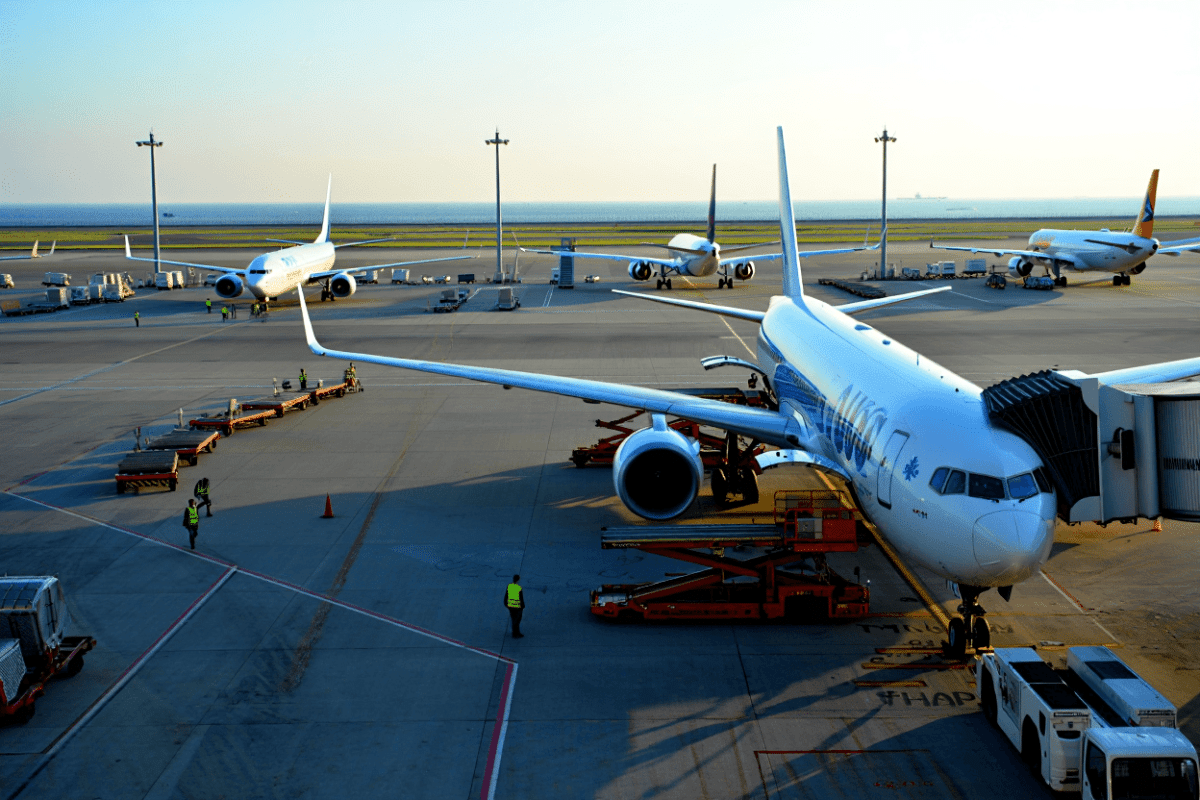
Allegiant Air completed the $1.5 billion acquisition of Sun Country Airlines on May 13, 2026, creating the eighth-largest U.S. airline by fleet size and reshaping the low-cost carrier segment. The merger brings together 195 aircraft serving nearly 175 cities with 650+ routes, forming a leisure-focused powerhouse that will serve approximately 22 million customers annually. This consolidation marks a critical turning point in the budget airline sector, which faces mounting pressure from rising costs and shifting consumer travel patterns.
🔥 Quick Facts
- Merger closed May 13, 2026, following Department of Transportation approval on April 15, 2026
- Combined fleet: 195 aircraft (Allegiant’s Airbus A319/A320 and Boeing 737 MAX plus Sun Country’s all-Boeing 737 fleet)
- $140 million in expected annual synergies within three years, primarily from operational efficiencies
- Service to 175 cities across the U.S., Mexico, and Central America with minimal network overlap
- 22 million annual customers across both carriers, making the combined entity a significant leisure travel force
The Strategic Context: Why Now?
The Allegiant-Sun Country merger reflects a broader industry shift toward consolidation in the low-cost carrier segment. Both airlines operate under similar models—flexible capacity deployment, unbundled pricing, and leisure-focused route networks—making them complementary rather than redundant. Allegiant announced the acquisition on January 11, 2026, and regulators moved quickly to approve it, signaling confidence in the combination’s competitive positioning.
The leisure travel market has become increasingly attractive as business travel remains subdued compared to pre-2020 levels. Combined with rising fuel costs and tightening margins, smaller independent low-cost carriers face mounting pressure to achieve greater scale. broader market volatility and sector performance directly influence airline investor sentiment and financing options for expansion.
Fleet Composition and Network Strategy
The combined carrier benefits from complementary aircraft types. Allegiant operates approximately 124 aircraft including Airbus A319, A320, and newer Boeing 737 MAX jets, while Sun Country operates an all-Boeing 737 fleet of roughly 69 aircraft. This diversity provides operational flexibility and the opportunity to optimize fuel efficiency and capacity allocation across overlapping and unique routes.
During winter 2025-26, Allegiant offered 462 nonstop routes while Sun Country operated approximately 100. The minimal overlap—fewer than 10 direct route conflicts—means the merger creates network expansion rather than redundancy elimination. The combined carrier will operate 650+ routes across the U.S., Mexico, and Central America, significantly expanding the leisure traveler’s options for nonstop flights and destination choices.
Financial Synergies and Operational Gains
Allegiant projects achieving approximately $140 million in annual synergies within three years of closing. These cost savings derive from several sources: aircraft and fleet optimization, network integration, shared technology platforms, and elimination of duplicate overhead functions. The merger also positions the combined airline to better negotiate supplier contracts and improve fuel procurement efficiency.
The $1.5 billion all-cash-and-stock acquisition represents a significant capital commitment, but industry analysts note the financial structure allows both companies’ shareholders to benefit. Sun Country shareholders received approximately $4.10 per share in cash plus 0.1557 Allegiant shares per share held, linking their upside to the merged entity’s performance. This pricing reflects confidence in synergy realization and the strategic fit between the two carriers.
| Metric | Pre-Merger (Combined Capacity) | Post-Merger Entity |
| Fleet Size | 193-195 aircraft | 195 aircraft (8th largest U.S. airline) |
| Cities Served | 175+ destinations | 175+ U.S., Mexico, Central American cities |
| Annual Routes | 550+ (with overlap) | 650+ routes total |
| Annual Customers | 22 million | 22 million (maintained base) |
| Expected Annual Synergies (Year 3) | N/A | $140 million |
“With a combined fleet of 195 aircraft serving nearly 175 cities, we are expanding access to affordable, reliable, and convenient travel for our customers and communities.”
— Allegiant Leadership, Company announcement, May 13, 2026
Implications for the Low-Cost Carrier Sector
The Allegiant-Sun Country merger accelerates a consolidation wave in budget air travel. Industry observers describe 2026 as “The Great Leisure Consolidation” because multiple forces are driving smaller carriers to combine: elevated fuel costs, limited pricing power in competitive leisure markets, and pilot staffing constraints. The merger also signals that independent leisure-focused carriers need scale to compete against larger network carriers encroaching on popular leisure routes.
With Spirit Airlines ceasing operations in February 2026, the budget carrier landscape has already shifted. Allegiant’s acquisition of Sun Country eliminates another potential competitor and consolidates the sector further. The newly combined entity now ranks among the nation’s top ten airlines by fleet size, giving it increased leverage in airport negotiations, vendor relationships, and crew recruitment.
What Does This Mean for Travelers?
The merger creates both opportunities and questions. For travelers, expanded route networks mean more nonstop flight options and increased frequency on popular leisure destinations. The combined airline’s $140 million in cost savings could theoretically improve pricing competitiveness, though budget carriers typically compete on capacity scale rather than price cuts. Frequent flyer programs, baggage policies, and seat selection fees will require integration planning, which could affect loyal customers in the short term. Allegiant leadership has indicated Sun Country will operate as a distinct brand initially, which may preserve some service differentiation during integration.
Network expansion to 650+ routes serving 175 cities increases options for leisure travelers seeking budget alternatives to major carriers. The combined carrier’s ability to deploy larger aircraft like the Boeing 737 MAX on high-demand routes improves capacity and potentially unit costs, creating conditions for competitive pricing in the leisure segment.
What Challenges Lie Ahead for Integration?
Airline mergers face predictable integration hurdles. Combining Allegiant’s Airbus-heavy fleet with Sun Country’s all-Boeing operation requires careful crew training, spares inventory management, and maintenance scheduling. Labor integration is critical—pilot seniority lists, flight attendant schedules, and ground crew assignments must be negotiated or arbitrated. The merger’s success depends on achieving synergies while maintaining operational reliability and customer satisfaction during the integration period, typically spanning 18-24 months.
Additionally, rising fuel costs and inflation pressures on the airline industry may reduce the realization of projected synergies. If jet fuel prices remain elevated, the combined carrier’s cost structure could limit the $140 million savings target. Market competition may also force more aggressive pricing, compressing margins and extending the payback period on integration investments.
Sources
- Allegiant Travel Company Press Release – Merger completion announcement, May 13, 2026
- U.S. Department of Transportation – DOT approval granted April 15, 2026
- Aviation Week – Analysis of Allegiant-Sun Country strategic fit and network implications
- Simple Flying – Fleet composition and eighth-largest U.S. airline designation
- PRNewswire – Regulatory milestones and shareholder approval updates
- Centre for Aviation (CAPA) – Industry consolidation context and leisure carrier pressures