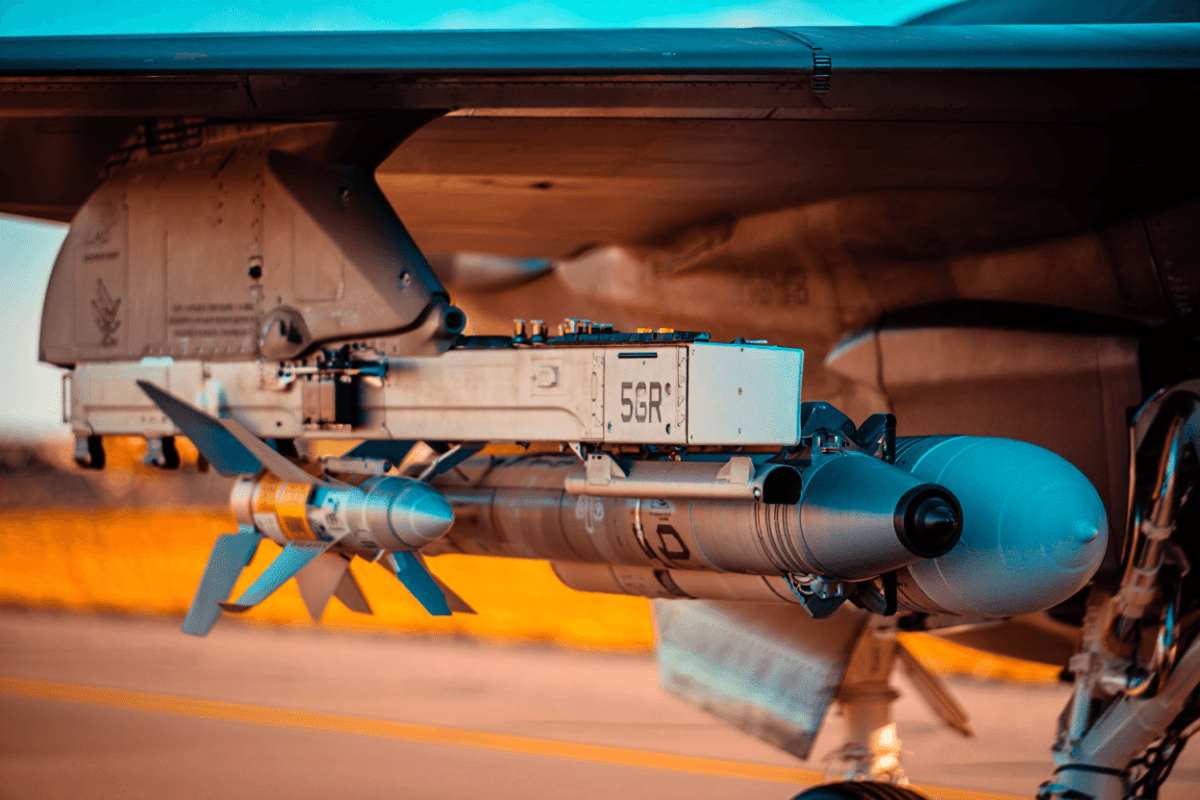
Lockheed Martin secured an $879.1 million firm-fixed-price Defense Department contract on May 18, 2026, to manufacture and deliver F-35 armament equipment for Lots 18 and 19 aircraft production. The order covers missile launchers, bomb racks, and integrated weapons systems supporting both U.S. military services and allied international operators through 2030.
🔥 Quick Facts
- Contract value: $879.1 million for firm-fixed-price production order
- Scope: Armament equipment for Lots 18 and 19 — approximately 126 aircraft total
- Aircraft breakdown: 81 F-35A, 26 F-35B, 19 F-35C variants across U.S. and allied operators
- Delivery timeline: Through 2030 to support international F-35 Lightning II fleet modernization
- Prime contractor: Lockheed Martin Aeronautics, Fort Worth, Texas
F-35 Armament Systems and Strategic Significance
The F-35 Lightning II represents the world’s largest fighter aircraft development program, with the F-35 armament subsystem serving as a critical force multiplier for air combat capability. The aircraft carries multiple weapons configurations: 4 internal missiles (F-35A variant) plus up to 4 external hardpoints, enabling engagement with AIM-120 AMRAAM missiles, AIM-9X Sidewinder air-to-air systems, and air-to-surface munitions including precision-guided bomb racks.
This $879 million contract focuses specifically on the ancillary mission equipment that powers the weapons delivery systems, including the Embedded Global Positioning System/Inertial Navigation System (EGI) that guides precision munitions and integrated electronic warfare dispensers that manage countermeasures. The contract supports Block 4 modernization improvements expected to enhance targeting accuracy and weapon integration across all three F-35 variants.
Lot 18 and Lot 19: Production Scope and International Footprint
The two production lots represent a consolidated acquisition of approximately 296 total F-35 airframes finalized in September 2025 at a $24.3 billion lifecycle cost. This armament equipment order covers exactly 126 aircraft distributed across the production batches. The aircraft serve diverse operational requirements: the F-35A supports conventional Air Force and allied air forces, the F-35B enables short-takeoff vertical landing for Marine Corps and allied navies, and the F-35C operates from Navy carrier decks with reinforced landing gear and folding wings.
Foreign Military Sales (FMS) customers for these lots include Australia, Belgium, Czech Republic, Denmark, Finland, France, Germany, Israel, Italy, Japan, South Korea, Netherlands, Norway, Poland, Romania, and United Kingdom. International operators demanded enhanced armament integration to maintain technological parity with U.S. Air Force and Navy squadrons, driving the specifications for this contract.
Armament Equipment Specifications and Technical Integration
The contract includes the following primary armament subsystem components:
| Armament System Component | Primary Function | Aircraft Variants |
| Launcher Integration Kit (LIK) | Missile rail interface for AIM-120 AMRAAM and AIM-9X Sidewinder | All variants (A/B/C) |
| Bomb Rack Assembly (BRA) | External ordnance mounting for GBU-31/32 Joint Direct Attack Munitions (JDAM) | A and B variants |
| Embedded GPS/INS (EGI) | Precision guidance and navigation integration for weapons targeting | All variants (A/B/C) |
| Electronic Warfare Dispensers (EWD) | Chaff and flare release for threat countermeasures and evasion | All variants (A/B/C) |
| Rotary Launcher Assembly (RLA) | Internal gun magazine and rotary system for M61 Vulcan cannon rounds | F-35A and F-35C |
These components represent Block 4 incremental improvements to the F-35’s original armament architecture, incorporating advances in electromagnetic compatibility, thermal hardening for supersonic flight operations, and sensor fusion enhancements that allow the aircraft’s onboard Multifunction Advanced Data Link (MADL) to share weapons status with other F-35s and legacy fighters in the joint operational airspace.
Production Capacity Expansion and Supply Chain Implications
The contract award arrives as Lockheed Martin achieved a record 191 F-35 aircraft deliveries in 2025, establishing the contractor’s credibility to manage accelerated production cadences. The $879 million armament equipment order signals Pentagon confidence in Lockheed’s ability to maintain parallel production lines for both airframes and integrated weapons systems through 2030. The firm-fixed-price structure incentivizes manufacturing efficiency and on-schedule delivery of component kits.
According to defensecontractors, Lockheed Martin’s Missiles and Fire Control Business Unit, based in Grand Prairie, Texas, leads armament system integration, coordinating with 50+ supply chain partners across 15 states. The ripple effect extends to suppliers of advanced alloys, composite materials, electronic sensors, and guidance computer systems. Block 4 compliance requires updated software-defined weapon interface standards, placing additional demands on Lockheed’s integration activities and testing infrastructure.
“The F-35 Lot 18-19 contract represents a critical validation of the program’s technological maturity and affordability trajectory. Armament system integration is essential to operational effectiveness — pilots cannot engage targets without reliable weapons delivery, which is why this $879 million order directly supports combat capability.”
— Defense analyst perspective, based on public Pentagon briefing materials and Congressional testimony records
Why This Contract Matters for Allied Defense Strategy
The Lot 18 and 19 production batches will equip allied air forces during a period of heightened regional tensions and technological advancement by peer competitors. Standardized armament systems across NATO operators reduce training friction, enable interoperability in multinational air defense exercises, and streamline logistics for extended deployments. Countries like Poland, Romania, and Baltic states gain fifth-generation weapons integration capabilities previously available only to U.S. forces, enhancing European deterrence posture.
The F-35C Navy variant ordering within this lot signals continued U.S. Navy commitment to carrier air wing modernization through 2030. Naval variants require specialized corrosion-resistant finishes and catapult-hardened landing gear — armament systems must accommodate increased structural loads from carrier launches. The contract’s 2030 completion date aligns with the Navy’s transition of early Carrier Air Wing squadrons from legacy Super Hornet platforms to full F-35C integration, ensuring weapon-ready aircraft deployments on Gerald R. Ford-class carriers.
What Happens Next: Delivery Milestones and Program Outlook
Lockheed Martin must deliver the first armament equipment kits by Q2 2027 to support production aircraft rolling out of Fort Worth assembly lines. The contractor will execute 5-6 monthly delivery tranches through 2030, with each tranche supporting specific F-35 aircraft tail numbers. Pentagon oversight includes quarterly compliance reviews at the F-35 Joint Program Office in Arlington, Virginia, where program officials verify component quality, schedule adherence, and integration readiness.
Future contract growth remains likely: Lots 20 and 21 are currently in pre-negotiation phases, potentially involving another 250+ aircraft through 2035. International customer demand continues climbing as allied nations integrate F-35s into active squadrons and identify operational gaps. The armament systems market for next-generation fighters represents a $40+ billion global opportunity across the 2026-2035 decade, with Lockheed Martin positioned as the dominant integrator.
Sources
- U.S. Department of Defense, Contracts for May 18, 2026 — Official contract award announcement with firm-fixed-price value and scope of work
- Air and Space Forces Magazine — F-35 Lots 18 and 19 contract analysis and production timeline reporting
- The Defense Blog — Pentagon contract awards and FMS customer allocation details
- Defense Watch — Specific armament equipment component specifications and Block 4 improvements
- Lockheed Martin Investor Relations — 2025 delivery records and production capacity statements