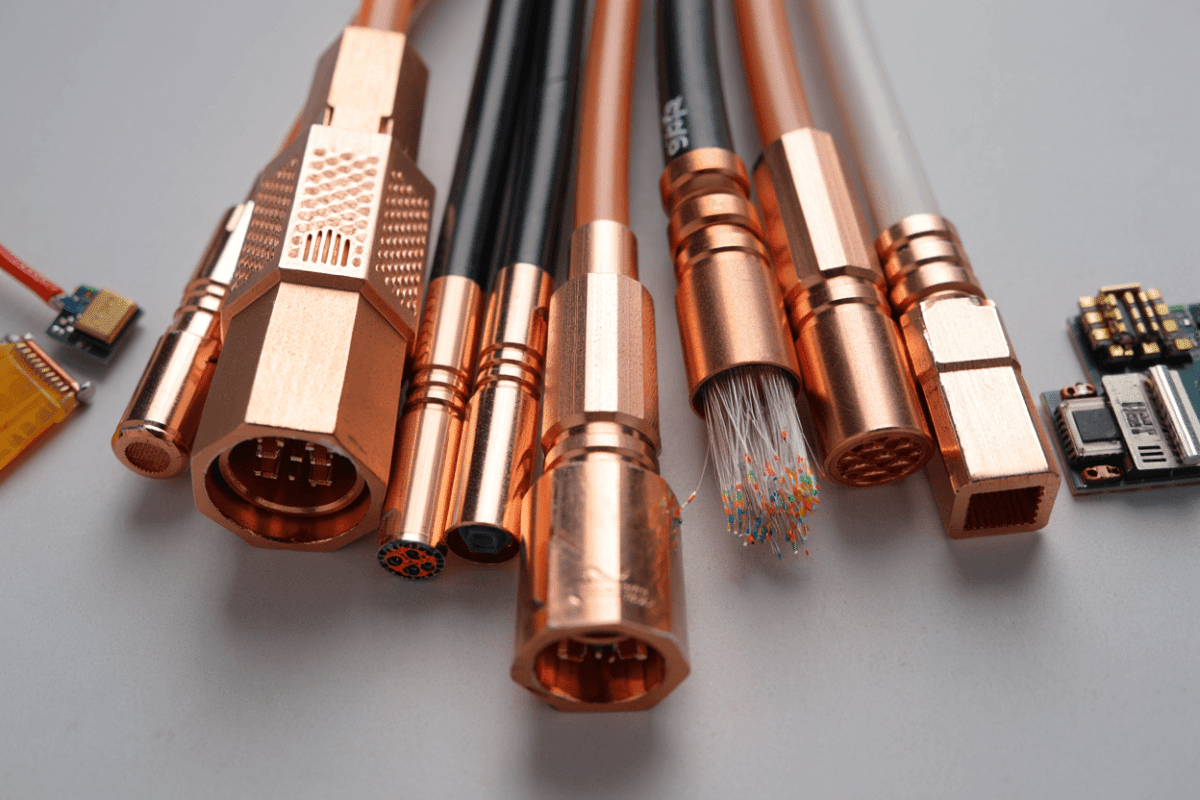
TE Connectivity (NYSE: TEL) climbed 2.7% as investors position ahead of the May 22, 2026 ex-dividend date, with the stock poised to benefit from strong Q2 earnings and elevated analyst sentiment. The company’s $0.78-per-share quarterly dividend — representing a 10% increase from the prior payout — arrives as Wall Street consensus targets reach $265 on average, reflecting confidence in TE’s industrial connectivity leadership and surging AI infrastructure demand.
🔥 Quick Facts
- Q2 2026 Revenue: $4.74 billion, up 15% year-over-year
- Dividend Yield: 1.42% with $0.78 quarterly payout effective June 12, 2026
- Analyst Consensus Price Target: $264-$265, up to 35% from current levels
- AI Revenue Projection: $2.3-$2.4 billion in FY 2026, up 155% from $900M in FY 2025
- EPS Growth: $2.73 adjusted EPS in Q2, up 24% year-over-year
Why Dividend Dates Trigger Stock Momentum
TE Connectivity’s pre-dividend rally reflects a fundamental market dynamic: ex-dividend dates often attract income-focused investors who accumulate shares before the deadline. The May 22 ex-date marks the cutoff for receiving the upcoming June 12 payment, creating a predictable window when institutional managers and dividend reinvestment plans (DRIPs) actively purchase shares to capture the distribution.
The $0.78 quarterly payout represents a 10% year-over-year increase announced in March 2026, signaling management confidence in sustained free cash flow generation. TE’s automation of dividend growth across six consecutive years demonstrates institutional commitment to shareholder returns, particularly relevant given the company’s $4.74 billion in quarterly revenue and expanding profit margins.
Q2 Earnings Delivered Record Margins and AI Leadership
TE Connectivity’s most recent results underscore why analysts maintain optimistic outlooks. The company posted net sales of $4.74 billion in its fiscal Q2 2026, representing 15% reported growth and 7% organic expansion. More critically, adjusted earnings per share climbed 24% to $2.73, outpacing revenue growth and indicating operational leverage from scale.
The Industrial segment led growth with demand from factory automation, renewable energy, and automotive electrification. However, management highlighted that AI infrastructure revenue reached $900 million in FY 2025, with projections of $2.3 billion to $2.4 billion for fiscal 2026 — a 155% year-over-year surge. This acceleration reflects TE’s critical role in data center thermal management, high-density connectors, and power distribution systems supporting hyperscale cloud deployments.
Analyst Price Targets Signal Significant Upside
| Metric | Current Value | Analyst Target | Upside Potential |
| Stock Price | $200.51 (May 19) | $264.74 (avg) | +32.0% |
| Target Range | 52-week high: $252 | $220-$365 | High $290-$365 |
| P/E Multiple (Est.) | ~20.5x | ~27.0x | Multiple expansion |
| Dividend Yield (Fwd) | 1.42%-1.51% | 1.18%-1.32% | Compression at target price |
| Consensus Rating | N/A | 43% Strong Buy / 29% Buy | 72% Bullish alignment |
Nineteen Wall Street analysts covering TE Connectivity have established a consensus price target of $264.74, with 43% rated as “Strong Buy.” This collective view implies 32% upside from the May 19 closing price of $200.51. Importantly, the high-end estimates exceed $360, suggesting conviction among top-tier tech-focused research teams that TE’s structural exposure to AI infrastructure justifies material revaluation.
The analyst dispersion is notable: similar semiconductor equipment plays have widened consensus ranges during periods of elevated AI spending, though TE’s historical consistency (demonstrated through consistent earnings beats) provides confidence in base-case projections.
Dividend Income vs. Capital Appreciation Trade-Off
TE Connectivity presents dual return drivers. The forward dividend yield of 1.42% appears modest relative to broader market averages, particularly given the company’s $2.84 annualized payout per share. However, dividend yield compression — where rising stock prices reduce yields — typically precedes sustained capital gains. If TE reaches the $265 analyst target, the dividend yield would compress to approximately 1.08%, but shareholders holding the appreciated stock would gain $64 per share in capital appreciation.
This asymmetry explains the pre-dividend surge. Investors accepting the May 22 ex-date trade-off — foregoing the right to the upcoming June 12 payment if selling before ex-date — do so because they expect the stock to appreciate beyond the $3.12 annual dividend value within shorter timeframes driven by upcoming earnings revisions and AI spending acceleration.
“TE Connectivity’s positioning in AI infrastructure and industrial electrification creates a multi-year growth runway with limited direct competition in certain connector and thermal management niches.”
— Consensus view from equity research teams tracking industrial technology and semiconductor supply chains, May 2026
What Catalysts Justify the $265+ Target?
Analysts anchor their optimistic targets to specific drivers. First, AI data center spending remains within first-inning acceleration, with estimates suggesting 15-18% year-over-year growth in infrastructure buildout through 2027. TE supplies connectors, cable assemblies, and thermal solutions — mission-critical components with high switching costs and limited substitution risk.
Second, automotive electrification accelerates through mid-2026 and beyond, with electric vehicle adoption in developed markets reaching 25-30% of annual sales. EVs require substantially more interconnect solutions per vehicle than combustion engines — connectors for battery management systems, high-voltage charging, and motor controllers represent growth multipliers for TE’s transportation segment.
Third, industrial automation adoption continues in developed and emerging markets. Factory digitization, supply chain resilience efforts, and reshoring initiatives all drive demand for sensors, connectors, and edge computing infrastructure where TE maintains leadership positions and high-margin contracts.
Why the 2.7% Bounce Signals Broader Momentum?
The 2.7% single-day gain near the ex-dividend date reflects tactical positioning rather than fundamental news flow. However, it reinforces that institutional investors and retail traders perceive asymmetric risk-reward. The combination of strong Q2 results, elevated margin guidance, accelerating AI revenue recognition, and dividend growth confirmation creates a risk-off environment for sellers.
Technical analysts note that TE’s 52-week high of $252.56 remains within reach if the stock consolidates above $210 in near-term trading. A break above $252 would establish fresh momentum toward $265-$280 resistance levels, where analyst clusters expect profit-taking to temper gains until updated guidance confirms the higher-price-target thesis.
Should You Buy Before or After the Ex-Dividend Date?
Dividend investment strategy hinges on individual tax treatment and time horizons. Investors holding TE for the long term benefit from accumulating shares regardless of ex-date timing, as the compounding effect of 10% annual dividend growth plus capital appreciation generates multi-year wealth creation. For tactical traders, waiting until after May 22 eliminates dividend timing risk and preserves cash for opportunistic purchases if the stock pulls back post-announcement.
The critical insight: TE’s core business momentum and AI tailwinds operate independently of dividend calendar mechanics. The $0.78 June payment validates management confidence, but analysts’ $265 target rests on earnings growth, not yield arbitrage.
What Happens if TE Misses Expectations?
Downside scenarios exist. A slowdown in AI infrastructure spending, broader recession signals, or automotive demand weakness could trigger analyst downgrades. The wide target range ($220-$365) hints at significant analyst disagreement regarding TE’s AI exposure longevity. Conservative investors should monitor upcoming guidance revisions from other technology firms for signals of spending deceleration before accumulating TE exposure aggressively.
The Takeaway: Dividend Growth Meets Structural Tailwinds
TE Connectivity’s 2.7% pre-dividend climb encapsulates a compelling narrative: a mature industrial company with legitimate exposure to transformative secular trends (AI infrastructure, electrification, automation) while maintaining an undervalued dividend yield supported by 24% earnings growth. The May 22 ex-dividend date passes within days, but the underlying investment case extends far beyond calendrical mechanics into a multi-year expansion cycle.
For dividend-focused investors, the $0.78 quarterly payout affirms commitment to income growth. For growth investors, the $264.74 consensus target signals conviction in earnings power. The rare intersection of both qualities explains sustained institutional accumulation as the ex-date approaches.
Sources
- TE Connectivity Investor Relations — Official Q2 FY 2026 earnings announcement and dividend declaration, March-April 2026
- Investing.com Consensus Estimates — Analyst price targets and consensus ratings, 19-analyst panel
- MarketBeat TEL Dividend Tracker — Historical dividend yield, payment dates, and forward projections
- Stock Analysis / Simply Wall St — Dividend forecast, historical growth trajectory, and analyst breakdowns
- Yahoo Finance Research — Institutional holdings, EPS growth projections, and analyst sentiment tracking