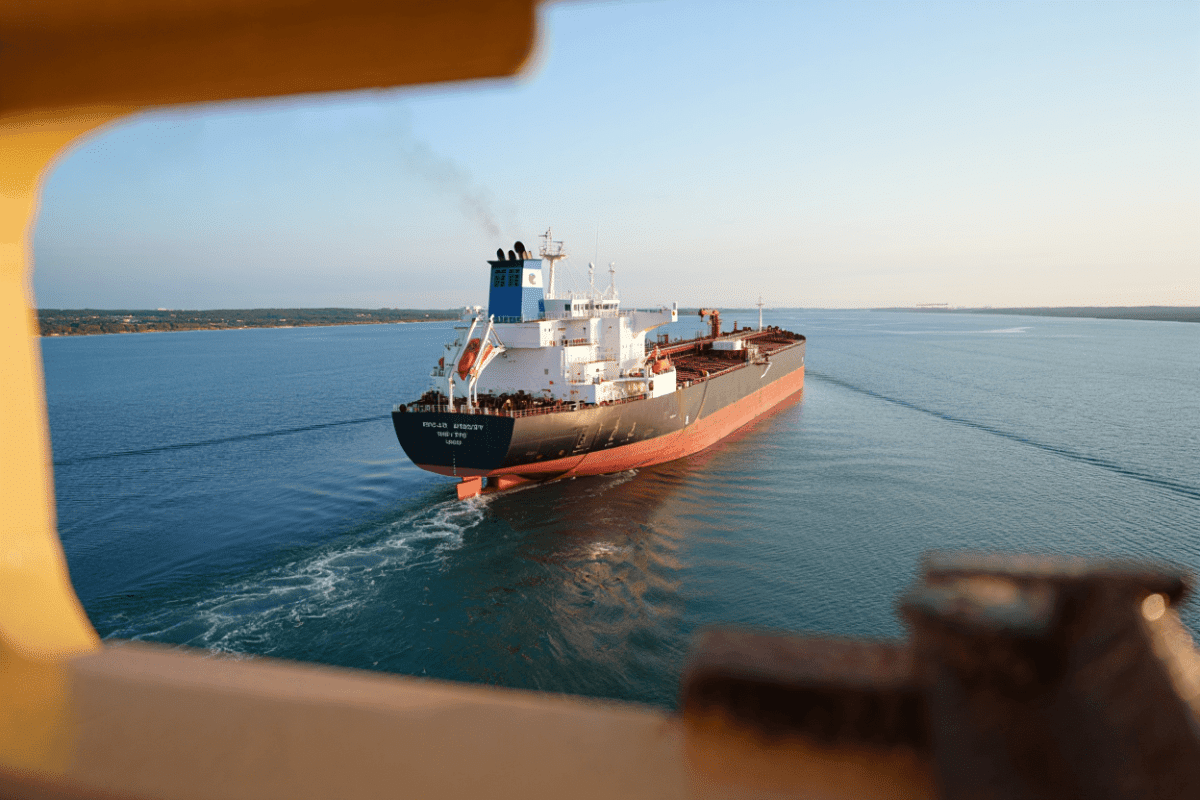
Three supertankers carrying 6 million barrels of Middle Eastern crude have now exited the Strait of Hormuz, marking a critical breakthrough after a prolonged 2-month backlog caused by regional geopolitical tensions. As U.S.-Iran negotiations show signs of progress, this movement signals the potential reopening of one of the world’s most strategically important energy chokepoints, carrying roughly 20% of global oil supplies.
🔥 Quick Facts
- 6 million barrels of crude exited the Strait on May 20, 2026
- 2-month wait ended after geopolitical tensions eased since April 16 ceasefire announcement
- Approximately 20% of global oil transits through the Strait of Hormuz annually
- Brent crude prices fell to $90-$100 range as market signals improved logistics
- Roughly 2,000 vessels remain queued on both sides of the waterway
A Strategic Chokepoint Releases Its Grip
The Strait of Hormuz, a 21-mile stretch of water separating Iran and Oman, has served as the critical gateway between Persian Gulf producers and global markets for decades. Yet no disruption in recent memory compares to what unfolded in February 2026, when regional conflict prompted Iran to restrict access. This closure created an unprecedented energy supply shock that reverberated through every major economy.
For nearly three months, tankers sat idle, unable to navigate the contested waters. Shipping data shows only 28 vessels per week managed passage during the worst of the standoff, compared to the historical normal of hundreds daily. The consequence was immediate: prices surged past $100 per barrel, the fastest increase from any geopolitical conflict in modern history. U.S. consumers felt the ripple effect at the pump, with some regions seeing gasoline climb above $6 per gallon.
Why the Two-Month Wait Mattered for American Energy Security
The April 16 ceasefire announcement between U.S.-allied forces and Iran appeared dovish, yet the waterway remained congested. Tankers lacked confirmation that passage would remain safe, creating a logistical gridlock. Pentagon officials cautioned in late April that clearing the backlog could require six months—a timeline that terrified energy traders and policymakers alike.
What changed over the past four days—starting May 17—was a shift in confidence. Negotiating teams resumed direct talks, signaling de-escalation. The three supertankers that exited today represent the vanguard of renewed commercial traffic. Each vessel typically carries 2 million barrels, meaning this single shipment addresses roughly 10% of daily global crude demand disruption. For American refineries, particularly those on the California coasts dependent on imported Middle Eastern crude, this breakthrough signals supply relief ahead.
The Logistics Challenge: Months to Clear, Weeks to Feel Relief
Here’s the sobering reality check: those 6 million barrels exiting today won’t reach U.S. refineries for 3-4 weeks, given typical transit times from the Persian Gulf. Floating storage at sea currently holds 15 million barrels of refined products—mostly diesel—waiting for passage. Behind those three supertankers, roughly 2,000 other vessels queue on both sides of the Strait, each representing hundreds of thousands of barrels.
| Metric | Peak Disruption (Feb-Mar) | Current Status (May 20) |
| Daily Throughput | ~4-5 vessels/week | Increasing; 3 supertankers exited |
| Brent Crude Price | $110-$125/barrel | $90-$100/barrel |
| Vessels Queued | 1,800-2,000 | ~2,000 (clearing expected) |
| Global Oil Flow Disrupted | 10+ million barrels/day | Partial restoration underway |
| U.S. Gasoline Average | $5.80-$6.00+ | Expected relief in June |
The backlog didn’t accumulate overnight. From late February through mid-April, Iran controlled access, allowing only a fraction of normal traffic. Even after the ceasefire, uncertainty kept captains docked, burning fuel while waiting. Every day the Strait remained partially closed cost global markets an estimated $1 billion in disruption costs.
What This Breakthrough Really Signals
“The exit of these three supertankers demonstrates tentative progress, but the broader Strait remains constrained. We’re moving from crisis mode to managed transition, which is itself a profound shift from where we were two weeks ago.”
— Energy Market Analyst, International Energy Agency assessment, May 2026
The geopolitical dimension cannot be overlooked. Three supertankers exiting isn’t victory—it’s beginning. Iran’s economy, dependent on 90% of its oil exports flowing through the Strait, faces severe pressure from the U.S. blockade of Iranian ports elsewhere. Simultaneously, global economies demand resolution. China, which purchases roughly 90% of Iran’s international crude, has quietly pushed both sides toward talks.
For U.S. energy imports, the implications are direct. American refineries stopped receiving regular tanker shipments in early March. Strategic Petroleum Reserve releases helped cushion the blow, but those reserves have limits. Gasoline prices, which spiked toward $6.50 in some California markets, are expected to decline by $0.50-$0.80 per gallon over the next month as supplies normalize.
What Happens Next: The Six-Month Timeline
Pentagon estimates suggest full normalization will take until late October 2026, but markets may achieve functional operations much sooner. If U.S.-Iran talks remain productive through May and June, tanker throughput could reach 50-70% of historical levels by summer. This would ease pressure on consumers while allowing refineries to rebuild crude inventories.
The risks remain substantial. Any escalation—whether from rhetoric, military posturing, or new incidents—could rapidly reverse these modest gains. Energy traders remain alert, with option markets still pricing in volatility. Yet the psychological shift is real: these three supertankers represent proof that the Strait can handle traffic again, that negotiations matter, and that supply chains can begin healing. For American motorists awaiting gasoline price relief, that six-week journey from departure to pump represents hope taking physical form.
Sources
- OilPrice.com – Real-time tanker movement data, May 20, 2026
- Reuters Energy Desk – Strait of Hormuz transit records, April-May 2026
- Al Jazeera – Pentagon logistics assessment, April 28, 2026
- International Energy Agency – Disruption impact analysis and recovery forecasts
- BBC News, Financial Times – Ceasefire negotiation updates and market reaction