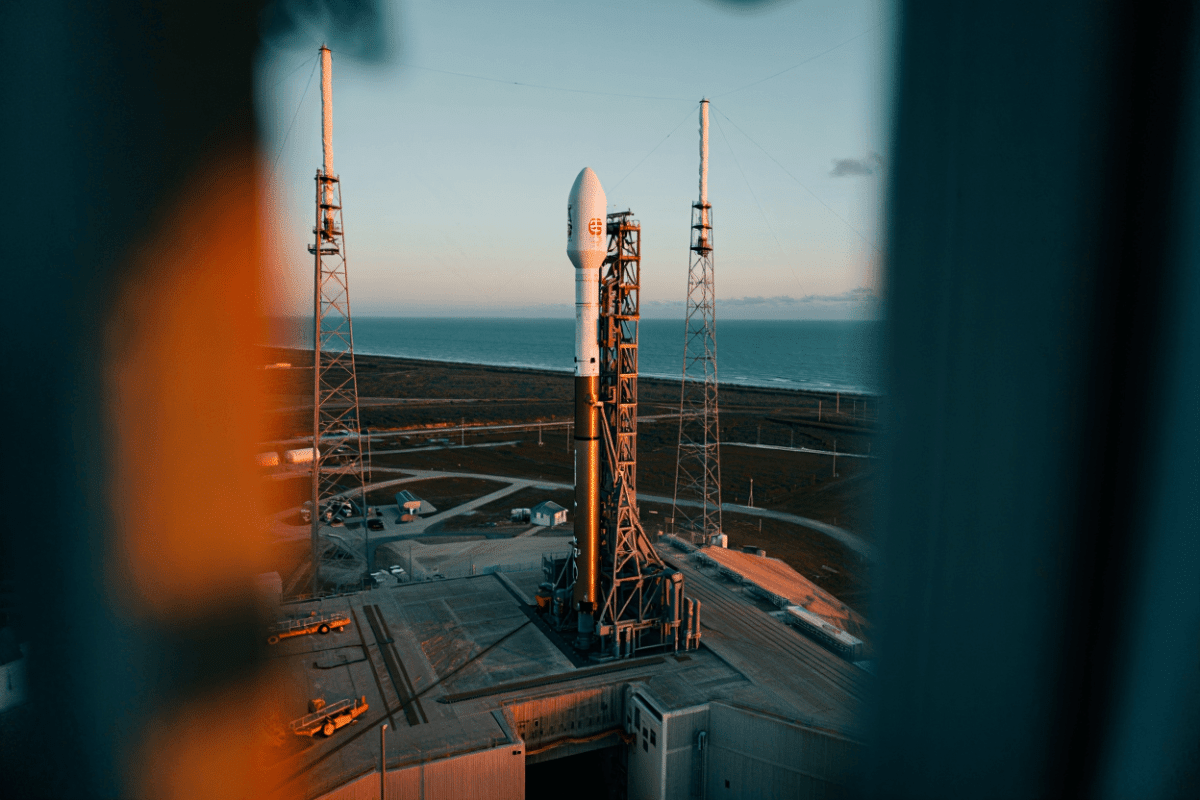
SpaceX is launching 24 Starlink satellites from Vandenberg Space Force Base in California tonight at 7:11 p.m. PDT (10:11 p.m. EDT). The Falcon 9 rocket will be carrying the latest batch in the company’s effort to expand global internet coverage through its Starlink Group 17-42 mission. The launch window extends to 11:11 p.m. PDT, giving weather and technical teams a four-hour operational window. A live webcast will begin approximately five minutes before liftoff on SpaceX’s official channels.
🔥 Quick Facts
- 24 Starlink V2-mini satellites deploying to low Earth orbit tonight
- Vandenberg Space Force Base location enables polar and high-inclination missions
- Constellation milestone: Over 10,370 active Starlink satellites currently in orbit
- Falcon 9 achievement: 99.83% success rate across 650+ launches as of May 2026
- Booster reuse: B1103 landing for its 2nd flight on OCISLY droneship
Why This Launch Matters for Starlink’s Global Expansion
Starlink‘s constellation strategy depends on frequent deployments to maintain comprehensive coverage. As of March 2026, the mega-constellation crossed 10,000 active satellites in low Earth orbit—a milestone SpaceX originally targeted for early 2026. Tonight’s addition of 24 satellites represents progress toward the planned constellation of up to 42,000 satellites, designed to deliver consistent broadband across every continent and remote location on Earth.
The Starlink Group 17-42 mission uses next-generation Starlink V2-mini satellites, which are optimized variants of SpaceX’s second-generation design. These satellites include improved phased-array antennas and better coverage efficiency compared to earlier generations, allowing SpaceX to serve more customers with fewer devices in orbit.
The Falcon 9’s Unmatched Reusability Track Record
Booster B1103 flying tonight will mark its second flight, landing on the autonomous droneship OCISLY after mission completion. This reflects SpaceX’s reusability revolution—as of May 15, 2026, the company has successfully landed and reflown Falcon 9 boosters 598 times. One booster holds the reuse record at 34 flights, set in March 2026.
This efficiency directly reduces launch costs and environmental impact. Falcon 9 maintains a 99.83% success rate across its launch history, with only two failures among 650+ orbital missions. Reusable boosters now account for the majority of SpaceX’s flight manifest, making rapid satellite deployment economically sustainable.
Launch Logistics and Viewing Opportunities
| Detail | Specification |
| Launch Site | Space Launch Complex 4E, Vandenberg Space Force Base, CA |
| Launch Time (PDT) | 7:11 p.m. – 11:11 p.m. (4-hour window) |
| Launch Time (EDT) | 10:11 p.m. – 2:11 a.m. (next day) |
| Vehicle | Falcon 9 Block 5 rocket with reusable first stage |
| Booster Landing | OCISLY autonomous droneship (Pacific Ocean) |
| Payload | 24 Starlink V2-mini satellites for constellation deployment |
Vandenberg’s location on California’s central coast provides unique orbital advantages. Launches southbound over the Pacific traverse open ocean toward the Antarctic, enabling deployments to high-inclination and polar orbits—essential for SpaceX’s Starlink V2 satellites, which target global coverage including polar regions where traditional geostationary systems cannot reach.
“Reusability allows SpaceX to refly the most expensive parts of the rocket, which in turn drives down the cost of space access.”
— SpaceX, official statement on Falcon 9 vehicle architecture
What’s Next for Starlink and SpaceX’s Launch Cadence
May 2026 marks an exceptionally active launch period for SpaceX. Following tonight’s deployment from California, three additional Starlink missions are scheduled for later in the month—two from Florida’s Cape Canaveral (May 21 and May 25) and one from Vandenberg (May 23). This acceleration reflects SpaceX’s target of 57 launches in 2026, maintaining a pace of roughly one mission every 2-3 days.
The satellite constellation’s expansion accelerates global broadband availability in remote regions. With transmission latencies averaging 20-40 milliseconds throughout the current constellation, Starlink competes directly with traditional fiber-optic and cellular networks for speed-sensitive applications including gaming, video conferencing, and cloud services.
Will Tonight’s Launch Affect Your Region?
Observers across California, Oregon, Washington, and even Hawaii may witness the Starlink satellites during their initial orbital deployment phase. The satellites appear as bright moving points crossing the sky in formation during twilight hours (roughly 20-40 minutes after sunset or before sunrise). Online tools like Heavens-Above.com and N2YO.com provide real-time visibility predictions for specific locations.
By contrast, telescope-using astronomers remain concerned about constellation brightness. While Starlink V2-mini satellites incorporate darkening technology reducing their maximum brightness, the cumulative effect of 10,000+ satellites continues to impact deep-sky observations—a consideration SpaceX addresses through ongoing engineering refinements.
Sources
- SpaceX Official Launches – Confirmed May 19 Starlink Group 17-42 mission details and vehicle specifications
- Spaceflight Now – Launch schedule tracking and booster reuse statistics
- Ventura County Star – California viewing locations and local launch impact
- Wikipedia: Falcon 9 – Historical success rates and landing statistics (598 recoveries as of May 15, 2026)
- Starlink Official – Constellation size (10,370+ active satellites) and constellation deployment goals
- Next Spaceflight – Detailed mission parameters including booster B1103 specifications