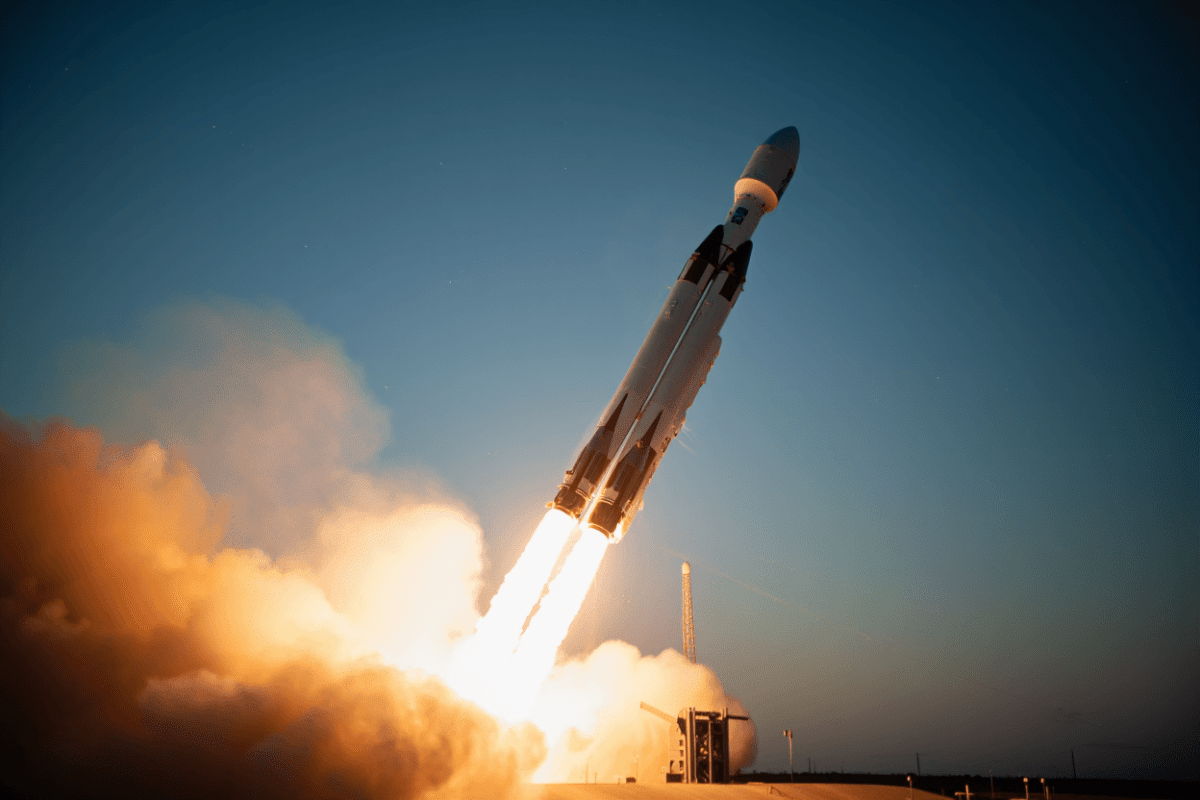
SpaceX successfully launched 24 Starlink satellites into orbit from Vandenberg Space Force Base in California on May 19, 2026, continuing its aggressive expansion of global broadband coverage. A Falcon 9 rocket lifted off from Space Launch Complex 4 East (SLC-4E) during an evening launch window, with satellites deployed approximately one hour after liftoff. This mission represents part of SpaceX’s year-to-date total of 1,052 satellite deployments and advances the constellation toward complete global coverage for high-speed, low-latency internet.
🔥 Quick Facts
- 24 Starlink satellites deployed to low-Earth orbit (LEO)
- Launch from Vandenberg Space Force Base, California on May 19, 2026
- 1,052 total satellites deployed year-to-date in 2026
- 10 million+ active customers globally as of February 2026
- 99.7% coverage of U.S. households now available
Understanding the Starlink Expansion Strategy
SpaceX‘s May 19 launch is the latest in a series of frequent Starlink deployments designed to maintain orbital positioning and expand global coverage simultaneously. The company now operates the largest satellite constellation ever deployed, with each launch adding critical mass to multiple orbital shells. Falcon 9 rockets conducted dozens of launches throughout 2026, establishing SpaceX as the world’s most active space launch provider. This operational cadence reflects both the engineering precision required for large-constellation deployment and the commercial demand driving expansion. The satellites launched on May 19 will join thousands of predecessors circling Earth at approximately 370 miles (550 kilometers) altitude, forming a mesh network that relays signals globally.
The Vandenberg Space Force Base launch facility has become increasingly critical to SpaceX’s deployment schedule. Located on California’s Central Coast near Lompoc, the base provides an ideal launch site for polar and near-polar orbital insertions, complementing launches from Cape Canaveral in Florida. The SLC-4E (Space Launch Complex 4 East) pad supports both launch and first-stage booster recovery, with the Starlink payload descending to the OCISLY droneship in the Pacific Ocean.
Technical Mission Sequence and Recovery Operations
The Falcon 9 payload deployment sequence involves precise timing across multiple stages. Following first-stage separation at T+2 minutes 26 seconds, the second stage ignites for orbital insertion. Approximately 1 hour 1 minute after liftoff, the 24 satellites separate and begin autonomous deployment into their designated orbital slots. Each Starlink satellite weighs approximately 573 pounds (260 kilograms) and is equipped with phased-array antennas, inter-satellite communication links, and on-board propulsion systems for orbital maneuvering. The first stage achieved a powered landing on the OCISLY droneship approximately 8 minutes 19 seconds after liftoff, marking another successful booster recovery that reduces launch costs through reusability.
Ground operations preceding launch required propellant loading sequences coordinated over 38 minutes before ignition. Engine chill operations, tank pressurization, and final prelaunch verification procedures ensured the rocket’s readiness for the stringent demands of orbital insertion. Weather conditions throughout the day remained favorable for launch operations on California’s Central Coast.
Starlink Constellation Growth and Global Coverage Metrics
| Metric | Current Status (May 2026) | Growth Context |
| Active Customers | 10+ million | Added 4.6M in 2025 alone |
| U.S. Coverage | 99.7% of households | Near-complete saturation |
| Service Countries | 127+ nations | Expanded from 40 in 2024 |
| 2026 YTD Satellites | 1,052 deployed | 158 in April alone |
| Uptime Guarantee | 99.9% average | Industry-leading reliability |
| FCC Broadband Standard | 44.7% meeting 100/20 Mbps | Q4 2025 performance data |
The May 19 deployment advances Starlink’s conquest of critical performance thresholds across North America and Europe. Ookla speed test data from February 2026 revealed that Starlink users comprised 97% of global satellite internet speed test samples, overwhelming competitors like Viasat and HughesNet. Performance improvements across Q4 2025 and Q1 2026 demonstrated SpaceX’s ability to enhance service quality as constellation density increased. The company’s third-generation satellite initiative, targeting mid-2026 deployment, promises even higher throughput and lower latency by incorporating advanced phased-array technology and expanded bandwidth capacity.
Critical Infrastructure and Commercial Significance
“Starlink provides high-speed, low-latency internet with more than 99.9% average uptime and reliable connectivity around the globe.” — SpaceX, Starlink Service Commitment
— SpaceX, Official Network Update
Broader commercial implications shape SpaceX’s deployment cadence. Each satellite launch adds revenue-generating capacity while serving government, military, and humanitarian missions. The Federal Communications Commission (FCC) authorized SpaceX to deploy an additional 7,500 second-generation satellites in January 2026, bringing total authorized constellation capacity to approximately 12,000 satellites. This regulatory approval signals confidence in SpaceX’s orbital management capabilities and spectrum stewardship. The company simultaneously operates Starshield, a government variant designed for military and national security applications, demonstrating diversified revenue streams beyond consumer broadband.
California’s coastal launches hold particular strategic importance for SpaceX’s operations. Vandenberg Space Force Base coordinates closely with SpaceX operations teams, weather monitoring, and maritime authorities to execute the frequent launch schedule while maintaining safety. The Central Coast region experiences favorable weather patterns and provides direct oceanic access for booster recovery—critical factors enabling launch frequency that would be impossible from Florida-only operations.
What Does This Mean for Global Internet Access Expansion?
The persistent pace of Starlink deployment throughout 2026 suggests SpaceX remains on track for its ambitious coverage and capacity targets. With 1,052 satellites already deployed year-to-date, the company trajectory indicates an annual deployment rate exceeding 1,400 satellites. This velocity sustains the constellation’s ability to cover new geographic regions while replacing aging units approaching end-of-life. Rural communities in the United States and developing nations increasingly rely on Starlink for broadband access, particularly in areas where fiber or terrestrial infrastructure deployment remains economically unviable. The expansion to 127+ countries through 2026 underscores growing demand from international markets.
Performance metrics reveal tension between quantity and quality considerations. While 44.7% of users now consistently meet FCC minimum broadband standards (100 Mbps download), the remaining users experience variable throughput dependent on congestion, weather, and orbital geometry. Third-generation satellites with higher power output and increased bandwidth allocation aim to shift this equation favorably by Q4 2026. Military applications through Starshield simultaneously demonstrate space infrastructure’s strategic importance, positioning SpaceX as critical to U.S. national security alongside commercial goals.
Sources
- SpaceX Official Launch Manifest — Starlink SL-17-42 mission details and deployment sequences
- Space.com — Real-time launch coverage and technical specifications
- Spaceflight Now — Historical launch records and constellation tracking
- Ookla Speed Test Analysis — Global satellite internet performance benchmarking
- Starlink Progress Reports — Customer growth and service availability metrics
- Federal Communications Commission (FCC) — Authorization documents and spectrum allocation records