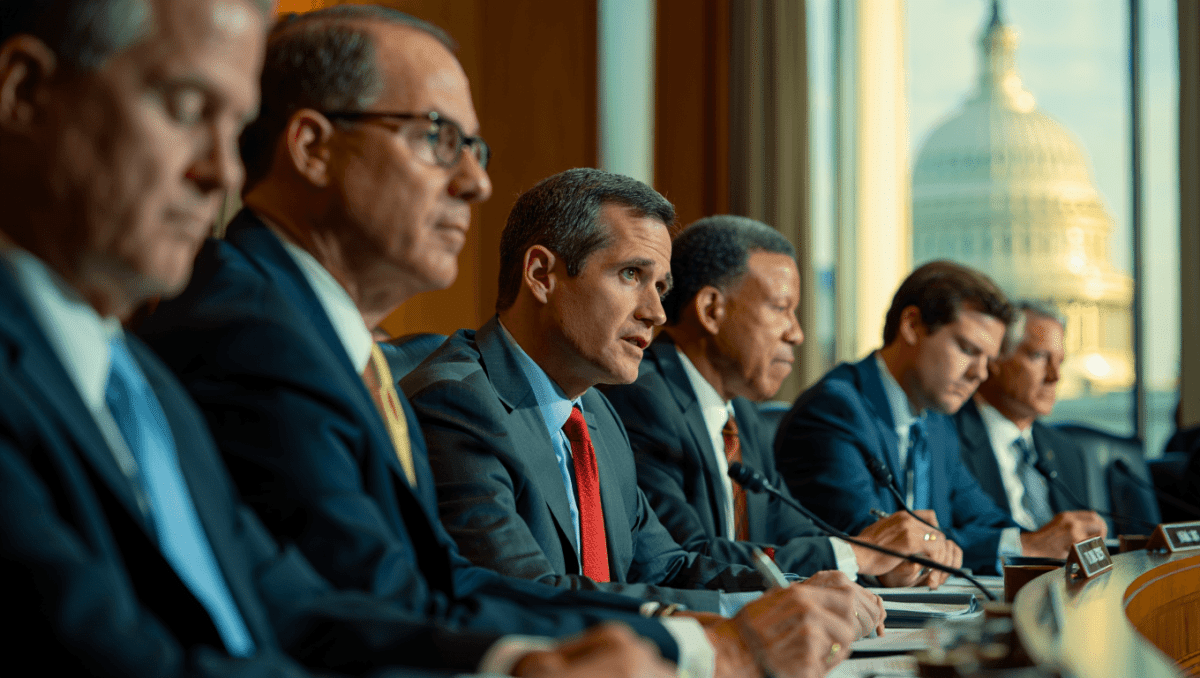
The Clarity Act, a landmark 309-page cryptocurrency regulation bill, just dropped last night. The Senate Banking Committee unveiled the final draft just hours before a critical May 14 markup vote. What’s in this bill could reshape how America regulates digital assets.
🔥 Quick Facts
- Bill Size: The 309-page Clarity Act creates the first comprehensive U.S. framework for digital asset regulation.
- Vote Timing: Senate Banking Committee markup scheduled for May 14 at 10:30 a.m. ET in Washington, D.C.
- Key Points: Assigns SEC authority over new token sales and establishes clear regulatory boundaries between agencies.
- Stablecoin Rules: Permits activity-based stablecoin rewards while banning passive yield for holders under new framework.
What Clarity Act Draft Actually Does
The Digital Asset Market Clarity Act of 2025 addresses a critical problem: crypto operates under fragmented oversight with outdated rules. The framework splits responsibilities between the SEC and CFTC, creating legal certainty the industry has lacked. Each regulator gets clear jurisdiction over digital commodities and securities.
The bill establishes a new exemption from SEC registration called Regulation Crypto. This allows certain digital asset projects to raise capital from the public while meeting specific compliance standards. Consumer protections include 24/7 customer service requirements and insurance or SIPC-like coverage provisions.
Stablecoin Provisions Creating Industry Debate
Stablecoin rules in the Clarity Act draft have sparked intense lobbying from banking groups and crypto advocates. The bill restricts qualifying reserve assets to short-duration U.S. Treasuries under 90 days, overnight repurchase agreements, and similar instruments. Activity-based yields remain permitted, but passive holding rewards are prohibited.
The American Bankers Association and major banking trade groups mounted a last-minute push to tighten stablecoin language even further. This opposition reflects deep concerns about competitive pressures on traditional banking products. Senators remain divided on whether these restrictions strike the right balance.
Timeline and Next Steps for Adoption
| Event | Date and Time |
| Draft Released | May 11-12, 2026, late evening |
| Committee Markup | May 14, 2026 at 10:30 a.m. ET |
| Amendment Deadline | May 13 before markup session |
| Potential Full Senate Vote | Summer 2026 (estimated) |
Committee members have until May 13 to file any amendments before the official markup hearing. If the committee advances the bill, it heads to the full Senate floor for consideration. Advocates estimate passage could occur by August before the Senate recess, starting a 9-10 week legislative window.
“This week, the Senate is set to take a historic step forward on the CLARITY Act, comprehensive market structure legislation that brings regulatory clarity and certainty to the digital asset industry.”
— Senate Banking Committee, official statement
Industry Response and Political Landscape
The crypto industry has largely embraced the Clarity Act draft, viewing it as a win for regulatory certainty. Companies can finally plan long-term investment strategies knowing the rules. Consumer advocates appreciate safeguards like mandatory customer service and coverage provisions. However, this consensus fractures when discussing stablecoins.
Bipartisan support from Chairman Tim Scott, Senator Cynthia Lummis, and Senator Thom Tillis suggests the bill has momentum. Yet banking industry opposition represents a significant political headwind. The May 14 vote will reveal whether committee members prioritize digital asset innovation or banking sector concerns in the final markup.
Will the Clarity Act Become Law Before Summer Recess?
The Clarity Act faces a narrow but achievable timeline. Senate leaders want crypto legislation resolved before the August recess leaves just nine to ten weeks for full floor consideration. This compressed schedule means fast-track procedures might be necessary.
Success depends on committee passage May 14, then rapid floor scheduling without major amendments reopening debates. Industry observers give the bill moderate to strong chances of advancing past May 14, but full Senate passage remains uncertain. Banking industry opposition and ethics committee delays could still derail momentum needed for summer passage.
Sources
- CoinDesk – Comprehensive analysis of Clarity Act provisions and Senate Banking Committee actions
- Senate Banking Committee – Official draft text and section-by-section breakdown released May 11-12
- Reuters – Reporting on regulatory framework and committee markup timeline