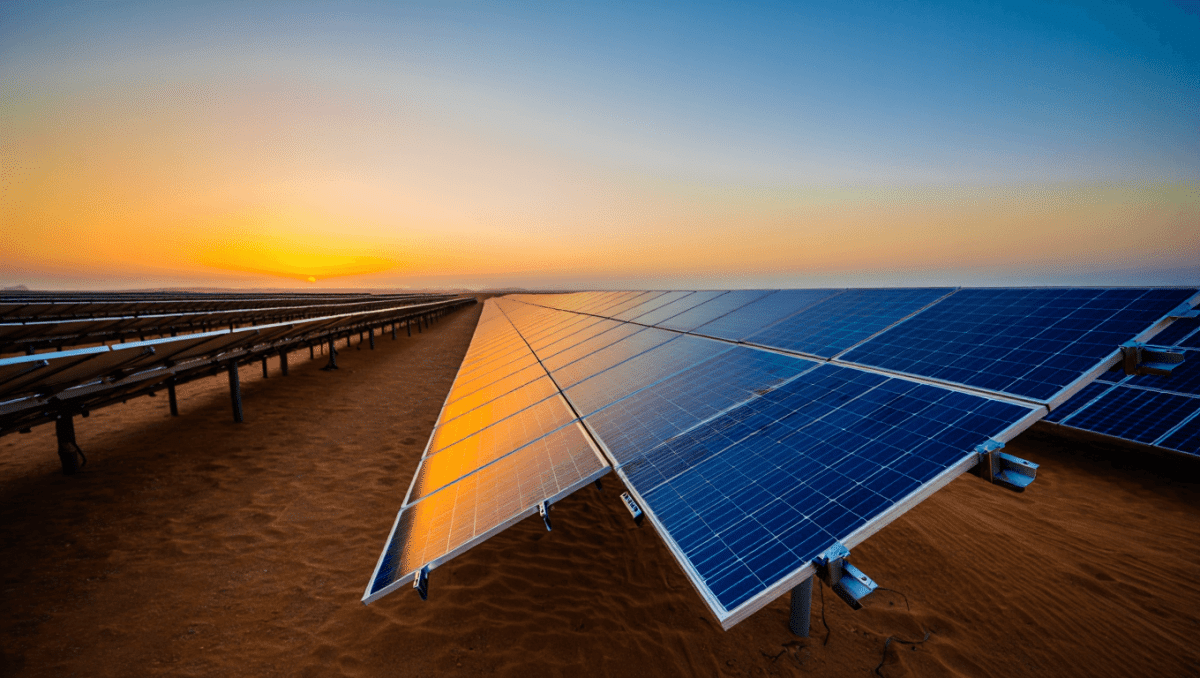
Solar energy is surging across America. Developers are planning a record 43.4 gigawatts of new capacity in 2026 alone, marking a 60% increase from last year. This explosive growth signals a fundamental shift in how the nation powers itself.
🔥 Quick Facts
- Record Capacity: Developers plan to add 43.4 GW of utility-scale solar in 2026, a 60% jump from 27.2 GW in 2025
- Industry Growth: U.S. solar energy production grew 24.7% year-over-year as of February 2026
- Market Leadership: Solar represents 51% of all new U.S. capacity additions planned for 2026
- Clean Energy Dominance: Renewables now comprise 90% of new electrical generating capacity coming online
Why Solar is Breaking Records
Solar energy has become the undisputed leader in new power generation for five consecutive years. The 43.4 GW projection for 2026 dwarfs all other sources. Battery storage trails at 24 GW, while wind capacity sits at 11.8 GW. This dominance isn’t accidental.
Federal incentives under recent energy legislation have accelerated project development timelines. Investment tax credits, manufacturing grants, and regional renewable energy mandates all push developers to break ground faster. Lower solar panel costs, down significantly since 2015, make large-scale projects financially viable at scale.
The 2026 Capacity Explosion Explained
The 60% year-over-year increase reflects a pipeline that’s been filling for years. Many utility-scale solar farms follow long development cycles, from permitting through construction, often taking 2-4 years. Projects approved in 2023-2024 are now entering the construction phase simultaneously.
Election uncertainty and policy shifts also play a role. Developers are racing to complete interconnection agreements and begin construction before any potential regulatory changes take effect. This creates a bottleneck of projects all launching at once.
Growth by the Numbers
| Metric | 2025 Actual | 2026 Forecast |
| Solar Capacity Added | 27.2 GW | 43.4 GW |
| Annual Growth Rate | 16.4% utility-scale | Expected 15%+ increase |
| Total Renewable Capacity | 90% of new additions | 86 GW total (51% solar) |
| Market Share vs Fossil Fuels | Only new capacity online | Continues dominance |
“Solar and storage to lead 86 GW capacity surge,” with solar and battery assets comprising nearly 80% of all new utility-scale power.
— U.S. Energy Information Administration, April 28, 2026
What This Means for the Grid
Grid operators face unprecedented challenges managing this solar surge. Unlike traditional power plants, solar production fluctuates with weather and time of day. The battery storage capacity of 24 GW helps, but it covers only part of the dispatchability gap.
Transmission infrastructure upgrades are now critical. Many solar farms are built in rural areas with weak grid connections. Connecting 43.4 GW requires massive investment in interstate transmission corridors, a process often blocked by environmental reviews and local opposition.
Can This Growth Momentum Continue?
The 15.3% growth rate in solar energy suggests the trend will persist, but obstacles loom ahead. Supply chain vulnerabilities in key components, tariff disputes, and land use conflicts could slow the pace. Rising interest rates also increase project financing costs, potentially delaying some utility-scale solar developments.
Will solar energy maintain this explosive growth rate, or will regulatory headwinds and logistical challenges create a slowdown in 2027 and beyond? Industry watchers are watching carefully as the transition accelerates.