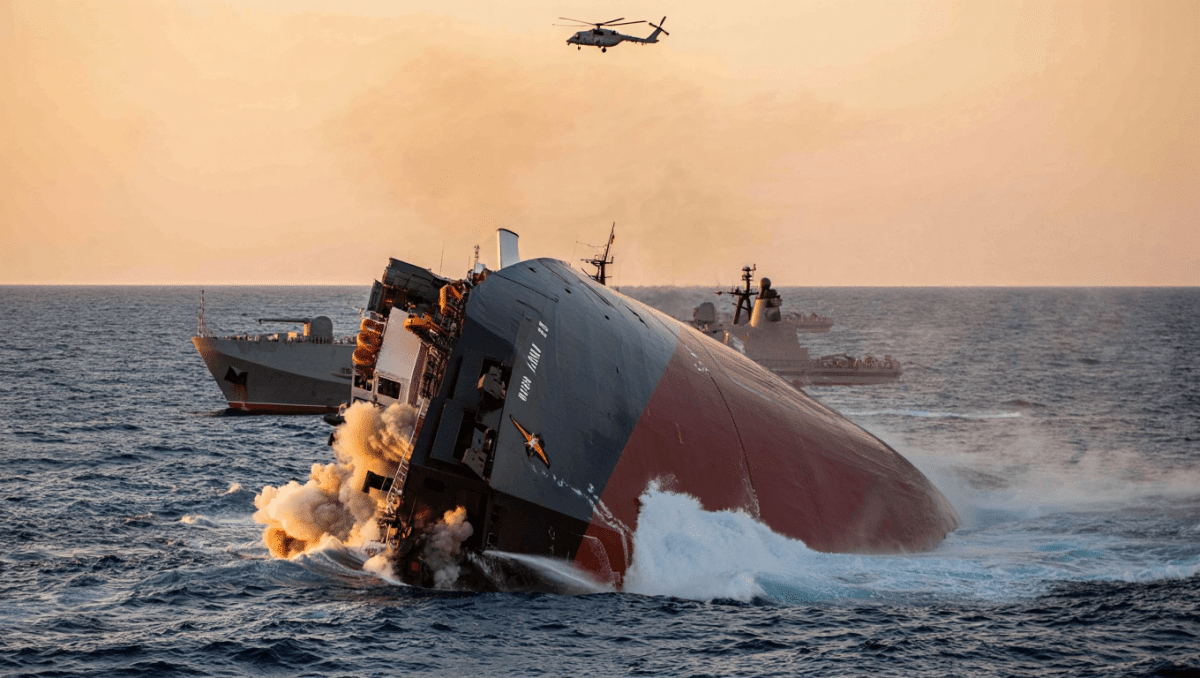
Investigators just revealed a stunning secret: the Russian cargo ship Ursa Major that sank in the Mediterranean Sea was likely carrying two nuclear reactors bound for North Korea. The vessel suffered mysterious explosions and went down December 23, 2024, sparking geopolitical shockwaves.
🔥 Quick Facts
- Ship Name: Ursa Major, a 9,500-dwt Russian cargo vessel built in 2009
- Sinking Date: December 23, 2024, off the coast of Spain, approximately 60 miles away
- Nuclear Cargo: Two submarine nuclear reactor housings and components destined for North Korea
- Investigation: May 2026 revelation suggests possible NATO torpedoes caused the sinking
A Ghost Ship’s Nuclear Mission Exposed
The Ursa Major operated as part of Russia’s shadow fleet, vessels used to evade international sanctions and conduct covert missions. This discovery reveals North Korea’s nuclear ambitions and Russia’s role in circumventing weapons proliferation restrictions. The ship’s final destination was to deliver critical reactor components that would enhance Pyongyang’s submarine capability and military strength.
Western intelligence agencies had suspected this cargo for months. The two nuclear reactor casings were designed for submarine propulsion systems, specifically the VM-4SG reactor type. Such transfers represent serious violations of United Nations Security Council sanctions against North Korea and threaten regional stability in the Asia-Pacific.
How the Nuclear Shipment Unfolded
The Ursa Major loaded its classified cargo during October and November 2024 through covert sea-to-sea transfers. Russian operatives utilized sophisticated smuggling tactics, avoiding major ports and relying on remote maritime zones. The vessel’s final journey took it toward North Africa en route to Asian waters before disaster struck.
Investigators traced the cargo’s origins to Russian military-industrial facilities specializing in submarine technology. The timing of these transfers coincided with North Korea’s test launches of new ballistic missiles, suggesting urgent demand for upgraded nuclear propulsion systems. This coordination represents unprecedented cooperation between Moscow and Pyongyang in weapons development.
The Mysterious Sinking and Investigation
| Investigation Detail | Finding |
| Vessel Status | Sank off Spain coast, December 23, 2024 |
| Location | Approximately 60 miles from Cartagena, Spain |
| Suspected Cause | Torpedo strike by NATO-affiliated actor |
| Reason for Interest | Contained two submarine nuclear reactors |
The Ursa Major experienced catastrophic explosions that catastrophically damaged hull integrity. Spanish authorities initially treated the incident as an accident, but forensic analysis revealed signs of external weaponry involvement. Evidence pointed toward a sophisticated naval strike using NATO-standard torpedoes, potentially deployed from a submarine operating in NATO waters.
“The vessel sank in the ambiguous maritime zone between NATO and non-NATO waters, raising questions about who conducted the operation and under what circumstances,” according to geopolitical analysts examining the incident.
Sanctions Evasion and Shadow Fleet Operations
Russia maintains an extensive shadow fleet network of aging vessels registered under foreign flags. The Ursa Major exemplifies this strategy, allowing Moscow to bypass oil embargoes and arms restrictions while maintaining plausible deniability. The nuclear reactor shipment represents the most significant military logistics operation exposed so far, revealing deepening Russia-North Korea ties.
This incident demonstrates how advanced military technology proliferates despite international monitoring and sanctions regimes. The United States and its allies have imposed comprehensive restrictions on North Korea’s weapons programs, yet Moscow continues supplying critical components. Such shipments enable Pyongyang to accelerate its nuclear submarine program, directly threatening South Korea, Japan, and the broader Indo-Pacific region.
What This Revelation Means for Global Security
The Ursa Major discovery transforms understanding of North Korea’s nuclear capabilities and reveals unprecedented Russian-North Korean military cooperation. If Pyongyang successfully integrates these reactors into submarines, their underwater strike capability would increase exponentially. This development could trigger military escalation across East Asia and complicate already delicate diplomatic relations.
The 2026 investigation findings raise critical questions about deterrence effectiveness and sanctions enforcement. International bodies must reassess strategies for preventing weapons transfers while confronting silent actors who sabotage such operations. How can the global community strengthen protection against nuclear proliferation in the shadow economy of maritime smuggling?
Sources
- CNN – Breaking coverage of the Russian ship sinking and nuclear reactor cargo revelation
- Mirror UK – Reporting on the vessel explosion off Spain’s coast and investigation details
- United24Media – Analysis of rare NATO torpedo suspected in sinking and geopolitical implications