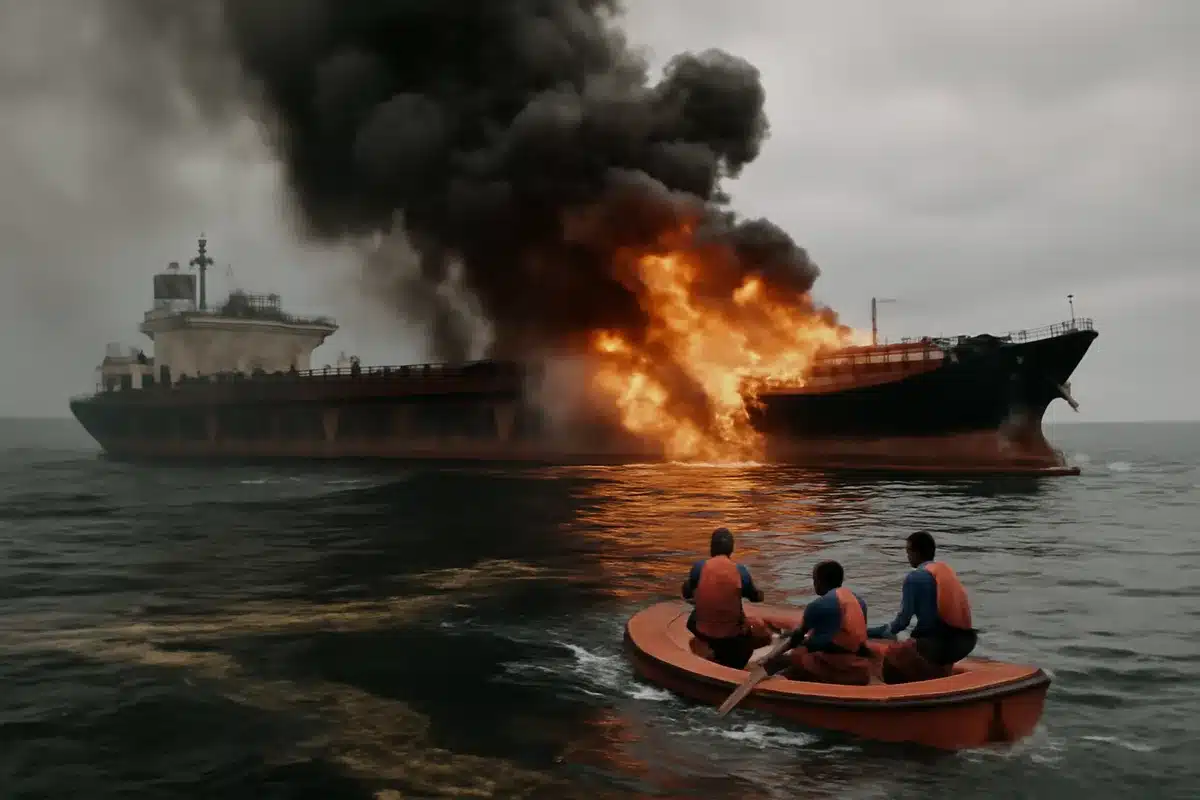
U.S. Central Command struck three Iranian crude oil tankers on Saturday after the Islamic Revolutionary Guard Corps launched ballistic missiles at two Navy warships patrolling regional waters, according to a CENTCOM statement. A U.S. aircraft carrier and guided-missile destroyer successfully evaded the attacks, and no American personnel were injured.
The three vessels—M/T Downy off the coast of Kharg Island, M/T Stark 1 near Jask, and M/T Kylo in the Gulf of Oman—were permanently disabled or completely destroyed, CENTCOM said. The strikes mark the latest escalation in a conflict that had paused for a month before resuming last weekend.
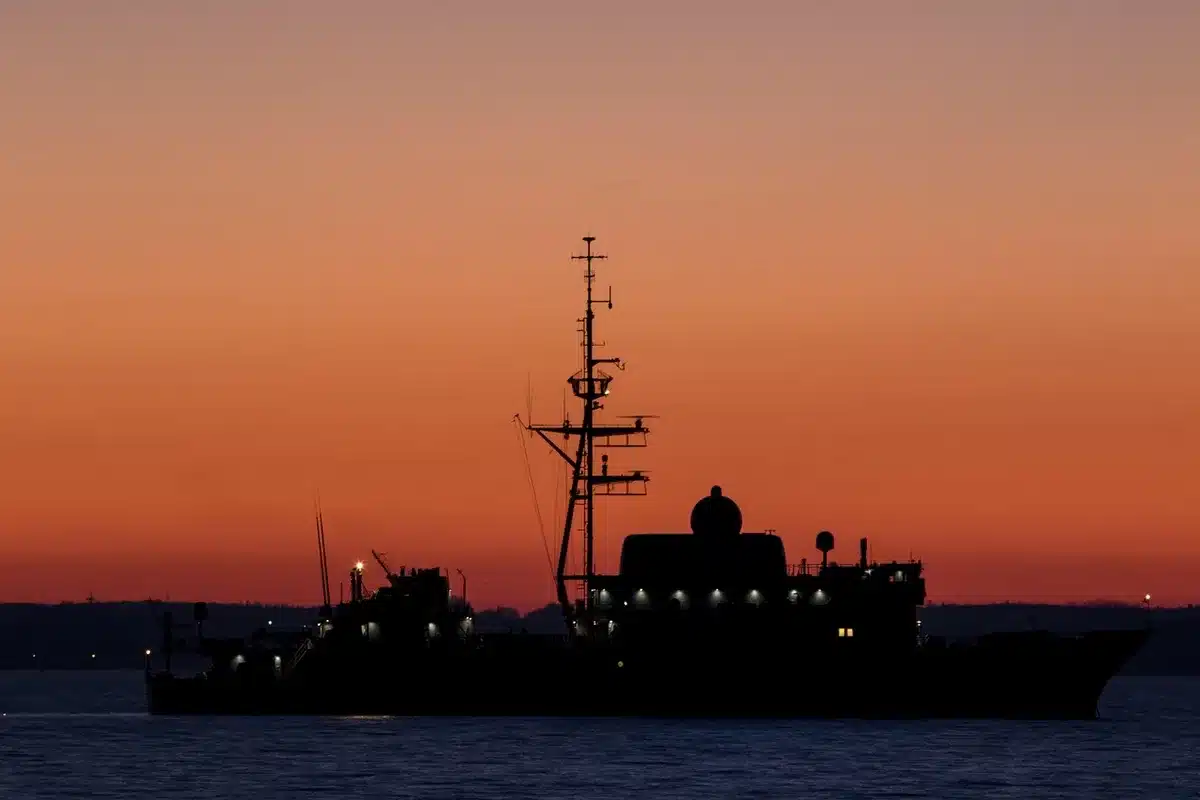
The three tankers are part of what CENTCOM described as a “multibillion-dollar shadow network” that funds the Iranian Revolutionary Guard and its regional proxies. Shadow fleets operate outside official shipping systems, allowing Iran to move oil despite international sanctions. CENTCOM noted that Iran has no means by which to defend these vessels.
The “Tanker for Tanker” Strategy
The strikes are part of a new “tanker for tanker” policy approved by President Donald Trump, according to multiple reports. The policy directly mirrors Iranian attacks on shipping with retaliatory strikes on Iran’s own oil fleet, fundamentally shifting the economic battlefield of the conflict.
CENTCOM Commander Adm. Brad Cooper laid out the logic in stark terms: “If you shoot at two of our ships, we will impose an even higher economic cost—taking out three of yours. We will not hesitate to defend American forces, and if necessary, destroy Iran’s limited and exposed oil fleet.” Defense Secretary Pete Hegseth reinforced the message on social media, stating that if Iran shoots at U.S. Navy ships, “we will destroy (and sink) their oil tankers.”

The policy targets Iran’s remaining oil export capacity at a time when the country’s economy is already strained by sanctions and the broader conflict. One of the three tankers struck Saturday was located near Kharg Island, Iran’s primary oil export hub, which handles nearly all of the country’s crude exports.
Iran’s foreign ministry condemned the strikes on Saturday, calling them “a clear violation” of international law and “a war crime” that threatens global shipping security. Lt. Col. Ebrahim Zolfaghari warned that Iranian forces would target American military in the region “more severely than before” if the U.S. continues strikes against ships. Iran claimed Sunday that it had targeted an unmanned U.S. vessel attempting to enter the Strait of Hormuz, though the U.S. military did not immediately confirm the attack.
The strikes come as fighting between the U.S. and Iran has intensified after a month-long pause that began in late August. Tensions had escalated dramatically in recent weeks over control of shipping lanes in the Strait of Hormuz, one of the world’s most critical oil chokepoints, with both sides trading attacks on vessels and military targets across the Persian Gulf and surrounding waters.
Sources
- U.S. Central Command — official statement on the strikes, vessel details, and CENTCOM commander’s statement
- NPR — reporting on the strikes, shadow fleet operations, Iranian response, and month-long fighting pause
- The Guardian — initial reporting on the strikes and escalation
- Axios — reporting on the “tanker for tanker” policy approval
- Forbes — analysis of the policy and its strategic purpose