
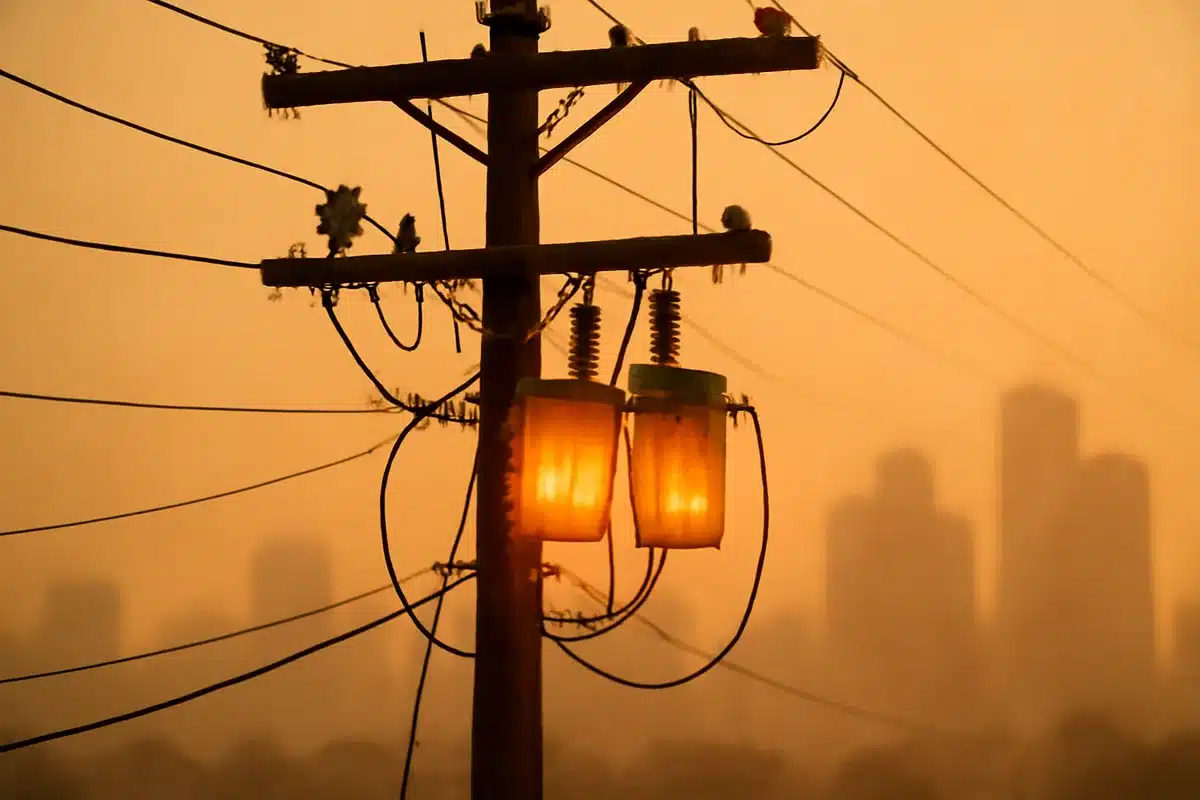
The U.S. electrical grid faces heightened blackout risk Wednesday as an intense heat wave peaks across a broad swath of the nation, testing the capacity of power supplies serving millions of homes and businesses from the Midwest through the Mid-Atlantic, according to the U.S. Department of Energy.
The PJM Interconnection, the largest U.S. electric grid serving 67 million people in a territory stretching from Washington D.C. to Chicago, is under particular strain. Late Tuesday night, DOE Secretary Chris Wright authorized PJM to direct backup generation resources to operate as a last resort before declaring a level 3 energy emergency alert—one of the final steps before rotating blackouts are ordered.
Wright said the move was “part of a plan to stabilize the Mid-Atlantic grid and mitigate the risk of blackouts,” emphasizing that “maintaining affordable, reliable, and secure power for hardworking American families and businesses during periods of hot weather is non-negotiable.”
Temperatures in Chicago, St. Louis, and Washington D.C. are expected to rise above 90 degrees Fahrenheit during peak electricity demand Wednesday afternoon and evening. The extreme heat is driving air-conditioning loads to near-record levels across multiple regions.
The Midcontinent Independent System Operator (MISO), which serves 15 U.S. states in the Midwest and South, is forecasting peak demand Wednesday to approach record territory at approximately 121 gigawatts. MISO’s all-time high is 127.1 GW. The grid operator has warned of tight conditions and increased its normal reserve requirement as a buffer against unexpected power plant outages and transmission line congestion.

PJM’s “maximum generation emergency” alert, in effect early Wednesday, directed generators with planned outages to report how quickly they could return units to service. The alert is a signal to all available resources that the grid is operating near its limits.
In rural Missouri, the Howell-Oregon Electric Cooperative advised customers to unplug unused chargers and appliances to reduce demand. Customers were also asked to consider raising their thermostats to decrease air-conditioning use during the critical afternoon and evening hours when demand peaks.
The emergency measures reflect broader challenges the national grid faces as extreme weather events stress aging infrastructure and growing electricity demand. Earlier this summer, federal authorities declared emergencies across multiple regions as successive heat waves pushed demand toward record levels.
Sources
- Reuters — peak demand forecasts, PJM and MISO alerts, DOE emergency authorization, temperature projections, and grid operator statements
- U.S. Department of Energy — emergency order details and Secretary Wright’s statement on grid stabilization










