
California fast-tracked $239 million in construction-gap funding to bring 1,700 affordable housing units to market across 20 projects, Governor Gavin Newsom announced on August 11. The investment addresses a critical bottleneck: thousands of affordable housing developments are fully approved and legally ready to build but lack the final layer of funding needed to break ground.
The funds target a specific financing challenge that has stalled housing development across the state. Affordable housing projects typically require multiple funding sources — grants, low-interest loans, and tax credits — each with its own timeline and requirements. The gap funding closes the final financial hole that prevents projects from moving to construction, according to the California Department of Housing and Community Development (HCD).
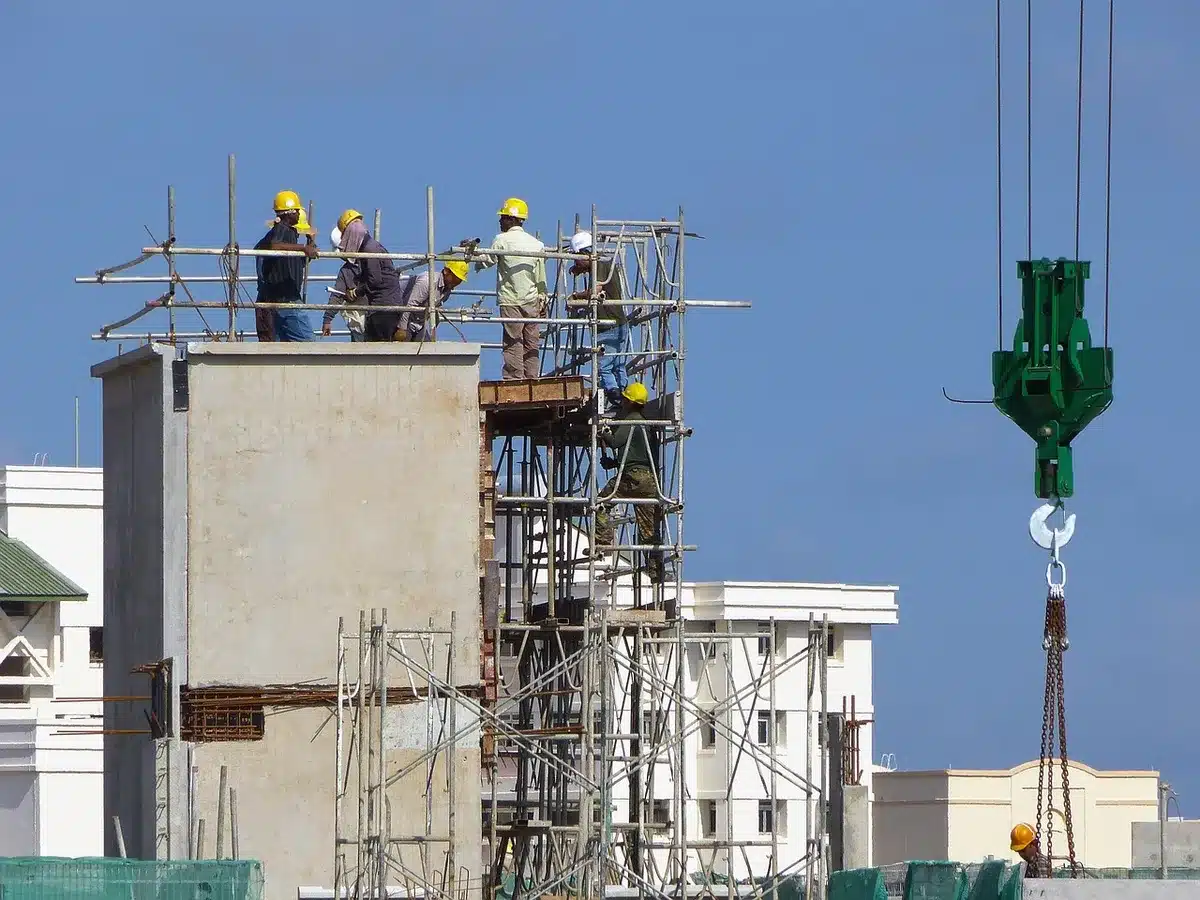
The projects underwent a streamlined approval process that took just four months from announcement to award — a sharp contrast to California’s historically slow affordable housing pipeline. Each project had already secured at least one other state funding source, demonstrating financial viability and community readiness, according to HCD Director Gustavo Velasquez. With total project costs exceeding $1.2 billion, the state’s nearly $239 million investment represents the final piece needed to unlock construction.
California faces an acute shortage of affordable homes. According to the National Low Income Housing Coalition’s 2026 report, California has a shortage of nearly one million affordable and available homes for extremely low-income renters — the largest shortfall of any state. Separately, a March 2026 Enterprise Community Partners report identified 39,880 affordable units stuck in the financing pipeline, fully designed and legally approved but waiting for final funding. Clearing that backlog would require an estimated $4.1 billion in additional state support, the report found.

The gap funding model builds on prior state efforts. California’s Housing Accelerator program, launched earlier in the decade, has awarded funding to 58 projects for 4,945 affordable units as of July 2025, demonstrating that targeted bridge financing can accelerate stalled projects. The new gap funding NOFA (Notice of Funding Availability) announced in April represents the state’s first dedicated program focused specifically on construction-gap financing, according to HCD.
Governor Newsom’s administration is pursuing broader structural reforms alongside direct funding. The state created the California Housing and Homelessness Agency — scheduled to consolidate disparate housing loan and grant programs — to simplify the approval process and reduce the time developers spend navigating multiple funding streams. A single application process could cut months of delays, with each additional funding source currently adding an average of four months to a project’s timeline and approximately $20,460 per unit in extra costs, according to UC Berkeley’s Terner Center for Housing Innovation.
The announcement reflects mounting pressure to address California’s decades-old housing shortage. Since 2019, annual residential construction has increased 59%, from 70,000 homes in 2018 to about 111,000 in 2024. Approval times have also improved, with the average timeline from application to entitlement slashed by 57%, from 160 days to 68 days in 2024. Yet the state’s production still lags behind the need for new affordable units, particularly for renters earning at or below the poverty line.
Sources
- Governor of California — Official announcement of $239 million gap funding for 1,700 affordable units across 20 projects, August 11, 2026; quotes from Governor Newsom, HCD Secretary Tomiquia Moss, and HCD Director Gustavo Velasquez.
- Connect CRE — Reporting on the gap funding awards, project costs totaling $1.2 billion, and streamlined approval process, August 12, 2026.
- National Low Income Housing Coalition — The Gap 2026 report findings on California’s shortage of nearly one million affordable homes for extremely low-income renters, March 5, 2026.
- CalMatters — Investigation of California’s affordable housing financing bottleneck, identifying 39,880 units awaiting final funding and $4.1 billion shortfall; analysis of construction cost delays and funding complexity, March 9, 2026.
- AllHome — Data on California Housing Accelerator program results: 58 projects funded for 4,945 affordable units as of July 2025.
- UC Berkeley Terner Center for Housing Innovation — Analysis showing each additional funding source delays construction by average of four months and adds $20,460 per unit in costs.