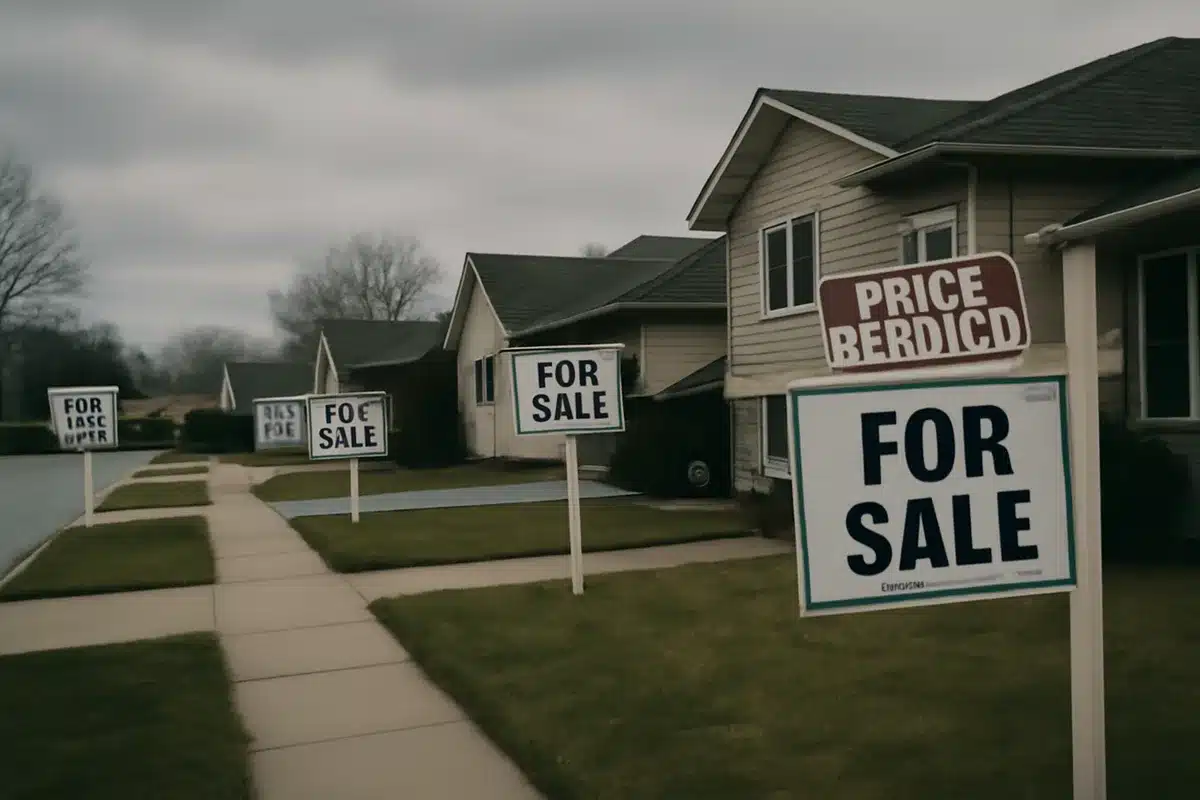
U.S. housing prices grew 2.1% year-over-year in 2026, marking the slowest pace in a decade as mortgage rates and affordability constraints continue to weigh on the market. The modest growth reflects a sharp deceleration from the rapid gains of the pandemic era and signals a fundamental shift in how the housing market is functioning.
The slowdown is driven primarily by elevated mortgage rates, which have constrained buyer demand across most of the country. The average 30-year fixed mortgage rate fell to 5.98% on February 26, 2026, but then rose to 6.65% by August 20, according to U.S. Bank analysis published in August 2026. That rate climb has made monthly payments significantly more expensive for prospective buyers, even as home prices have moderated.

The housing price growth slowest in a decade comes as the market transitions from the rapid post-pandemic surge into a slower, more selective phase. The S&P Cotality Case-Shiller U.S. National Home Price Index rose just 1.1% year-over-year in May 2026, while other national measures also show subdued price growth compared with the rapid gains recorded earlier in the decade, according to U.S. Bank. Meanwhile, existing-home sales declined 1.7% in July from June to a seasonally adjusted annual rate of 4.06 million, though they rose 0.7% from a year earlier.
Affordability remains especially difficult for first-time buyers. The National Association of Realtors’ affordability index uses 100 as the point where a family earning the median income has enough income to qualify for a mortgage on a median-priced home. While the overall index reached 105 in the second quarter of 2026, the first-time buyer index stood at only 70, showing that entry-level buyers still face a much larger affordability gap, U.S. Bank reported. The median existing-home price increased 2.0% year-over-year to $434,100 in July.

National averages mask wide differences among local housing markets. Midwest and Northeast markets have generally recorded firmer price gains, while several Sun Belt and Western markets have cooled after large pandemic-era increases. Location, property quality and the number of competing listings now have a greater influence on sellers’ pricing power, according to U.S. Bank analysis.
Housing inventory is gradually returning to more normal levels, with total inventory at 1.54 million homes—equal to 4.6 months of supply at the current sales pace as of July. Some homeowners remain reluctant to exchange a lower-rate mortgage for a new loan at today’s higher rates, since the effective rate on mortgages already outstanding was 4.33% in June, more than two percentage points below prevailing mortgage rates. This dynamic can keep the supply of existing homes tight even when buyer demand slows.
The future of the housing market depends on whether mortgage rates decline and income growth accelerates. A lasting increase in sales will likely require lower borrowing costs, stronger income growth or additional price relief, according to U.S. Bank. For now, the market remains characterized by high monthly payments and modest national price growth, with buyers gaining more negotiating leverage in many regions as sellers substantially outnumber buyers nationally.
Sources
- U.S. Bank Asset Management Group — mortgage rate trends, home price growth data, affordability indices, inventory levels, and regional market analysis as of August 2026.
- Nora Real Estate — 2026 housing price growth forecast survey showing 2.1% expected annual growth.
- Forbes Mortgages — confirmation of 1.4% annual home price gain in 2025 as one of the slowest growth rates in recent years.