
Pete Ferrell’s Kansas wind ranch generates roughly half his annual income, with 50 turbines on his 7,000-acre Flint Hills property providing reliable revenue that has transformed how he manages debt and succession on his family’s fourth-generation cattle operation.
Ferrell’s Elk River Wind Project, which came online in 2005, produces enough electricity to power approximately 60,000 homes annually. Each turbine nets host landowners roughly $10,000 per year in lease payments, according to Nicholas Glover of the Environmental Defense Fund. The consistency of that income has become Ferrell’s hedge against the volatility of ranching itself.
“The big scary word in agriculture is drought,” Ferrell says. “It adds a great deal of uncertainty to our lives. I tell people, ‘You know what is my best cash crop? It blows even during a drought.'” Since 2005, royalties have covered roughly half of Ferrell’s income, drought years included—a stability cattle prices and forage production cannot match.
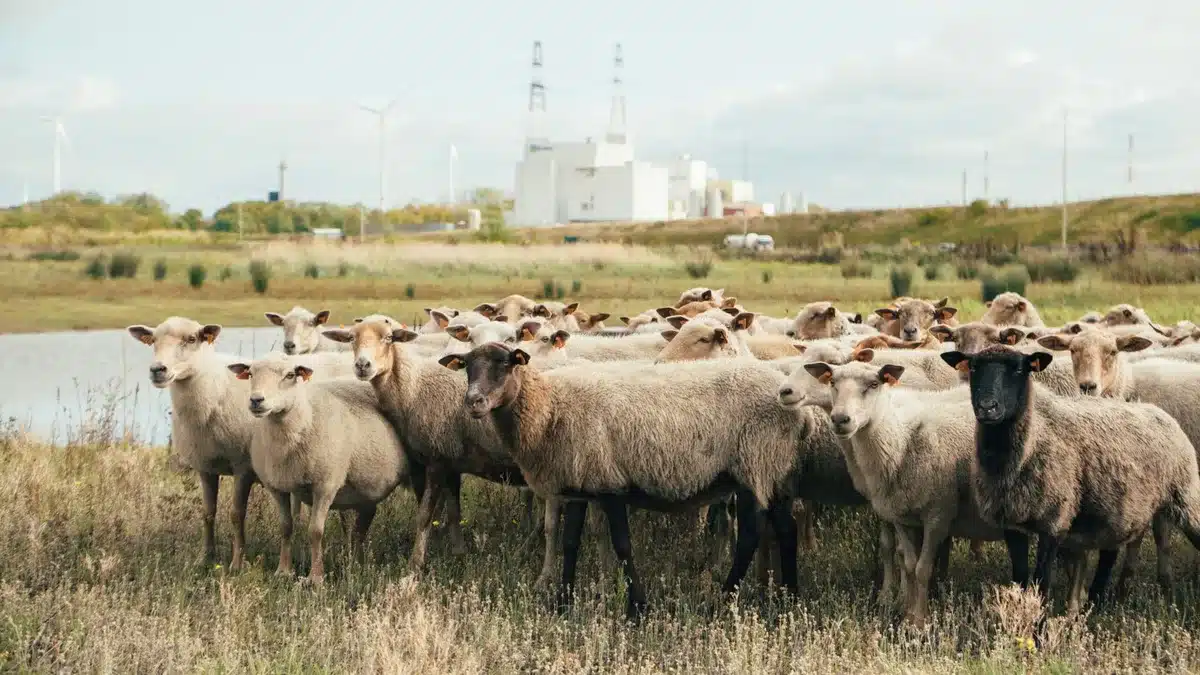
The rancher’s embrace of wind energy stands in sharp contrast to his initial resistance. When a Fortune 500 developer approached him in the 1990s, Ferrell said no, fearing turbines would degrade the prairie he had spent his life stewarding. The developer flew him to California’s Altamont Pass to meet ranchers already hosting turbines. One of them shrugged and said, “What turbines? We are still caring for our land as we always did.” That single conversation reframed everything.
Ferrell fielded six competing offers before signing with Greenlight Energy Resources under a 35-year lease. The economics were straightforward: wind royalties would service ranch debt through succession, allowing him to pass the full 7,000 acres to his two children and four grandchildren without financial burden. “Because of the wind farm, they’ll be able to perpetuate it without financial burden,” Ferrell says.
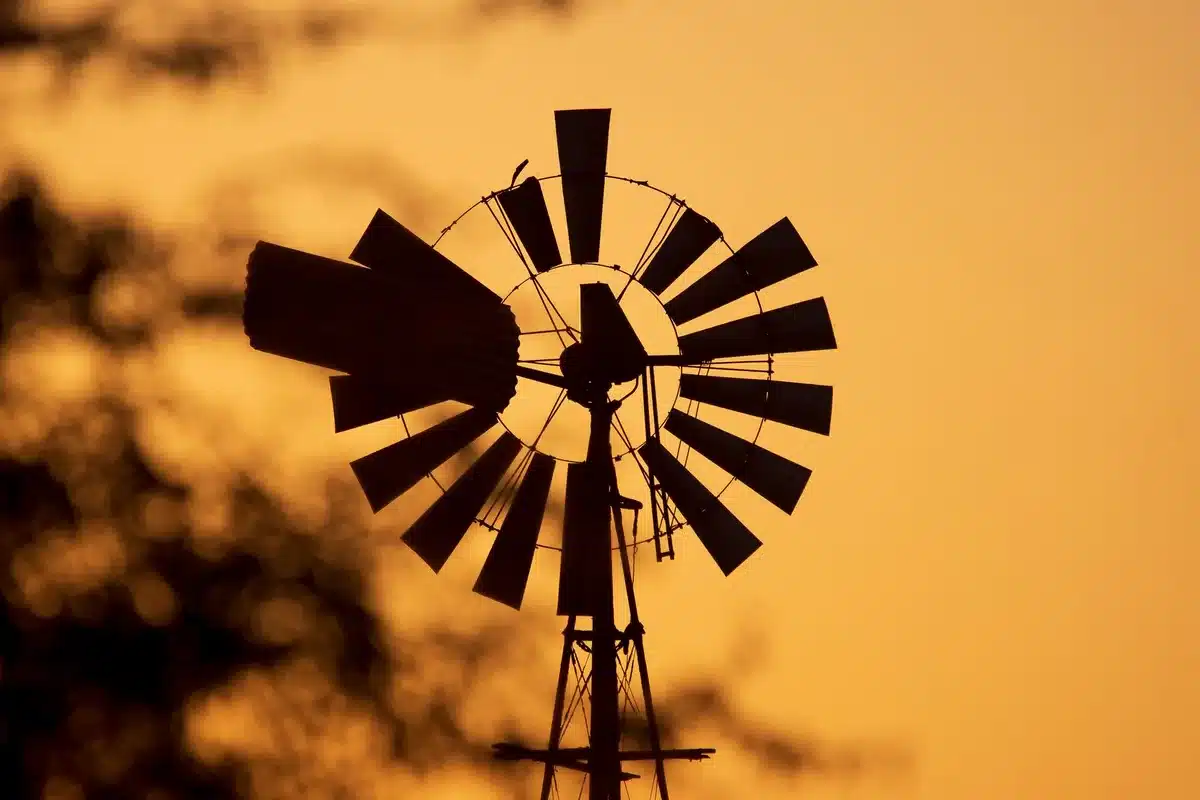
The Ferrell family’s relationship with wind power runs deeper than two decades. In 1923, Ferrell’s great-grandfather installed a Jacobs Windjammer direct-current turbine with a Delco glass battery on the ranch house, long before the grid reached Beaumont, Kansas. “Renewable energy was just practical,” Ferrell reflects. “It always struck me as odd that it became political.”
Policy Headwinds and Quiet Regret
Ferrell faced opposition from both left and right when Elk River broke ground. Left-leaning critics called turbines a blight on the landscape; right-leaning neighbors accused him of feeding at the government subsidy trough. His read on the real source of organized opposition is unambiguous: “Every dollar against us came from fossil fuel interests,” he says. He learned to drop “environment” and “ecology” from his vocabulary when talking to neighbors, focusing instead on economics and debt relief—the language that stayed in the room.
That political calculus is hardening nationwide. Columbia Law School’s Sabin Center for Climate Change Law documented 459 counties and municipalities across 44 states with severe local restrictions on renewable siting by the end of 2024—a 16% increase in a single year. More than 300 counties have effectively banned or imposed moratoria on wind or solar. Every county locking itself out is forfeiting the landowner income, tax revenue, and grid capacity that Elk River has delivered for nearly two decades.
Ferrell’s neighbors mostly stay quiet publicly. Privately, he says, they tell him they wish they’d gotten a few turbines on their land. That quiet regret is not ideological—it is arithmetic. As U.S. electricity demand heads toward a projected 50% increase by 2050, driven partly by AI and data centers, the cost of every lease left unsigned compounds. Ferrell now serves on the board of Renewable Energy Farmers of America (REFA), helping other landowners navigate wind energy decisions. “After the wind farm was built, my phone rang off the hook,” he says. “Farmers and ranchers asking, ‘How’d you do it? Could we get one?'”
Sources
- Gadget Review — detailed account of Ferrell’s 50-turbine ranch, annual royalty figures ($10,000 per turbine), Elk River Wind Project capacity (60,000 homes), and policy context (Columbia Law School siting restrictions data, 16% annual increase, 459 counties/municipalities, 44 states)
- Environmental Defense Fund (Vital Signs) — Ferrell’s income composition (half from wind royalties), drought resilience, lease details (35-year agreement with Greenlight Energy Resources), family succession planning, historical context (1923 Jacobs Windjammer turbine), California Altamont Pass visit, and policy impact (O’Brien County, Iowa case study; electricity demand projection of 50% increase by 2050)
- Renewable Energy Farmers of America — Ferrell’s role on REFA board, early cattle operation scale (3,000 head, 15-hour days), transformation narrative, and current advocacy work











Is this farmer the same gentleman who runs Prestige WorldWide?
I believe he farms with his step brother.