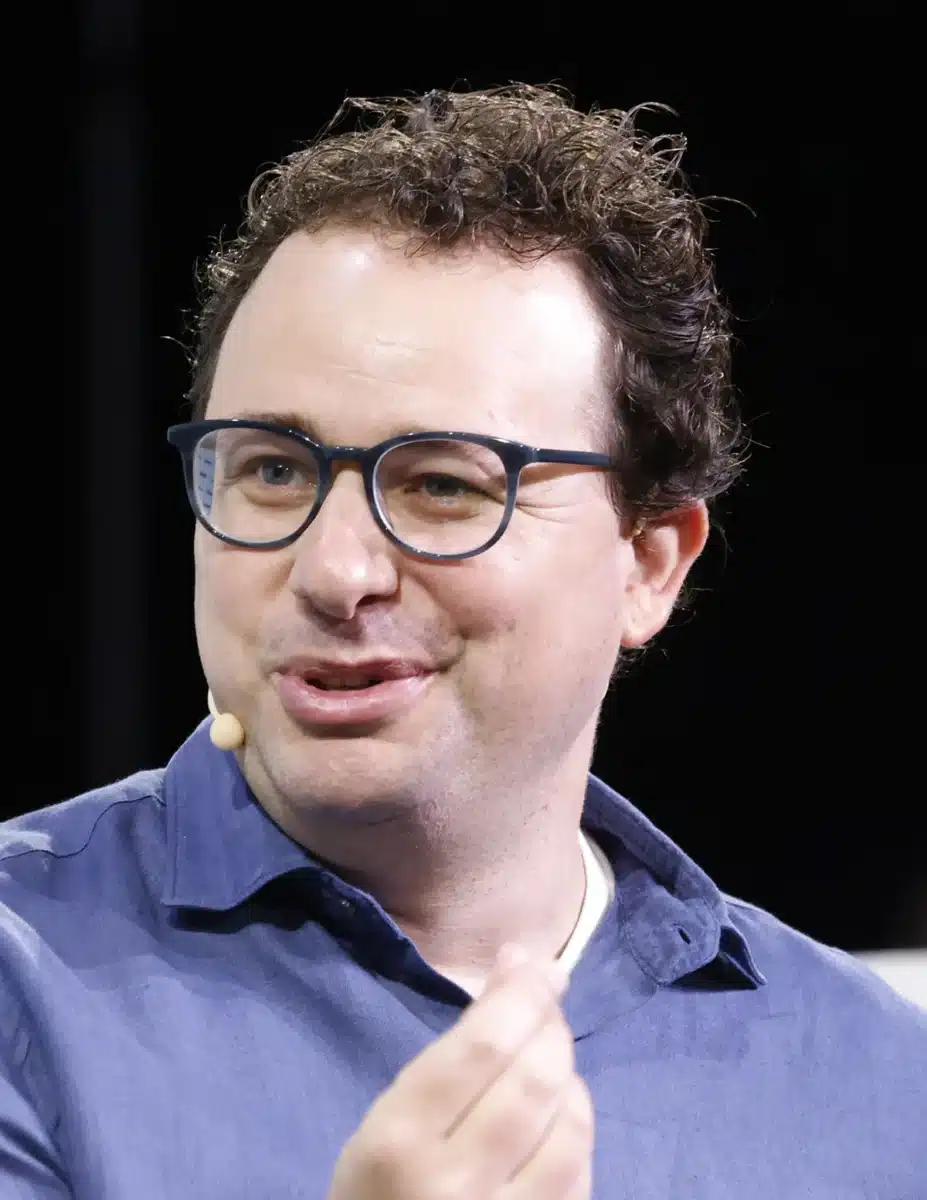
Anthropic CEO Dario Amodei said on August 16 that the public backlash against artificial intelligence stems from a “fundamentally a crisis of trust,” not from warnings about AI risks that executives like himself have issued.
Amodei pushed back against investor Gavin Baker, who had argued on the All-In podcast and social media that Amodei’s own cautionary messaging about AI dangers has fueled opposition to the technology across the United States, particularly against AI data centers. Baker urged Amodei to become a more positive advocate for the industry.
In a series of posts on X, Amodei rejected the premise. “I think it is fundamentally a crisis of trust,” he wrote. “I think that ordinary people don’t trust companies, governments, or the tech industry and always suspect that we are cooking up some new way to screw them over.”
Amodei said his writing had balanced risks and benefits roughly equally, and he pointed to his essay “Machines of Loving Grace” as evidence he paints an ambitious picture of AI’s potential. But he acknowledged that “the public has a negative view of AI” and called that “a big problem” — one that extends far beyond any individual executive’s rhetoric.
The distrust, Amodei argued, has roots going back decades, and the current resistance to AI is merely its latest iteration. A March 2026 Gallup poll found that 70 percent of Americans oppose constructing AI data centers in their local area, with 48 percent strongly opposed — a level of opposition that exceeds even public resistance to nuclear power plants.
Amodei placed the sharpest responsibility on the AI industry itself. “I think by far the most accurate criticism of AI companies including Anthropic is that we haven’t yet delivered on our big promises to benefit the world,” he wrote. He said that promising AI will cure cancer is “more a cliche than it is inspiring,” and that what would actually change public opinion is “actually curing cancer.”
This argument reflects a broader institutional trust crisis in the United States. A July 2026 Gallup report found that Americans’ confidence in national institutions remains near all-time lows, with average trust below 30 percent for the fifth consecutive year. The skepticism extends across companies, governments, and the technology sector — a dynamic that Amodei sees as the real driver of AI backlash, not safety-focused messaging from executives.
On regulation, Amodei dismissed Baker’s suggestion that rules inevitably concentrate power in the hands of large incumbents. He said Anthropic has sought to craft proposals that would slow down frontier AI companies while creating openings for smaller competitors. He also argued that AI’s fundamental architecture tends toward power concentration, a dynamic tied to how models improve with scale rather than to regulatory frameworks alone.
The exchange reflects a broader debate over how AI companies should communicate as the industry faces growing scrutiny. Earlier this month, Amodei clarified Anthropic’s position on open-weight AI models, stating the company has never sought a ban on them and instead supports mandatory safety testing for all capable AI systems. Meanwhile, other AI-related incidents have highlighted public trust concerns — for instance, American Airlines’ AI systems rebooked passengers without consent, raising questions about how the technology is deployed in everyday services.
Amodei said he is working to address unmet promises through expanded work in biology and medicine, describing what he called “early glimmers” of results. The broader AI bubble debate continues as the industry pursues massive infrastructure investments, yet public confidence in both the technology and the companies developing it remains strained by decades of institutional skepticism.
Sources
- TechCrunch — Amodei’s direct quotes about the crisis of trust, his response to Baker, and his views on regulation and delivering on AI promises
- Quartz — Amodei’s statement that distrust has roots going back decades and is the newest iteration of broader skepticism
- Gallup — Data on 70 percent of Americans opposing AI data centers in their area (March 2026 survey) and institutional trust at near all-time lows (July 2026 report)