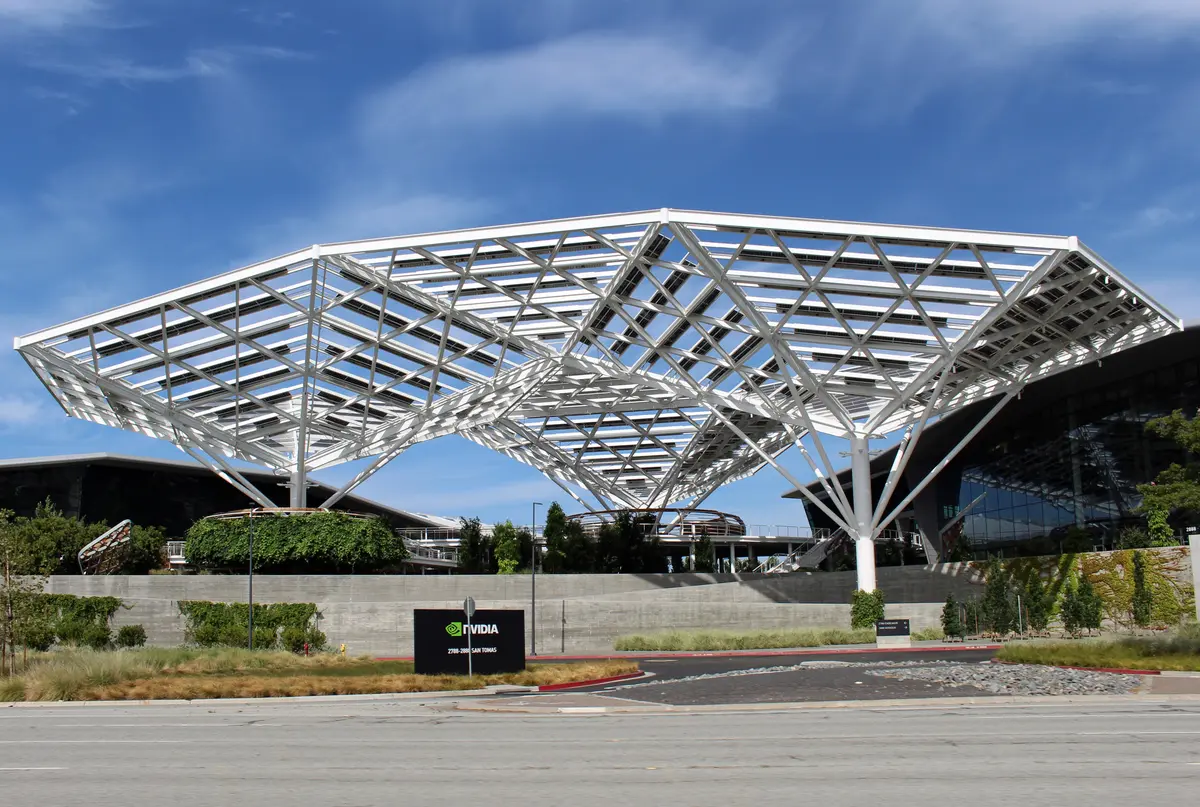
Nvidia announced a $500 billion financing deal with six major Wall Street firms on August 10, 2026, marking a pivotal moment in the intensifying AI bubble debate as the chipmaker attempts to transform compute infrastructure into a mainstream asset class for institutional investors.
The company signed memorandums of understanding with Apollo Global Management, Blackstone, BlackRock, Brookfield Asset Management, Goldman Sachs, and KKR to establish dedicated financing platforms for AI infrastructure development, according to Nvidia’s official statement. The effort aims to mobilize over $500 billion in third-party capital to help hyperscalers, frontier AI labs, and enterprises build data centers and acquire Nvidia hardware without straining their own balance sheets.

CEO Jensen Huang framed the initiative as a fundamental shift in how computing infrastructure is financed. “This is really the first time that technology chips have become an investable asset class,” Huang told CNBC. “These are revenue-generating assets now. They’re productive, they’re long-lived, they’re fungible, they’re flexible.”
Historically, GPUs have been viewed as rapidly depreciating hardware that loses value as newer generations emerge. Huang’s argument challenges that assumption by positioning AI compute as long-term, bankable infrastructure comparable to mortgage-backed securities or toll roads—assets that institutional investors can reliably underwrite and hold.
The announcement came at a critical moment for the AI sector. Markets had experienced a July swoon in which investors began questioning whether Big Tech’s massive AI capital expenditures would generate sufficient returns. Rating agencies like Moody’s have warned that hyperscalers are on track to pour hundreds of billions into data centers while their AI revenue streams remain uncertain, forcing tech giants into heavier debt loads.

The market reaction to the deal itself was mixed. Nvidia shares fell 2.9 percent on August 10, erasing nearly $60 billion in market capitalization, according to the Financial Times. The decline suggested investor skepticism about the financing mechanism or broader concerns about AI valuations.
The deal also highlights a growing concern among analysts: the circular nature of AI financing. The FT reported that Nvidia has been providing financial backing to help its AI partners raise debt in capital markets, which boosts Nvidia’s own revenue. The financing platforms announced Monday extend this model by formalizing it through major financial institutions, raising questions about concentrated risk and whether such arrangements can sustain themselves if AI infrastructure fails to generate the promised returns.
BlackRock CEO Larry Fink said in a statement that the project represents the start of the “next future for financial engineering,” akin to the creation of mortgage-backed securities in the 1970s. However, that historical parallel also carries a cautionary note—mortgage-backed securities were central to the 2008 financial crisis when underlying assets declined in value.
Economist and analyst Richard Bernstein has explicitly called an AI bubble likely, citing extreme valuations and the disconnect between massive infrastructure spending and limited monetization. Morgan Stanley projects that hyperscalers will spend $3.5 trillion between 2026 and 2028, yet most companies report AI investments delivering only marginal returns, according to recent data cited in industry analyses.
Huang has consistently pushed back against bubble concerns, arguing that AI demand is robust and infrastructure spending is justified. On the CNBC panel discussing the financing deal, he emphasized that compute is now “part of the infrastructure, like electricity, like the internet,” suggesting it will generate stable, long-term cash flows.
The $500 billion financing initiative is designed to test that thesis. If the platforms successfully attract institutional capital and borrowers generate sufficient revenue to service the debt, the deal could validate Huang’s vision and ease concerns about the sustainability of AI spending. If demand softens or returns disappoint, the same mechanism could amplify losses across the financial system, much as structured products did during previous bubbles.
Sources
- CNBC — Nvidia CEO Jensen Huang’s comments on chips as investable assets, executive panel discussion on the $500 billion financing deal
- Financial Times — Details of the $500 billion financing agreement, Nvidia stock decline and market capitalization loss, circular financing concerns
- Nvidia official statement — Announcement of partnerships with Apollo, Blackstone, BlackRock, Brookfield, Goldman Sachs, and KKR; deal structure and objectives
- Reuters — Confirmation of the August 10, 2026 announcement and deal overview
- Bloomberg — Market reaction and executive commentary on the financing initiative
- Intellectia AI — Analysis of AI bubble debate, Richard Bernstein’s bubble assessment, and monetization concerns
- Morgan Stanley — Hyperscaler capital expenditure projections for 2026-2028