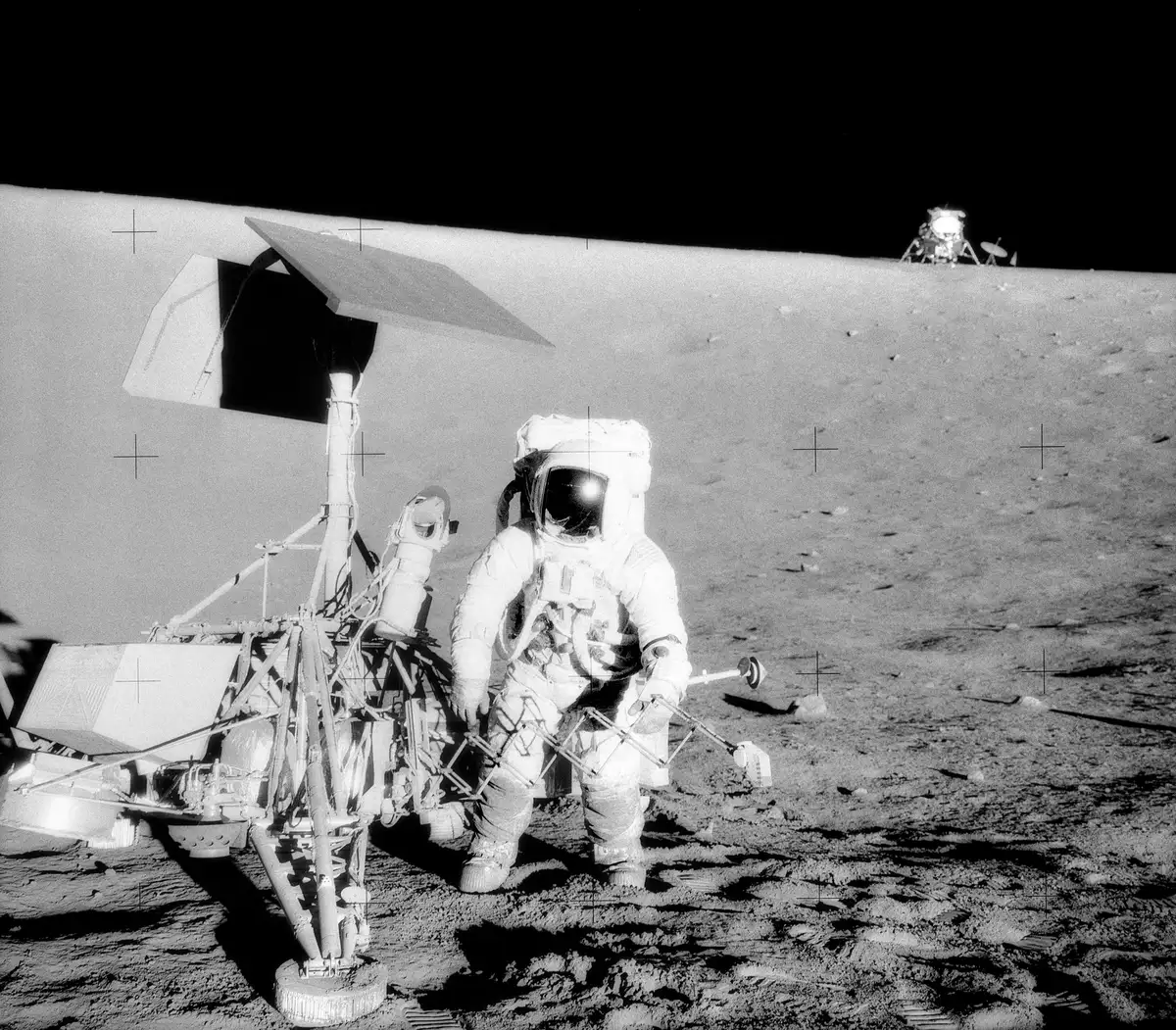
In November 1969, Apollo 12 astronaut Alan Bean accidentally destroyed the mission’s color television camera by pointing it at the sun while setting it up on the lunar surface, permanently ending live broadcasts from the moon and forcing NASA to rethink how future crews would handle their equipment.
Bean, the Lunar Module Pilot, was relocating the Westinghouse color camera away from the lunar module Intrepid to capture better footage of Commander Pete Conrad and his own work on the moon. As he carried the camera on its tripod, the lens passed over the sun, exposing the camera’s vidicon tube to intense solar radiation. The tube’s target area was burned beyond repair, making the camera unusable within the first few moments of the moonwalk.
The damage was not intentional, and Bean later attempted to fix the problem by tapping the camera with a hammer, suspecting a mechanical jam. However, the solar exposure had already destroyed the optical components. According to the Smithsonian’s National Air and Space Museum, a 1993 examination of the TV record confirmed that Bean had pointed the camera directly at the sun while mounting it on the tripod.
The loss of live color television was particularly significant because Apollo 11 had broadcast only in black and white four months earlier. NASA had invested in the color camera specifically for Apollo 12 to provide clearer, more vivid footage of the second moon landing. Without the TV camera, live coverage of both moonwalks ended almost immediately, leaving only still photographs and 16mm film from the lunar module to document the mission. The astronauts did capture thousands of still photographs on 70mm film, which preserved the visual record of their 34 hours on the lunar surface.
The incident troubled some viewers on Earth. One Missouri resident wrote to NASA on November 25, 1969, complaining that the loss of television coverage diminished the public’s visual connection to the historic mission. George Abbey, then assistant to the director of the Manned Spacecraft Center, responded by sending the writer copies of Apollo 12 photographs and assuring him that the camera problem would be corrected before the next mission. Abbey also noted that the astronauts took their work seriously, and some enthusiasm should be expected during such extraordinary moments.
How NASA Changed Camera Procedures
The camera failure prompted immediate procedural changes. For Apollo 14, NASA equipped the same type of Westinghouse color camera with a lens cap and established stricter protocols for how astronauts positioned and pointed it. A more significant structural change came with Apollo 15: NASA transferred control of the color TV camera from the astronauts to Mission Control, allowing controllers on Earth to pan and tilt the camera while the astronauts concentrated on their lunar work.
Alan Bean later channeled his experience into art. Following the mission, he developed his impressions of the lunar surface into an acclaimed series of paintings that evoked some of the moments not captured on television, offering a unique artistic perspective on what the world had missed. The camera incident remains a reminder that even meticulously planned space missions depend on split-second human decisions made in bulky spacesuits in an unfamiliar environment, and that such decisions can reshape how future crews approach their equipment and training.
Sources
- The Economic Times — detailed account of the camera failure, Bean’s attempt to fix it with a hammer, the damage to the vidicon tube, and NASA’s procedural changes for Apollo 14 and structural changes from Apollo 15 onward
- Smithsonian National Air and Space Museum — explanation of why the color camera mattered, the accident during setup, the 1993 examination confirming solar exposure, and how Bean later developed his lunar experience into paintings
- NASA official mission records — confirmation that Apollo 12 landed on November 19, 1969, and that Bean was the Lunar Module Pilot