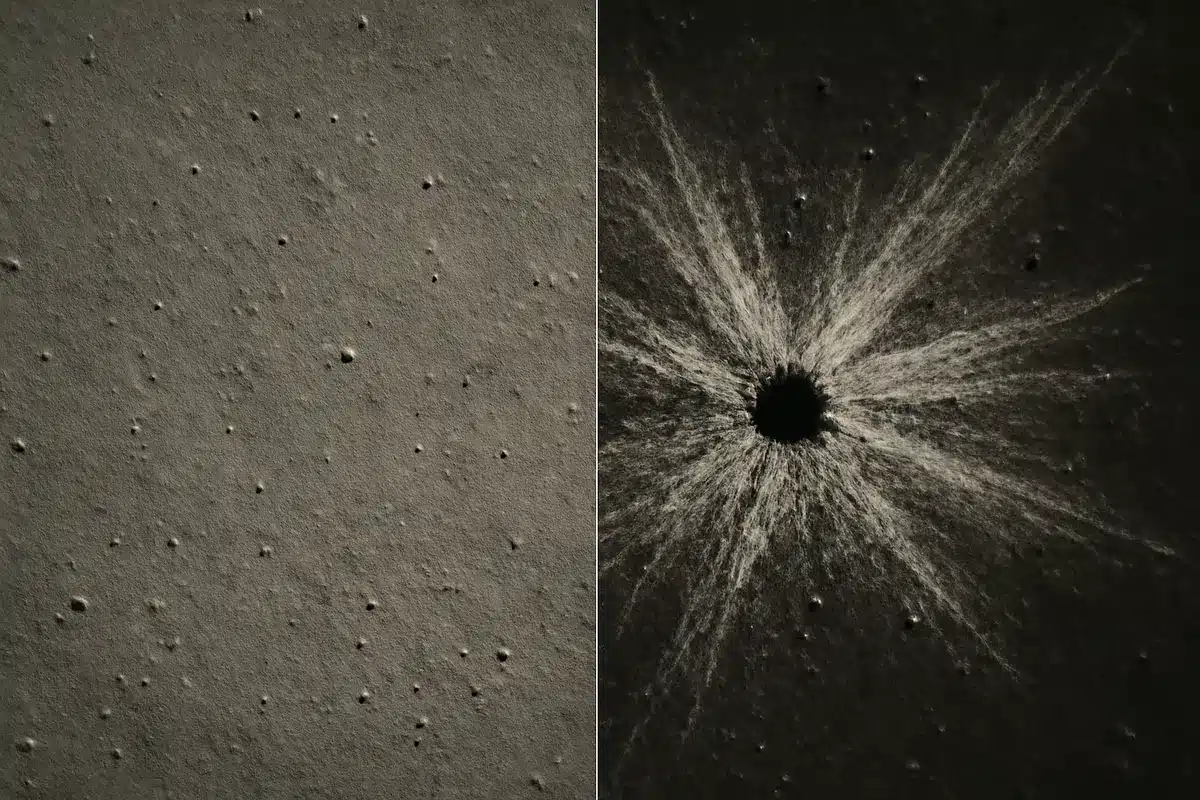
NASA’s Lunar Reconnaissance Orbiter has captured the sharpest images yet of a crater carved by a SpaceX Falcon 9 upper stage that crashed into the Moon on August 5, 2026, near Einstein Crater.
The spacecraft photographed the impact site between August 11 and August 12, one week after the collision occurred at approximately 5,400 miles per hour. Based on the new images, the fresh crater measures 18 metres across and less than 3 metres deep, according to measurements scientists determined from the length of the crater’s shadow.
The Falcon 9 upper stage had been drifting through space for more than a year after completing its commercial mission before its unintended lunar impact. NASA and SpaceX had been tracking the discarded rocket stage in the days leading up to the collision.
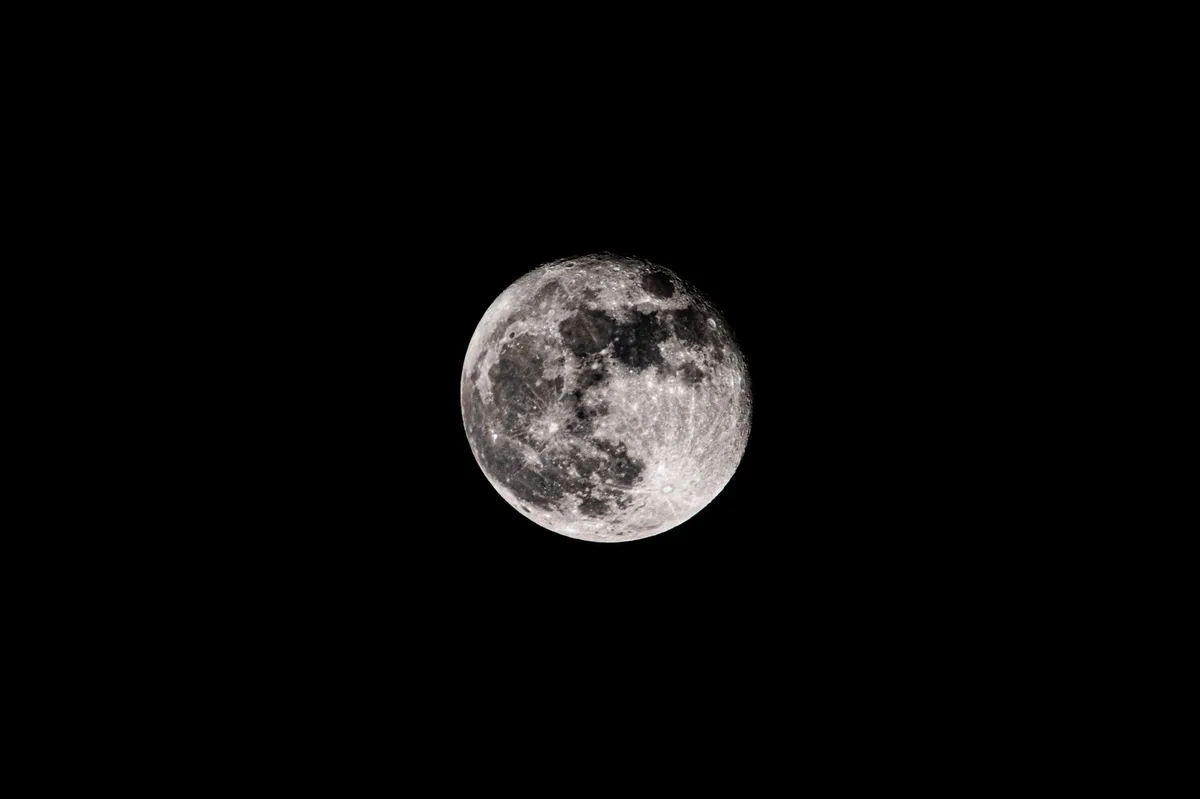
The images reveal striking details of the impact’s aftermath. Dark streaks emanating from the crater represent excavated material that was close to the surface and shaped by eons of solar wind, cosmic rays, and micro-meteorite strikes. Brighter rays indicate fresh rocks and dirt that were hurled from deeper layers, creating a distinctive pattern visible in the orbital photographs.
Capturing the images required precise orbital mechanics. The Lunar Reconnaissance Orbiter circles the Moon in a polar orbit every two hours as the Moon rotates beneath it. Flight controllers had to tilt the spacecraft so its cameras pointed toward the impact scene, and the spacecraft had to wait until that location turned into view, which took six days after the impact.
The SpaceX impact was not the first intentional lunar collision. In 2009, NASA’s Lunar Crater Observation and Sensing Satellite (LCROSS) deliberately crashed an Atlas 5 rocket’s Centaur upper stage into Cabeus crater at the Moon’s south pole, exposing material that revealed evidence of subsurface water. The unintended SpaceX collision provides scientists with a fresh opportunity to study how impacts excavate and scatter lunar material, data that could inform the design of future lunar landers and bases.

The Lunar Reconnaissance Orbiter, which has been orbiting the Moon since 2009, serves as NASA’s primary tool for high-resolution lunar observation as the agency works to return astronauts to the lunar surface through the Artemis program.
Sources
- ABC News — crater dimensions, impact speed, and orbital imaging details
- NASA — Lunar Reconnaissance Orbiter mission overview and impact site documentation
- Space.com — historical context on lunar impacts including the 2009 LCROSS mission
- BBC News — scientific analysis of impact mechanics and crater formation