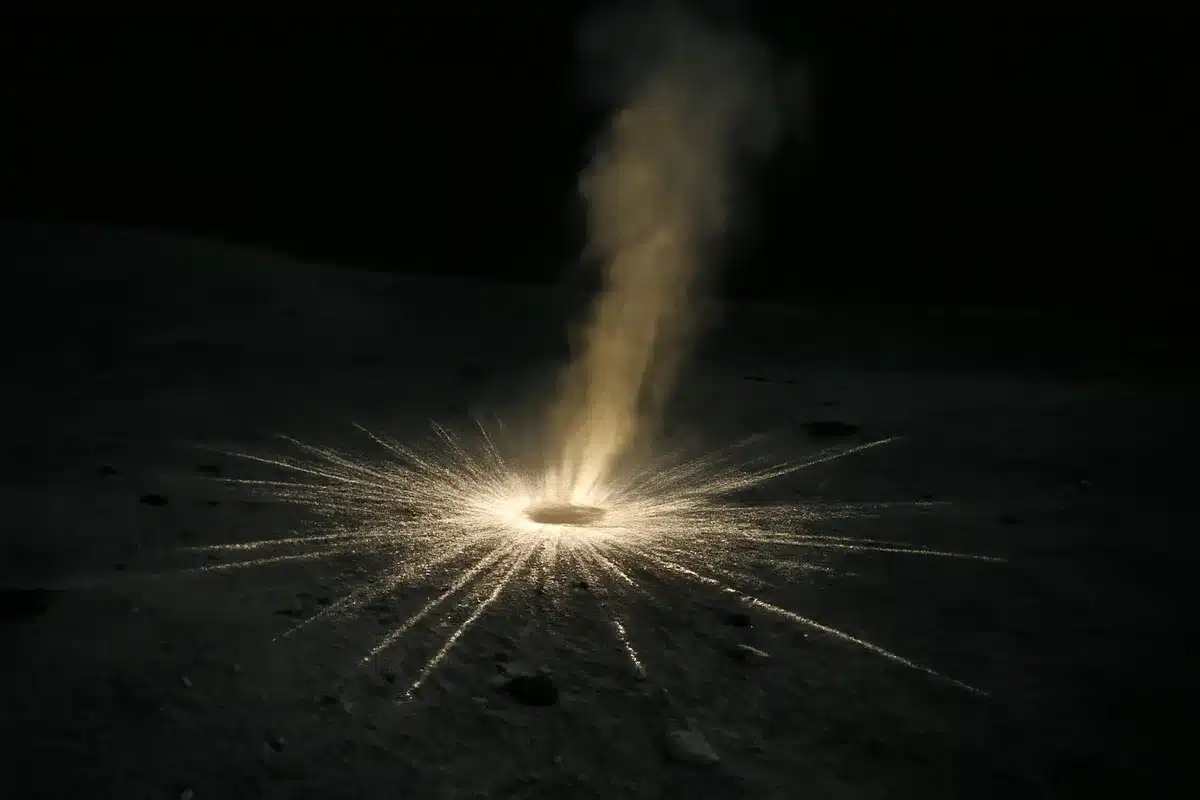
A SpaceX Falcon 9 upper stage crashed into the Moon on August 5, 2026, near Einstein Crater at 5,400 mph, carving a new impact crater on the lunar surface. The four-tonne rocket stage, which had drifted through space for more than 18 months after launching two lunar landers in January 2025, struck the Moon unintentionally, sending up a plume of dust that was captured by astronomers using ground-based telescopes.
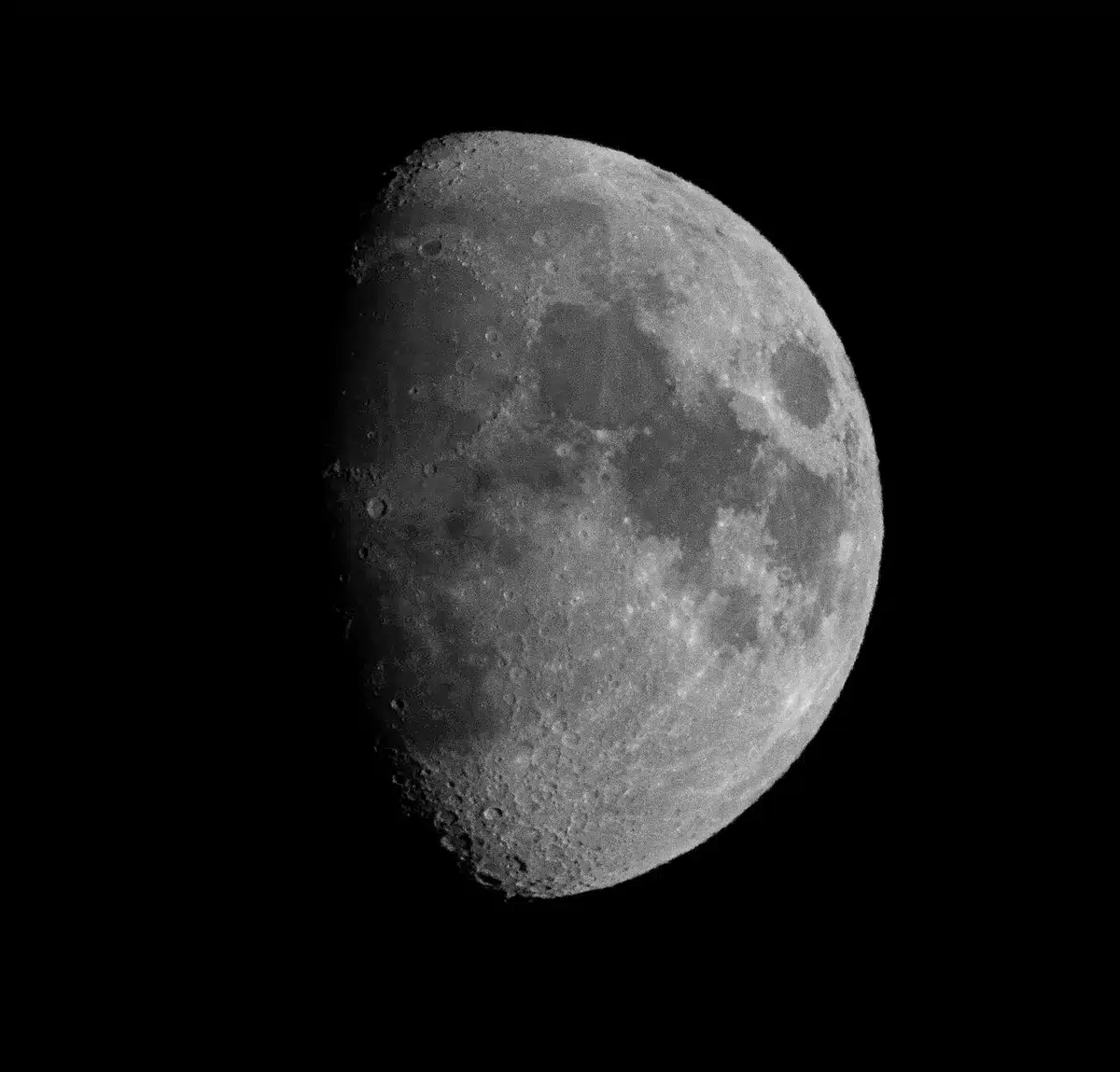
The impact occurred near the Moon’s terminator line—the boundary between the sunlit side and the far side—at approximately 2:35 a.m. EDT on Wednesday. NASA estimated the collision would create a crater about 60 feet wide and 12 feet deep, though the exact dimensions depend on the composition of the lunar soil at the impact site.
The Falcon 9 upper stage launched from Kennedy Space Center on January 15, 2025, carrying Firefly Aerospace’s Blue Ghost lunar lander and ispace’s Resilience lander toward the Moon. After separating from the landers, the spent upper stage remained in an unstable orbit that gradually decayed over 18 months due to gravitational influences from Earth and the Moon, placing it on an inevitable collision course with the lunar surface.
Scientists seized the opportunity to gather rare data on impact phenomena. The European Southern Observatory’s Very Large Telescope in Chile detected “spectral lines”—chemical fingerprints—of sodium and lithium gas in the dust plume, which measured several tens of kilometers in size. Carl Schmidt, an astronomer from Boston University’s Center for Space Physics, noted that sodium in the spectra likely came from lunar soil, while traces of lithium may have originated from the rocket stage itself.
The observation provided valuable data for understanding space debris impacts—a concern as NASA prepares to establish a sustained human presence on the Moon. Benjamin Fernando of Los Alamos National Laboratory said the collision could yield insights into “hazards from artificial space debris impacts” and help assess risks to future lunar bases. According to research published in July 2026, the presence of debris in cislunar space and in lunar orbit poses a significant collision risk for missions traveling to and from the Moon as part of NASA’s Artemis program.
The SpaceX impact was not the first unintended rocket crash on the Moon. In 2022, a Chinese Long March 3C upper stage from the 2014 Chang’e 5-T1 mission struck the lunar surface. However, intentional impacts have also advanced science: NASA’s 2009 LCROSS mission deliberately crashed a Centaur rocket upper stage into the Moon to study the resulting plume and search for water ice.
No lunar satellites were in position to photograph the impact directly, but NASA’s Lunar Reconnaissance Orbiter and South Korea’s Pathfinder Lunar Orbiter are expected to image the crash site in coming days. The impact adds to a growing inventory of human-made debris on the Moon, with estimates suggesting more than 209 tons of artificial objects now rest on or orbit the lunar surface.
Sources
- The Guardian — spectral observations of sodium and lithium gas in the impact plume, rocket stage mass and launch date, crater size estimates
- BBC — impact date, time, and location; comparison to previous Chinese rocket impact in 2022
- Forbes — rocket stage mass (8,818 pounds), impact speed (5,400 mph), lunar junk accumulation figures
- CNN — NASA crater size estimates (60 feet wide, 12 feet deep)
- NPR — launch date (January 15, 2025), rocket stage origin and mission details
- Phys.org — debris hazards to future lunar missions and Artemis program concerns
- Space.com — impact time (2:35 a.m. EDT), impact speed, NASA and South Korea satellite observation plans