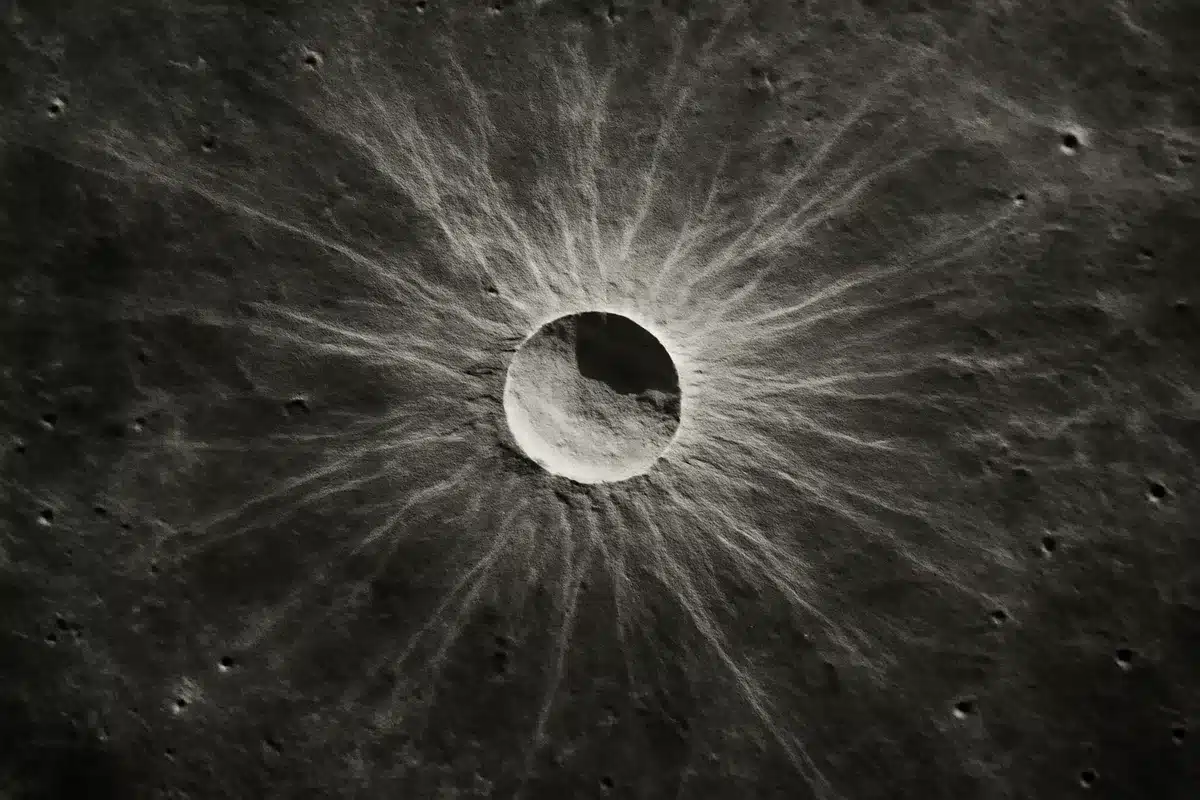
A SpaceX Falcon 9 upper stage crashed into the Moon on August 5, 2026, near Einstein Crater at 5,400 mph, creating a crater approximately 60 feet wide, according to NASA measurements released this week.
The roughly 4-tonne upper stage had been drifting through space for more than a year following its January 2025 launch, which carried Firefly Aerospace’s Blue Ghost 1 lunar lander on a private mission that successfully landed on the Moon.
Solar activity and gravitational forces gradually pulled the abandoned stage back toward the lunar surface, according to NASA. The agency’s Lunar Reconnaissance Orbiter (LRO) captured the first detailed images of the impact site between August 11 and 12, measuring the crater at 18 metres wide and less than 3 metres deep based on the length of its shadow.

Tracking the stage proved challenging for NASA’s imaging team. To photograph the specific location, the LRO had to wait six days for that part of the Moon to rotate into view, and the spacecraft had to be tilted precisely so its camera pointed at the crater while passing 100 kilometres overhead. According to NASA, “If the camera snapped even 10 seconds too early or too late, the target would drift off-center by 10 miles.”
The images revealed details of the ejected material. Darker streaks around the crater are surface dust and rocks altered by solar wind and cosmic rays over time, thrown up from about half a metre below the surface. Brighter streaks hugging the crater’s rim show fresh material excavated from deeper underground.
Precedent: Earlier Rocket Impacts on the Moon
The Falcon 9 impact was not the first uncontrolled rocket stage to strike the lunar surface. In March 2022, the third stage of a Chinese Long March 3C rocket—which had launched in 2014 as part of China’s Chang’e 5-T1 mission—crashed into the Moon near Hertzsprung Crater, creating an unusual double crater. That impact highlighted the growing challenge of space debris and the need for better tracking and disposal protocols for spent rocket stages.
SpaceX and NASA are now studying how to prevent future unplanned upper-stage lunar collisions, according to recent reporting. The issue reflects a broader concern in spaceflight: as more missions launch toward the Moon and beyond, managing the disposal of spent rocket stages becomes increasingly important to avoid both intentional and accidental impacts on the lunar surface.

Sources
- National Post — NASA crater measurements (18 metres wide, less than 3 metres deep) and LRO imaging details
- NASA — Upper stage origin (January 2025 Firefly mission), solar activity and gravitational forces as cause, LRO imaging challenges and timeline
- Space.com — Chinese Long March 3C impact in March 2022 as precedent
- Reuters — Solar activity and gravitational forces explanation