
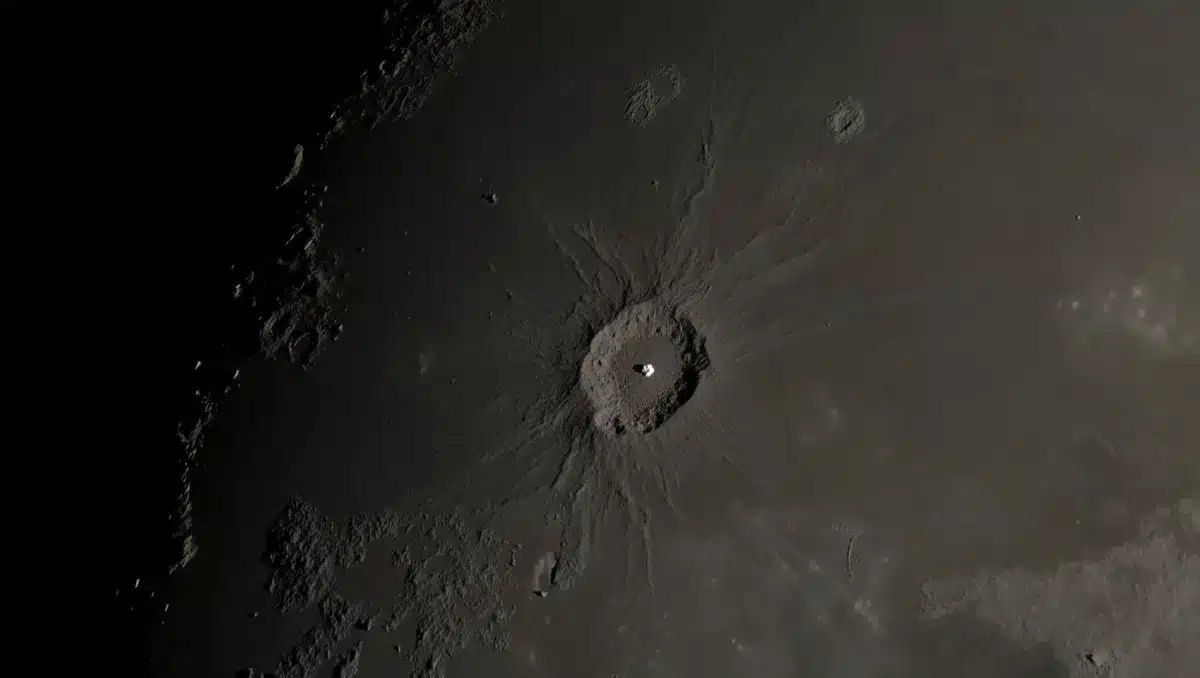
A SpaceX Falcon 9 upper stage crashed into the moon on August 5, 2026, at approximately 2:35 a.m. ET, striking near Einstein Crater at a speed of roughly 5,400 miles per hour. The abandoned rocket stage, estimated to weigh about 4,000 kilograms (8,818 pounds), originated from a January 15, 2025 launch that delivered two commercial lunar landers to the moon’s surface. The impact created a crater estimated between 60 and 100 feet wide (20 to 30 meters), according to NASA and scientists who had predicted the collision.
The Falcon 9’s upper stage had completed its primary mission propelling Firefly Aerospace’s Blue Ghost and iSpace’s Resilience landers toward the moon. For low-Earth orbit missions, SpaceX typically allows upper stages to burn up in Earth’s atmosphere, but high-energy lunar missions require different disposal procedures. A combination of solar activity and gravitational forces placed the stage on an unintended trajectory toward the moon, according to Julianna Scheiman, director of NASA Science and Dragon Programs at SpaceX, who spoke at a news conference before the impact.
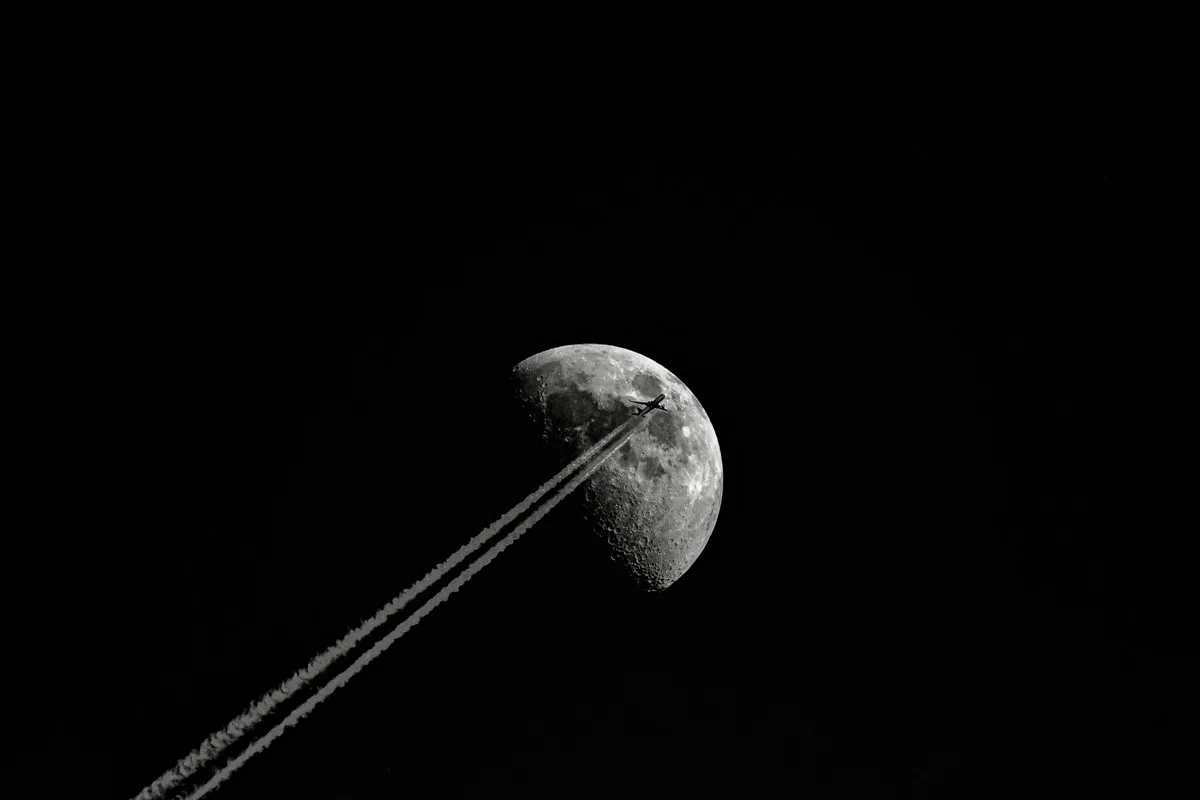
Scientists detected the impact in real time using ground-based and space-based telescopes. The European Southern Observatory’s Very Large Telescope, located at the Paranal Observatory in Chile, captured spectral evidence of the collision. “We can confirm that the telescope detected spectral lines of sodium and lithium gas in the impact plume lasting for 5-10 minutes after impact,” said Dr. Bárbara Ferreira, media manager for ESO’s department of communication. The sodium likely came from lunar soil, while the lithium may have originated from the rocket itself.
South Korea’s Danuri lunar orbiter also observed the upper stage before and immediately after the impact, according to the Korea AeroSpace Administration. The impact flash lasted only about a second and was largely obscured by the brightness of the sun-lit lunar surface, which explained why it proved difficult to observe from Earth despite widespread astronomical interest.
Precedent and Future Concerns
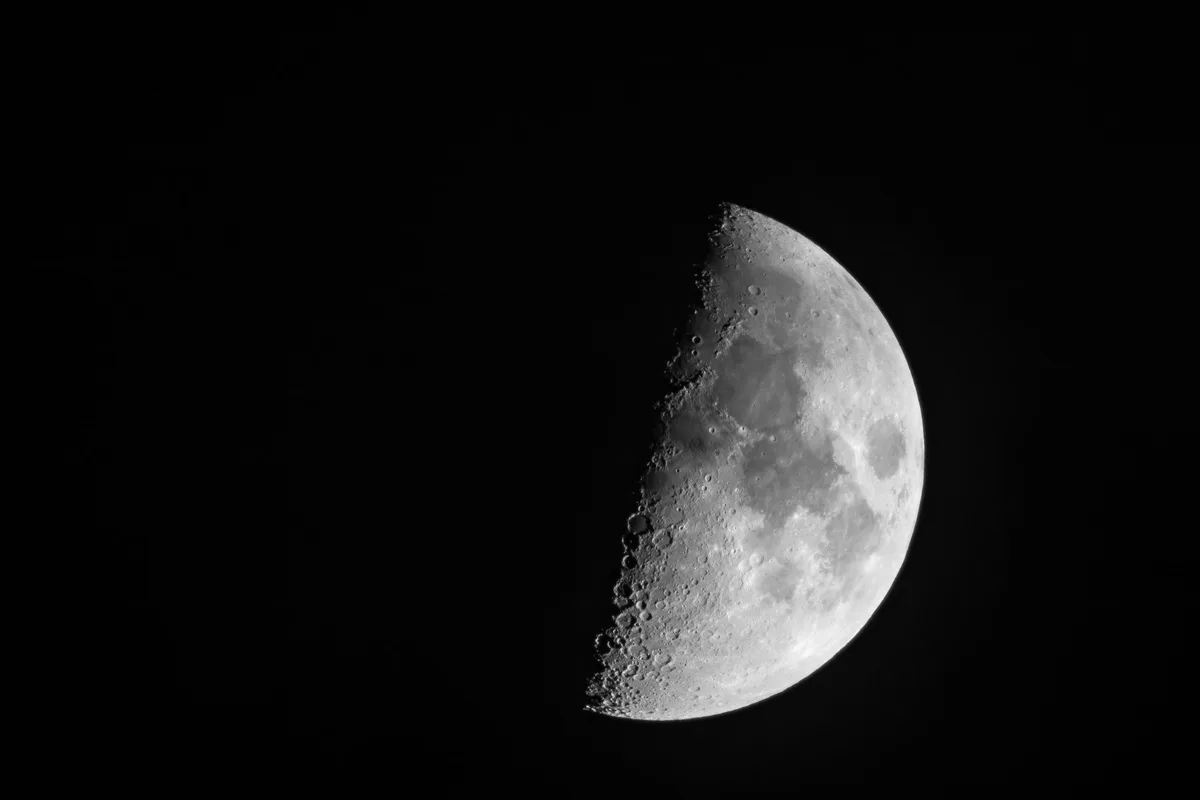
Artificial impacts on the moon are rare. The most recent comparable event occurred in March 2022, when a Chinese Long March 3C rocket stage crashed into the lunar surface, creating a double crater roughly 28 meters wide. NASA intentionally crashed its LCROSS mission into the moon in October 2009 to search for water ice in permanently shadowed craters near the south pole, confirming subsurface water deposits.
The SpaceX collision raises concerns about space debris management as lunar exploration accelerates. Unlike Earth, the moon has no atmosphere to burn up falling objects, and there is no formalized tracking system for debris beyond Earth orbit. Dr. Paul Wiegert, a professor of astronomy and physics at Western University in Ontario, emphasized the scientific value of studying artificial impacts. “What happens when an object crashes into the moon? We know it makes a crater, and of course it does eject material, but we don’t really understand that process in great detail,” Wiegert said. Estimates suggested the rocket stage might launch rocky material as far as 500 miles from the impact site.
NASA’s Lunar Reconnaissance Orbiter will survey the impact site in coming days. The collision poses no danger to Earth but underscores challenges ahead as NASA plans sustained human presence on the lunar surface through its Artemis program. SpaceX and NASA are working together to develop optimal disposal solutions for high-energy missions in the Sun-Earth-moon system to prevent similar unintended impacts in the future.
Sources
- CNN — detailed reporting on the impact, detection by the Very Large Telescope, the Falcon 9’s origin mission, and expert commentary from Dr. Paul Wiegert and SpaceX officials
- New York Times — crater size estimates and pre-impact predictions
- Fox Business — confirmation of impact speed, crater dimensions, and NASA assessment
- NASA — LCROSS mission details and lunar impact science
- Space.com — comparison to the 2022 Chinese Long March 3C lunar impact and historical context










